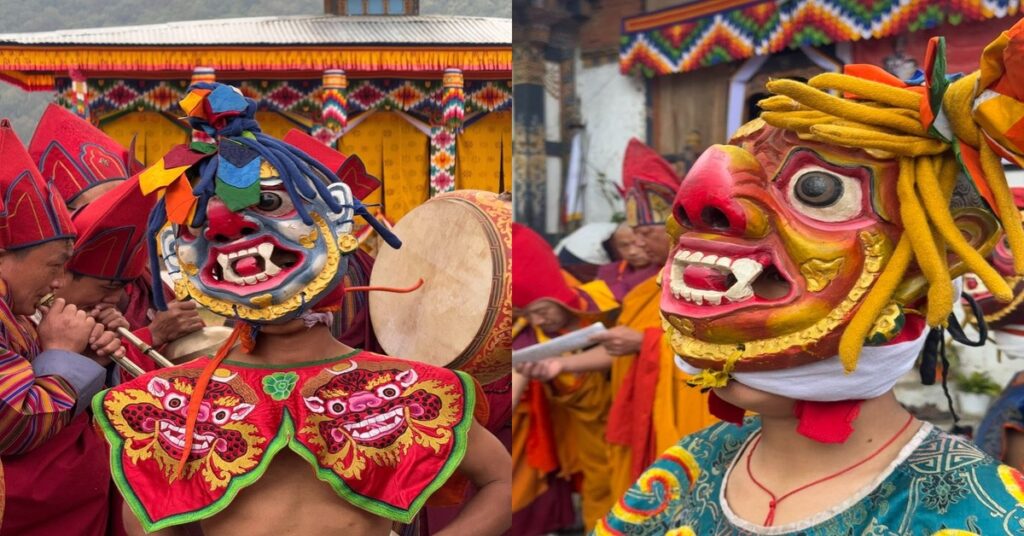
Nabji Lhakhang Drup, also known as Doling Drubchen, is a five-day annual religious festival held in Nabji Lhakhang to honor Guru Rinpoche and commemorate the founding of Nabji Temple in Trongsa Dzongkhag. The festival is celebrated from the 15th to the 19th day of the 11th month of the Bhutanese calendar.
Claimed to be identical to the Jambay Lhakhang Drup of Bumthang, Nabji Lhakhang Drup is not just a cherished ritual but a treasured community gathering for the locals. For visitors, it offers a fascinating experience to witness the living spiritual tradition of Nabji village.
The Nabji Lhakhang Drup festival 2026 will be held from 22nd to 26th December 2026.
Where is the Nabji Lhakhang Drup held?
The Nabji Lhakhang Drup Festival is held in Nabji Lhakhang in Trongsa Dzongkhag. Nabji Lhakhang is a site where Guru Rinpoche resolved a conflict between Sindu Raja, a local king of Bumthang, and Nowoche, a king from the Indian plains. The temple can be reached via a short and scenic trek from Reotala.
Read More: Nabji Lhakhang, a Place where Guru Rinpoche erected a Stone Pillar of Oath
Nabji Lhakhang Drup (Doling Drubchen)
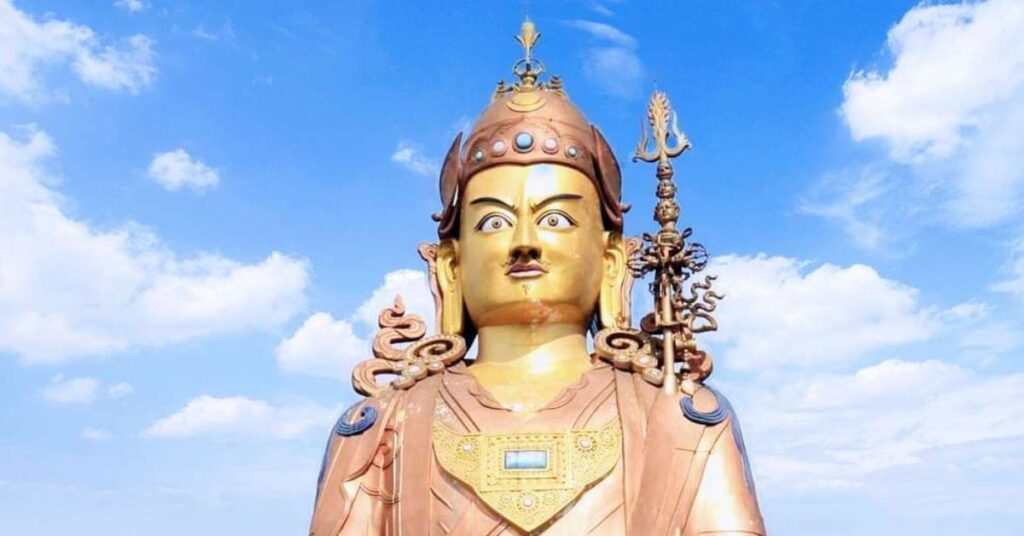
Also known as Doling Drubchen, Nabji Lhakhang Drup is performed by monks along with local villagers of Nabji-Korphu. The festival is dedicated to Guru Rinpoche and marks the founding of Nabji Lhakhang.
Over the course of five days, sacred rituals and masked dances bring the temple courtyard alive with devotion and symbolism.
Highlights of the Nabji Lhakhang Drup Festival
The highlights of the festival include Mewang (a fire blessing ceremony) and Terchams (a sacred, naked dance performed by Pema Lingpa).
1. Mewang (Fire Blessing Ceremony)
One of the most powerful highlights of the festival is the Mewang, or the fire blessing ceremony. During this ritual, devotees run beneath a huge flaming arch gate made of dry grass, while glowing embers and burning grass strands fall from above.
2. Terchams (Sacred Naked Dance)
Another rare ritual is the Tercham, a sacred naked dance performed at night around a blazing bonfire. Dancers wear only masks, and the ritual is believed to bless childless women with fertility. This sacred dance is believed to have been composed by Terton Pema Lingpa, the great treasure revealer, in the 15th century.
Following these main rituals, a series of traditional mask dances, such as Peling Gimsum Chams, Tshogyem, Pholay Molay, and others, are performed. Many of these dances reenact legends of how Terton Pema Lingpa helped revive Nabji village after a devastating outbreak of disease.
On the final day of the Drup, the sacred Thongdrel of Guru Tshengye is unfurled for public viewing and blessings.
Why attend Nabji Lhakhang Drup?
Nabji Lhakhang Drup in Trongsa presents a rare opportunity to witness sacred rituals, including Mewang (the fire blessing ceremony) and Terchams (sacred naked dance), which are believed to be similar to the most revered Jambay Lhakhang Drup in Bumthang. You can attend the festivals of Bhutan with the Bhutan Festival Package.
Frequently Asked Questions
Where is Nabji Lhakhang Drup held?
The festival is held at Nabji Lhakhang in Nabji village, Korphu Gewog, Trongsa Dzongkhag, central Bhutan. Nabji is a remote village surrounded by forested hills and traditional farm settlements.
What does “Drup” mean?
“Drup” or “Drubchen” refers to a religious practice, ritual ceremony or spiritual accomplishment. Nabji Lhakhang Drup is therefore more than a cultural performance: it is a sacred community festival involving prayers, rituals, masked dances and blessings.
When is Nabji Lhakhang Drup held?
The festival is held annually according to the Bhutanese lunar calendar, generally from the 15th to the 21st day of the 11th month. The exact Gregorian dates change every year.
What is Mewang?
Mewang is a fire-blessing ceremony. Participants pass over or near a fire as part of a ritual believed to purify obstacles and provide protection and blessings.
What is Tercham?
Tercham is a sacred “naked dance” traditionally associated with Pema Lingpa’s terma or revealed treasure tradition. It is normally performed at night and is a religious ritual rather than entertainment.
Can tourists watch Tercham?
Visitors may be permitted to witness the ritual, but access and photography rules are controlled by the organisers. The performance should be approached with the same respect as a prayer ceremony.
Tourists should:
Avoid flash photography and filming unless permission is given.
Remain quiet during the ritual.
Follow seating and viewing instructions.
Never make jokes or inappropriate comments.
Understand that the ceremony is sacred to the local community.
How do I reach Nabji?
Drive south from Trongsa toward Reotala (located between Trongsa and Zhemgang). Diverge onto the unpaved Korphu Gewog Centre Road. The total drive from Trongsa town to the end of the road covers about 110–115 km and takes roughly 3 to 4 hours on bumpy mountain roads.
How is it different from Jambay Lhakhang Drup?
Both festivals include sacred dances connected with Guru Rinpoche and Pema Lingpa traditions, and both are known for a fire ceremony and Tercham. However, they are held at different temples and have distinct local histories.