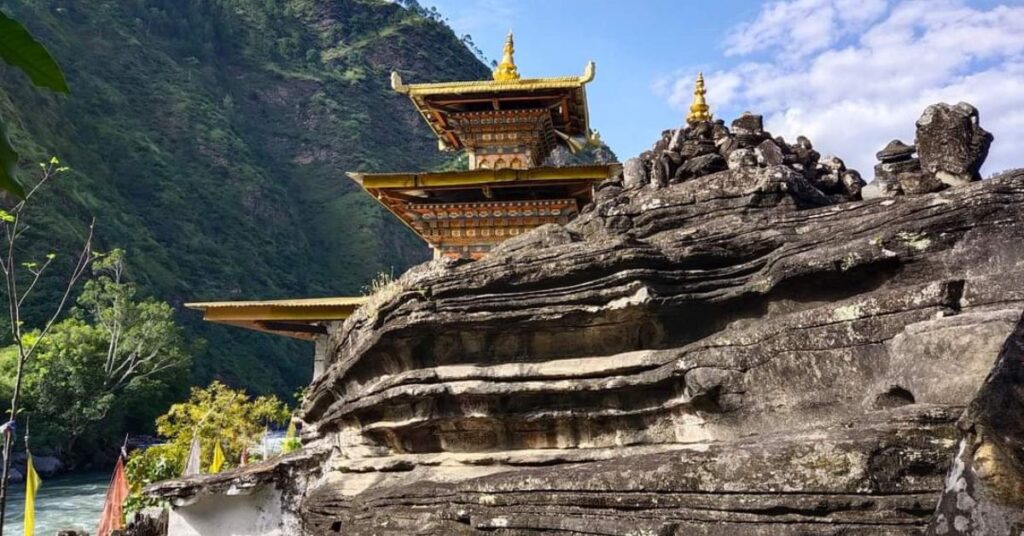
Gongza Ney is a sacred place where Khandro Yeshey Tshogyal offered tea to Guru Rinpoche at noon while he was on the way to Gomphu Kora to subdue a demon. The Ney is located on the banks of Gongri (Drangme Chhu) in Toedtsho Gewog under Trashi Yangtse Dzongkhag at an altitude of 927 masl.
The Ney’s original name was Gung Ja, meaning “noon tea or midday tea.” With time, the sacred Ney was called Gongza Ney. It is also called Gongja Ney. You will only need an hour to explore the holy Ney. Some people believe that the sacred site of Gongza Ney continues to GomKora along the riverbank of Drangme Chhu.
How to Reach Gongza Ney
From Trashiyangtse, drive to Doksum, near another sacred site, Gomphu Kora. Doksum is about a 45-minute journey from the main town of Trashiyangtse. From Doksum, you will take just 2 hours on foot to reach Gongza Ney. You can also get to the Ney from the Yalang Bridge. The Ney is a 3-hour hike from the Yalang suspension bridge, 3 hours downhill from Jangphu village, and an hour from the Melongkhar bridge.
Sacred Relics to See at Gongza Ney
- The meditation cave of the Guru in the Lhakhang;
- Guru’s Ter Drom in the Tshangla dialect (box of treasure);
- Shoe (Tshoglham) of the Guru that blesses the pilgrims with Thruelchu;
- Guru Nangsi Zilnoen and many paintings;
- So many sacred stone artifacts (Ney dhos).
Also Read: Guru Rinpoche in Bhutan: His Visits to Bhutan and Sacred Sites
Historical Significance of Gongza Ney
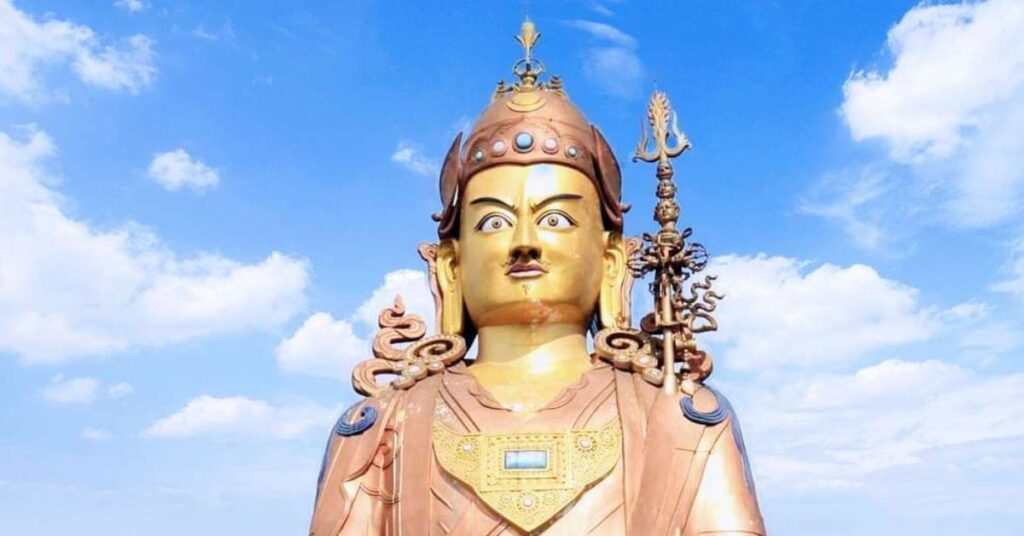
While Guru Rimpoche was on his way to subdue the demon of Gom Kora, Khandro Yeshey Tshogyal offered noon tea (Ja in Tshangla) to Guru Rinpoche at midday, when exactly the sun’s position was in the middle of the Sky (Gung in Tshangla). It was believed that the rainbow encircled the sun and the locality.
Considered a good sign, Guru Rinpoche blessed the place. Thus, the Ney is known as Gung (Midday) Ja (Tea), but with time, it became Gongza Ney among the pilgrims.
It is unclear who discovered Gungja Ney, but people have been on pilgrimage since Guru Rimpoche blessed it. The Ney was formally founded by Tshampa Dawa in 1988. It was said to be initially covered by dense forest. In 1993, after five years of staying in the place, a Zangdopelri Lhakhang was built by Tshampa Dawa.
Later, the Ney was blessed by numerous Buddhist masters. Namkhai Nyingpo Rinpoche was the first master to bless the Ney in 1996. Rinpoche graciously blessed the place and offered the lamps inside the Lhakhang and nearby sacred sites.
Another saint, Truelku Kuenga (Tibetan saint), also visited the Ney in 1998. He also performed Thruelsoel (oblation offerings) to the Ney.
Description of Gungja Ney
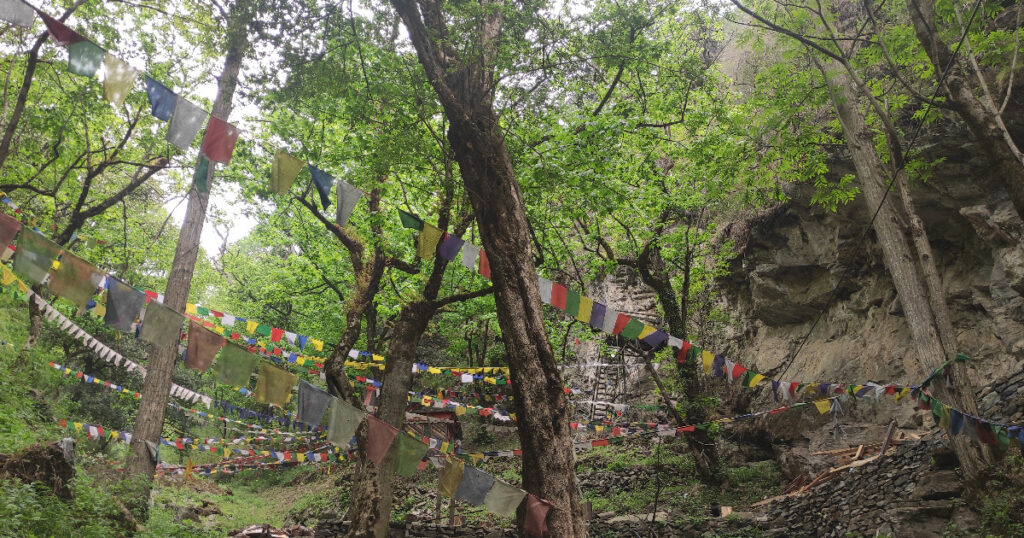
Upon reaching the Ney, on the face of the cliff where Gungja Ney Temple perches, there are 42 images of peaceful gods and 58 of wrathful gods. Behind the temple are three massive boulders representing Rigsum Gonpo (Chenrigzee-Chhana Dorjee-Jampelyang), and a stream flows below each. Another stream known as Guru’s Drubchu also flows nearby, making four streams.
Also Read: Drupchhu or Holy Spring Waters in Bhutan: Beliefs and Benefits
You can explore oddly shaped stone monuments along the riverbank like Tashi Gomang, Grinding Stones, Tsari Nyipa, Guru’s Throne, Drenagchung, Shinji Choegi Gyalpo, and many more. Below the main shrine, the stone Dungkar and clear male and female holy springs (Drupchhu Pho-Mo) flow to the main river.
Also Read: Drupchhu or Holy Spring Waters in Bhutan: Beliefs and Benefits
Gongza Lhakhang
The small temple is built into an overhanging rock. It is in the shape of a traditional Bhutanese-style Guru’s Zangdopelri. The main relics of the Lhakhang are Guru Nangsi Zilnoen, wall paintings of Guru Tshengye (eight manifestations of Guru), and Zhabdrung Phuensum Tshogpa. The Gongza Ney holds the treasure box, the shoe of Guru Padmasambhava, the devil’s egg, and many other relics.
There are also the wall paintings of Chenrezig (God of Compassion), Jitsuen Dema (God of Wealth), Tshangpa Gyarey, Tshepag Mei (God of Long Life), Dolkar (White Tara), Dorji Namgyelma, Kings of Four Directions, Gyalpo Songtsen Gampo, Naro Tapa, Kuenkhyen Pekar, Gyalpo Rigdhen, Jigten Wangchuk, Jittsuen Jampelpang (God of Knowledge), and Dorji Sempa.
The main protective deity of Gongza Nye is Goenyen Chophel (it is preserved in glass on the altar of Gomphu Kora), and there is a script for this Soelkha (offerings) of the protective deity. So, with different visitors and pilgrims coming to this Ney, smoking drugs and engaging in unhealthy activities are strictly prohibited.
Every year, in the 4th month of the Bhutanese calendar, Tshampa Dawa sponsors the program and observes Nyungnye. Under the sponsorship of the people of Khamdang and Toedtsho, Nyungnye is also observed in the 6th month of the Bhutanese calendar. Tshechus and other religious events are performed on favorable days wherever possible. Garab Rinpoche‘s followers from Rangjung and neighboring villages practice Throema.
Accommodation at Gungja Ney
The Gongza Ney has a guesthouse and toilet built by the Toedtsho Gewog Administration. You can contact Tshampa Dawa at 17703821.
Best Time to Visit Gongza Ney
The best time to visit the Ney is in spring and winter. The right time to visit Gungja Ney is between October and April. At this time, the water level would have gone down, and sacred sites and objects along the riverbanks could also be seen. Many sacred sites are submerged in the swelling river during the summer, and the Trashi Yangtse’s heat makes travel difficult. The area is full of oddly shaped rocks and can be perilous during monsoons. People usually visit the site between September and March. You can visit the major pilgrimage sites of Trashiyangtse with the Bhutan Pilgrimage Package.
Places to Explore in Trashiyangtse
Gomphu Kora: Known as Gom Kora, it is a sacred pilgrimage site where Guru Padmasambhava meditated in a rock cave and subdued an evil spirit in the 8th century.
Omba Ney: Often referred to as the “Taktsang of the East,” this is a significant pilgrimage site in Trashi Yangtse. The prominent Mantra “OM” is visible on the rock faces, and there are stunning cliffside temples.
Chorten Kora: A stupa built by Lama Ngawang Lodro in 1740 AD. The stupa is modeled after the famous Boudha Stupa in Nepal.
Rigsum Goenpa: A monastery founded in the 18th century by Lama Tshering Gyamtsho, which guards Bhutan’s sovereignty from the north.
Pemaling Ney: A holy pilgrimage destination where Guru Rinpoche had meditated.
Dechenphodrang Ney: A hidden place of peace and refuge blessed by Guru Padmasambhava in the 8th century.
Frequently Asked Questions
What is Gongza Ney?
Gongza Ney is a sacred pilgrimage site in Trashiyangtse, eastern Bhutan, blessed by Guru Rinpoche in the 8th century. It is renowned as the place where Khandro Yeshey Tshogyal offered midday tea to Guru Rinpoche while he was on his way to subdue a demon at Gomphu Kora. The ney houses a small temple built into an overhanging rock and contains revered relics, including a petrified treasure chest, Guru Rinpoche’s shoe, and a devil’s egg.
Where is Gongza Ney located?
Gongza Ney is situated on the banks of the Gongri (Drangme Chhu) river in Toedtsho Gewog under Trashiyangtse Dzongkhag, at an altitude of approximately 927 meters above sea level. It lies about a two-hour walk from Dooksum town and roughly three hours from the Yalang Suspension Bridge, making it accessible as part of an eastern Bhutan pilgrimage circuit.
What is the meaning and origin of the name Gongza Ney?
The original name of the site was Gung Ja, which means “midday tea” in the local Tshangla dialect. According to legend, Khandro Yeshey Tshogyal offered tea to Guru Rinpoche at noon (gung) when the sun was at its zenith, and the place was blessed with a rainbow encircling the sky. Over time, Gung Ja evolved into Gongza Ney among pilgrims, though it is also sometimes referred to as Gongja Ney.
What can pilgrims see at Gongza Ney?
Visitors to Gongza Ney can explore a tranquil monastery nestled among paddy fields and naturally sculpted rocks beside the Gongri River. Inside the temple, pilgrims can view sacred relics such as a petrified treasure chest, the shoe of Guru Rinpoche, a devil’s egg, and other holy artifacts. The site is known for its peaceful atmosphere and spiritual significance, making it ideal for meditation and circumambulation.
How do I reach Gongza Ney?
To reach Gongza Ney, travelers typically drive to Dooksum town in Trashiyangtse and then trek for about two hours along a well-trodden path. The route passes through forests and fields, offering scenic views of the Drangme Chhu valley. The ney is often included in eastern Bhutan neykor (pilgrimage) itineraries that also cover Gomphu Kora, Kharchendrak, and other sacred sites in the region.
When is the best time to visit Gongza Ney?
Gongza Ney can be visited year-round, but the most comfortable months are from October to May when the weather is dry and mild. The monsoon season (June to September) may make the trek slippery and challenging, while winter months remain pleasant due to the site’s low altitude. Pilgrims often combine their visit with other neys in Trashiyangtse during the autumn and spring festival seasons.
Is there accommodation near Gongza Ney?
There are no formal hotels at Gongza Ney itself, but visitors can find basic lodging and homestays in Dooksum town or nearby villages. Many pilgrims choose to stay in Trashiyangtse town, which offers a wider range of guesthouses and hotels, and make a day trip to the ney. For those on extended neykor tours, camping or monastery guesthouses may also be arranged through local tour operators.
What is the religious significance of Gongza Ney?
Gongza Ney is considered one of the most sacred neys in eastern Bhutan, blessed directly by Guru Rinpoche during his 8th-century journey to subdue local demons. The site symbolizes devotion and divine timing, commemorating the midday tea offering that marked a pivotal moment in Guru Rinpoche’s mission. Pilgrims believe that visiting and praying at Gongza Ney brings spiritual merit, protection, and blessings for overcoming obstacles.
Can Gongza Ney be combined with other pilgrimage sites?
Yes, Gongza Ney is commonly visited as part of a broader Trashiyangtse neykor circuit that includes Gomphu Kora, Kharchendrak, Pemaling Ney, Omba Ney, and Dechenphodrang Ney. These sites are linked by Guru Rinpoche’s blessings and form a cohesive spiritual journey through the Drangme Chhu valley. Many tour operators offer multi-day pilgrimage packages that cover these neys in a logical sequence for devotees.