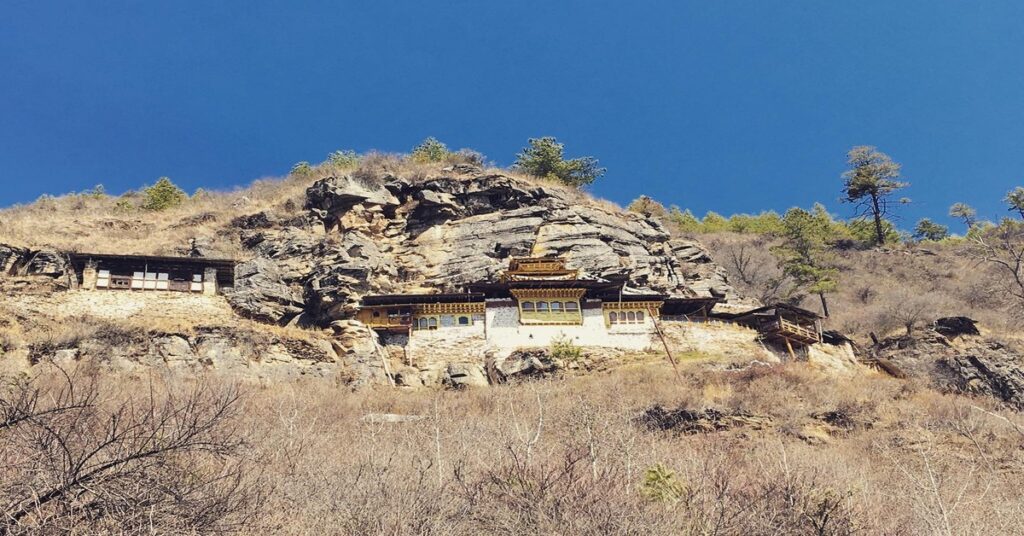
Gom Dra is one of Guru Rinpoche’s Four Cliffs, which he entrusted to Phajo Drugom Zhigpo in his prophetic vision. This sacred cliff is located in Paro Dzongkhag at an elevation of more than 2,200 meters above sea level.
Khandro Tashi Wangmo from Chang-Namka village extended the centuries-old Drupkhang into a small temple. Later, Prostration Man Chimi built a beautiful temple complex in the meditation cliff cave of Phajo.
According to the biography of Phajo Drugom Zhigpo, Gomdrak is one of the four cliffs out of the twelve meditation places, which consist of four Dzongs, four Cliffs, and four Caves entrusted to him by Guru Rimpoche. The other three cliffs are Thujidra in Thimphu, Tshechudra in Gasa, and Dechendrak in Wangdue Phodrang. Anyone who meditates here is said to become enlightened in their life.
How to Reach Gom Dra
The Gomdralo Monastery is situated just above the Uma Resort in Paro. It is located at a hiking distance of about 30-40 minutes from the road point, and it is worth a visit with a spectacular view of the Paro Valley. Take the road that leads to the Tibetan Temple while driving along the side road from Paro Ta Dzong towards the village of Chhubjakha. Further down the road, one has to turn towards another side road, which leads towards the remains of Chujag Dzong. From there on, it is a roughly twenty-minute walk to the temple.
Sacred Relics to See at Gom Drak
- The sleeping Buddha;
- A statue of Guru Rinpoche;
- Ten Caves;
- Six Chortens;
- Natural cliff of Dibu/Dorji;
- Ranjung Amithyus Buddha of long life;
- Guru Drakpo (Drakmar);
- Many other artifacts.
Also Read: Guru Rinpoche in Bhutan: His Visits to Bhutan and Sacred Sites
Historical Significance of Gom Dra
The legend is that Guru Padmasambhava blessed the site in the 8th century. In the 11th century, the great Yogi Milarepa also blessed Gom Dra.
Later, Guru Rinpoche entrusted Phajo Drugom Zhigpo with his twelve meditation places. According to the biography of Phajo Drugom Zhigpo, “The Current of Compassion”, Phajo Drugom Zhigpo traveled to Taktsang Senge Samdrup Dzong in the 13th century following a prophetic direction from Tsangpa Gyare. While Phajo was meditating in Taktsang Palphug, Guru Rinpoche appeared to him in an unmistakable, clear vision one early morning and said, ‘I am entrusting to you twelve of my meditation sites which consist of Four Dzongs or Fortresses, Four Draks or Cliffs, and Four Phugs or Caves. You have to plant the Victory Banner of Practice in all of these.’
According to Gomdra’s history, Gomdra is considered “the enlightenment place” since Phajo Drugom Zhigpo meditated there and experienced clear light day and night. He then named the village below Namka “everything is as clear as the sky,” or “the sky of clear light, ultimate reality.“
Also Read: Phajo Drugom Zhigpo in Bhutan: The Sacred Sites of Phajo Drugom Zhigpo and his Descendants
Therefore, Gom Dra is one of the Four Cliffs out of the twelve meditation places, which consist of four Dzongs, four Cliffs, and four Caves entrusted to Phajo by Guru Rinpoche. The other three cliffs are Thujidra in Thimphu, Dechen Draphu in Wangdue Phodrang, and Tshechudra in Gasa. It is believed that anyone who meditates here will become enlightened.
Many important religious figures also blessed Gom dra Nye. Phajo’s four sons, Khandro Machi-LabDron and Pha-Dampa Sangay in the 13th century, Khuenkhen Longchen Rabjam in the 14th century, while he was residing in Chujagkha Dzong (Chewaikha Dzong), Ngawang Chogyal and Drukpa Kuenley in the 15th century.
During Paro Rinpung Dzong construction, the great Zhabdrung Ngawang Namgyal also paid a visit and blessed the Ney.
Description of Gomdrak
A rock above the temple shows the figures of a Garuda, a Tiger, and a wish-fulfilling tree. The footprint, conch, dragon head, and self-arisen Chorten are also visible. The hood of a King Cobra is also visible above and close to the Sertog, or “Golden Cupola.”
The natural Bumpa Rangjung is located a little above, and above it are Namcha Reldri, also known as the “Wisdom Sword,” and the Rangjung Chorten. Kanjur and Tenjur volumes are slightly above the same. There is a Gyaltshen, or “Victory Banner,” over the entrance to the caves.
When you get closer, you will pass through a cavern that is thought to purge you of your impurities; after that, you will pass by the location where a rosary bead string was made; a footprint of the Lam; the area where the Lam’s sons and daughters used to play; and finally, once you are inside the cave, you will arrive at the exact location where the Lam attained enlightenment. A Tshe-Tor, a Mahaparinirvana Chorten or Stupa, and a Sleeping Buddha are above the cave’s base.
Also Read: The 4 Sacred Cliffs of Guru Rinpoche Entrusted to Phajo Drugom Zhigpo
The meditation cave of Phajo Drugom Zhigpo
Just above the walkway, one can reach Lam Phajo Drugom Zhigpo’s hallowed meditation cave before reaching the temple.
There are scratch marks on a flat rock in front of the Sleeping Buddha that are thought to have been produced by various animals and birds. It is reported to have been a statement of their grief upon realizing Lam Phajo Drugom Zhigpo was going to leave them for paradise.
Two elongated boulders, one shorter than the other and known as Amithyus or the Buddha of Long Life, are located approximately 10 meters east of the Sleeping Buddha (Dragmar). A stone platform around 100 meters below the cliff enhances the place’s spiritual potency. This platform is believed to be the throne from which the Phajo imparted teachings to the Khandromas.
Some scratches resemble a snake trail thought to have been left by the Phajo’s sons when they played with his Phurba, or “Ritual Dagger,” on the granite walls.
Gomdra Drupkhang
Khandro Tashi Wangmo from Chang-Namka village extended the centuries-old Drubkhang into a small temple on the flank of a cliff overlooking the Paro Chang Namka village in homage to the great Lama Phajo Drugom Rinpoche. Prostration Man Chimi turned this small Drubkhang into a beautiful temple complex. Currently, five nuns reside and meditate at the temple.
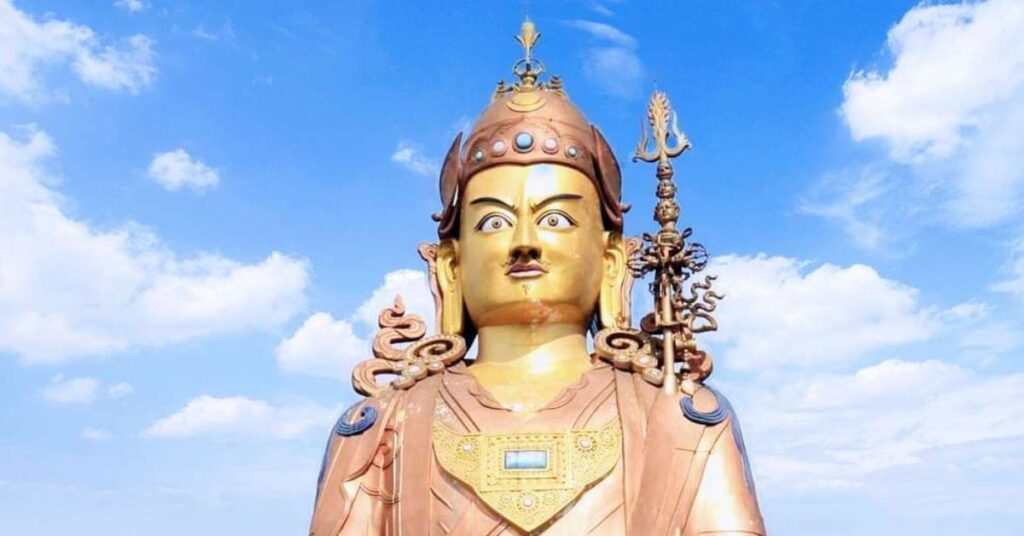
The main treasure of the Gom Dra temple is a two-and-a-half-foot-tall statue of Guru Rinpoche. Legend has it that the statue belonged to Paro Rinpung Dzong. The statue was taken to the holy Gomdrak to perform ceremonies. After that, they could not lift the statue from the place, and since then, the statue has become an important Nangten of Gom dra Nye.
Since the temple is used as their meditation chamber, other visitors and pilgrims cannot access it.
Best Time to Visit Gomdra Nye
There is no such thing as the best time to visit a holy site. A pilgrimage is possible even during the summer, but it is not recommended because the weather can be unpredictable and change without warning. The best seasons to visit Gom Dra Ney are Spring and Autumn. This is the season of good weather, warm temperatures, and the season of flowers. You can also visit during winter if snow doesn’t hinder your pilgrimage experience. I would also recommend you avoid the monsoon season. You can visit major pilgrimage sites in Paro with the Bhutan Pilgrimage Package.
Frequently Asked Questions
What is Gomdra Ney?
Gom Dra Ney is one of the Four Great Cliffs of Guru Rinpoche (Padmasambhava) in Bhutan, located in Paro Dzongkhag at an elevation above 2,200 meters. It is revered as an “enlightenment place” where intense meditation is believed to lead to profound spiritual realization. The site forms part of the twelve sacred meditation places—four dzongs (fortresses), four draks (cliffs), and four phugs (caves)—that Guru Rinpoche entrusted to the great Drukpa master Phajo Drugom Zhigpo.
Why is Gom Dra Ney significant for pilgrims?
Gom Dra Ney holds deep significance because Guru Padmasambhava blessed the site in the 8th century, and the yogi Milarepa further sanctified it in the 11th century. According to tradition, Phajo Drugom Zhigpo meditated here and experienced “clear light” day and night, which is why the nearby village is named Namka, meaning “sky of clear light.” Pilgrims visit to connect with this powerful energy, perform prayers, and seek blessings for spiritual progress and enlightenment.
Where is Gomdra Ney located?
Gomdra Ney is situated in Paro Dzongkhag, western Bhutan, on a sacred cliff face more than 2,200 meters above sea level. It lies within the broader Paro valley pilgrimage circuit, relatively accessible from Paro town. The exact trailhead and approach routes are usually guided by local monks or experienced trek leaders familiar with the sacred geography.
How do you reach Gomdra Ney?
Most visitors fly into Paro International Airport and then travel by road toward the trailhead near the Paro valley. From there, Gom Dra Ney is reached via a moderate uphill hike through forested paths and traditional villages. Because the route is not always signposted, hiring a local guide or joining an organized pilgrimage group is recommended for first-time visitors.
When is the best time to visit Gom Dra Ney?
The best seasons to visit Gom Dra Ney are spring (March to May) and autumn (September to November), when the weather is mild, skies are clear, and the landscape is vibrant with flowers or autumn colors. Winter visits are possible if snow does not block the trail, while the monsoon season (June to August) is generally discouraged due to slippery paths and leeches.