
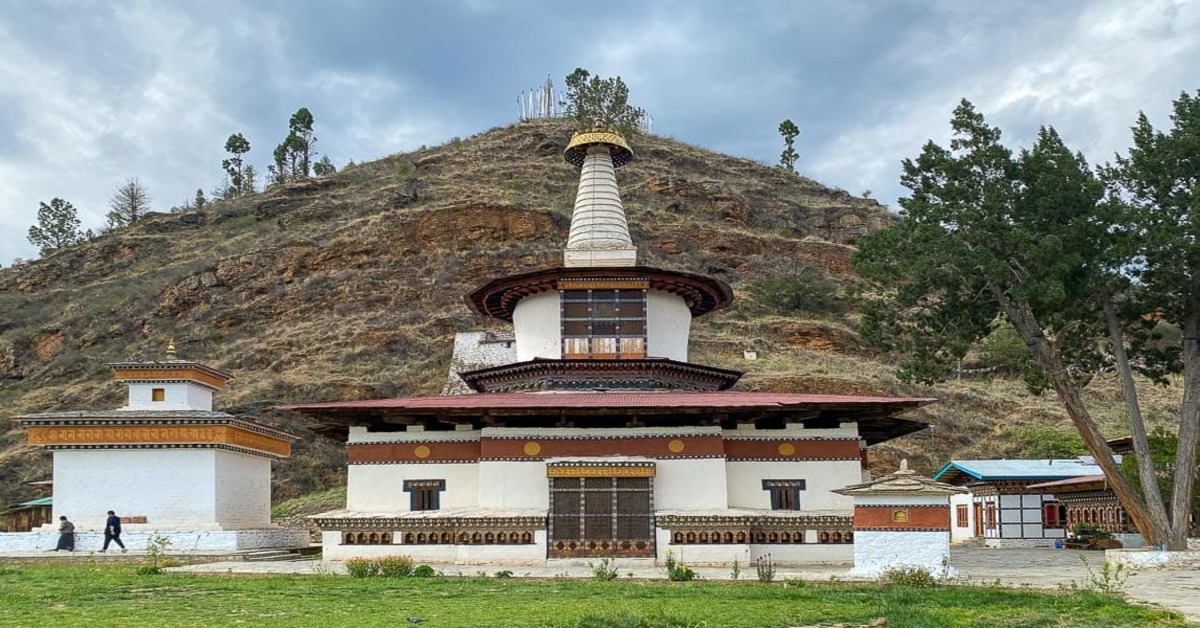
Jangtsa Dumtseg Lhakhang, also known as Dungtse Lhakhang or Dumgtseg Lhakhang, is a remarkable three-storey Buddhist temple built in the shape of a chorten (stupa) in Paro, Bhutan. Local tradition attributes its construction to the Tibetan master Thangtong Gyalpo, usually dated to 1421, although some sources give 1433. Set on a hill across the Pa Chhu River from Paro town, the temple is renowned for its unusual architecture, richly painted interior and stories of the spiritual power associated with its site.
Planning a Visit to Jangtsa Dumtseg Lhakhang?
Include this rare chorten-shaped temple in your Paro itinerary. If you would like help arranging a visit alongside Rinpung Dzong, the National Museum or other sacred places, send us a message.
Its distinctive chorten form makes Dungtse one of the most unusual historic temples in Bhutan. The building is sometimes compared with the National Memorial Chorten in Thimphu, although the two monuments differ in age, purpose and design. The nearby Pana Lhakhang is another place of local religious interest.
Table of Contents
How to Reach Jangtsa Dumtseg Lhakhang
Jangtsa Dumtseg Lhakhang stands on a small hill across the Pa Chhu River from Paro town, between the Paro and Dopshari valleys. It is about a kilometre from the town centre and can be reached on foot or by a short drive. The temple lies along the road towards the National Museum of Bhutan and can be included in a cultural sightseeing route with Paro Rinpung Dzong and the Taktsang Monastery trail. The current entry fee is Nu. 500 per visitor; children are charged half the adult rate. Dungtse began collecting entry fees as a national monument in January 2026. As opening access may depend on the caretaker, confirm that the temple is open before making a special trip.
History of Jangtsa Dumtseg Lhakhang
Local tradition attributes the construction of Jangtsa Dumtseg Lhakhang to Thangtong Gyalpo (also known as Thangtong Gyelpo or Chagzampa), the Tibetan Buddhist master, engineer and celebrated builder of iron suspension bridges. The temple is commonly dated to 1421, although some accounts give 1433. The precise year is therefore not consistently reported. Thangtong Gyalpo is also associated with other historic sites in Bhutan, including Tachog Lhakhang, known for its traditional iron-chain bridge.
Legend has it that Thangtong Gyalpo was prophesied to build a temple on the site one day, given its geomantically significant location at the nexus of two valleys. Thus, Thangtong Gyalpo built Jangtsa Dumtseg Lhakhang atop a hill to counteract a Sadag (earth-owning spirit) and a Lunyen (Serpentine Force).
It is said that during its consecration, the Ser-tog (central tower) began to shake and attempted to fly to Tibet. Thangtong Gyelpo appeared as five vultures circling the temple and tied the Ser-tog with iron chains. Today, the central tower is chained to the roof from four directions.
The name is commonly written as Dumtseg, Dumgtseg or Dungtse in English-language sources. These variations reflect different transliterations of the temple’s name; visitors may encounter more than one spelling on maps and in travel information.
Read More: Drukpa Kunley, the Divine Madman, subduing a demon tormenting the Punakha valley by containing it beneath a chorten at the Chimi Lhakhang, and the founding of the Dechenphug Lhakhang in Thimphu, where the grandson of Phajo Drugom Zhigpo subdued a malicious entity and transformed it into a faithful protector of the valley.
The 1841 Restoration
In 1841, the 25th Je Khenpo, Sherab Gyeltsen, undertook a major restoration and expanded the original chorten into a twelve-sided structure with a circumambulation passage. Accounts of the work describe villagers from twelve communities contributing wooden pillars. Their village names were carved into the pillars, which remain a distinctive feature of the ground floor. The restoration is an important part of the temple’s history and of the community’s continuing connection with the site.
Architectural Design and Symbolism
Jangtsa Dumtseg Lhakhang is unusual because its main structure takes the form of a chorten, or stupa, rather than the more familiar rectangular Bhutanese temple. The building has three storeys arranged around a central pillar, with a central tower (utse) rising through the structure. Its compact form and carefully arranged interior give the temple the character of a sacred architectural mandala. The three levels are commonly associated with the Buddhist realms of hell, earth and heaven, as well as stages of tantric spiritual understanding.
The interior is renowned for its extensive wall paintings and sacred iconography. The three levels are arranged around a central axis and are often interpreted as a three-dimensional mandala. Access between floors is by steep internal stairways or ladders, and the interior can be extremely dark. A small torch or phone light may help you see the paintings, but use it carefully and follow any instructions from the temple caretaker. Allow enough time to move slowly and respectfully through the building.
Ground Floor
The ground floor contains an altar and images of the Five Buddhas of Meditation, forms of Avalokiteshvara, Guru Rinpoche, Thangtong Gyalpo and other important Buddhist figures and protective deities. The wooden pillars are especially notable: local tradition and historical accounts associate them with contributions from twelve villages during the 1841 restoration, and the names of the villages are carved into the pillars.
First Floor
The middle level includes imagery associated with Mahakala and the Bardo, the intermediate state between death and rebirth in Tibetan Buddhist understanding. Peaceful and wrathful figures appear in the painted programme, illustrating themes of impermanence, transformation and the stages described in Buddhist teachings.
Top Floor
The upper level is associated with higher tantric teachings. Its walls contain depictions of important tantric deities, including Guhyasamaja, Vajrabhairava, Chakrasamvara, Hevajra, Kalachakra, Vajravarahi, Hayagriva and Mahamaya. The paintings also include the celebrated Indian mahasiddhas and Tibetan Buddhist masters such as Marpa, Milarepa and Gampopa. Together, these images make the upper floor an important part of the temple’s mandala-like programme.
The 2017–2019 Conservation Project
The most recent major conservation programme was undertaken under the patronage of Her Majesty the Royal Grandmother Ashi Kesang Choeden Wangchuck. The Royal Dumgtseg Lhakhang Restoration Project began in 2017 and the renovated temple was consecrated in November 2019. Japanese and Bhutanese conservation specialists worked to retain the original architecture while repairing the structure, addressing water seepage around the base, restoring damaged woodwork and carefully conserving the murals. Only damaged sections of the paintings were repainted so that much of the original work remained intact. After the project, the temple was handed back to the fifteen households of Jangsa village who are its custodians. This conservation effort followed the earlier major restoration carried out in 1841 by the 25th Je Khenpo, Sherab Gyeltsen.
Visitor Tips and Best Time to Visit
When to visit: Paro is generally pleasant in spring and autumn, but Jangtsa Dumtseg Lhakhang can be visited as part of a cultural itinerary in other seasons too. Before setting out, confirm that the temple is open to visitors, as access may depend on the caretaker and opening hours are not consistently published. The interior is very dark, so carry a small torch or use your phone light carefully. The stairways and ladders between the three floors are steep and narrow; take your time and avoid climbing if you are uncomfortable with them. Dress modestly, remove your shoes where required and follow the caretaker’s instructions. Photography rules may differ between the courtyard and the sacred interior, so ask before taking pictures.
Frequently Asked Questions
What is Jangtsa Dumtseg Lhakhang?
Jangtsa Dumtseg Lhakhang, also called Dungtse or Dumtseg Lhakhang, is a rare three-storey Buddhist temple built in the form of a chorten. It stands on a hill across the Pa Chhu from Paro town.
Where is Jangtsa Dumtseg Lhakhang located?
The temple is in Paro, Bhutan, on the opposite side of the Pa Chhu River from Paro town, near the road towards the National Museum and the route to Dopshari.
Who built Jangtsa Dumtseg Lhakhang and when?
Local tradition attributes the temple to the Tibetan Buddhist master Thangtong Gyalpo. The commonly cited construction date is 1421, although some published accounts give 1433, so the exact year is not universally agreed.
Why was Dungtse Lhakhang built in the shape of a chorten?
According to local oral tradition, Thangtong Gyalpo built the chorten-shaped temple to subdue a harmful serpentine spirit believed to inhabit the hill and threaten the people of the valley.
What is special about the three floors of the temple?
The three levels are understood through Buddhist cosmology and tantric symbolism. The temple is also conceived as a three-dimensional mandala, with sacred images and paintings arranged across its floors.
What can visitors see inside Dungtse Lhakhang?
The interior contains an extensive collection of Buddhist paintings and sacred images, including representations of the Five Buddhas of Meditation, bodhisattvas, protective deities, tantric figures and Buddhist masters.
What should visitors know before visiting?
The interior is very dark and the stairways between floors are steep. Carry a small torch, dress respectfully, remove your shoes where required and follow the caretaker’s instructions. Confirm that the temple is open before travelling, as access may depend on caretaker arrangements.
What other places can be visited near the temple?
Nearby places of interest include Paro Rinpung Dzong, the National Museum of Bhutan, Kyichu Lhakhang and the route to Taktsang Monastery. These can be combined into a cultural sightseeing itinerary in Paro.
What is the entry fee for Jangtsa Dumtseg Lhakhang?
The entry fee is Nu. 500 per visitor. Children are charged half the adult rate. The fee applies after the temple began collecting admission as a national monument in January 2026.
Discover More of Paro’s Sacred Heritage
Make time for the temples, dzongs and sacred landscapes around Paro. Tell us your travel dates and interests, and we can help you plan a thoughtful cultural journey through Bhutan.
