
Thimphu Tshechu is an annual religious festival held from the 10th to the 12th day of the 8th month of the Bhutanese lunar calendar in Tendrel Thang, outside Tashichho Dzong. Gyalse Tenzin Rabgye initiated the festival in 1670 to honor Guru Rinpoche.
Visitors planning a wider spiritual journey can also use our Bhutan Pilgrimage Guide to explore sacred sites and practical pilgrimage advice across the country.
Planning to Attend Thimphu Tshechu 2027?
The festival is tentatively scheduled for 10–12 October 2027 at Tendrel Thang. If you would like help planning your visit or combining the festival with other sacred places in Thimphu, send us a message.
The Thimphu Tshechu 2027 is tentatively scheduled for 10–12 October 2027 at Tendrel Thang, beside Tashichho Dzong in Thimphu. The dates follow the Bhutanese lunar calendar and should be reconfirmed before making non-refundable travel arrangements.
Thimphu Tshechu is one of Bhutan’s largest and most widely attended religious festivals. It follows the Thimphu Lhamoi Dromchoe (Drubchen); the 2027 Drubchen is tentatively listed for 6 October, ahead of the Tshechu on 10–12 October. The festival draws thousands of local devotees and visitors.
For Bhutanese people, attending the Thimphu Tshechu is more than a religious obligation; it is also a social and cultural gathering where people from all walks of life come together in their finest traditional attire. For tourists, it offers a rare and authentic glimpse into Bhutanese history.
Table of Contents
How to Get to the Thimphu Festival Ground
Thimphu Tshechu was traditionally performed in the courtyard of Tashichho Dzong. As attendance increased, the courtyard became too congested for the ceremonies and the growing audience. A separate festival ground, Tendrel Thang (often translated as “Auspicious Ground”), was developed outside the dzong. The festival is now held at Tendrel Thang, close to the dzong and within easy reach of central Thimphu. Depending on where you are staying, you can reach the ground by walking or a short drive. Follow local traffic directions and any temporary road closures during the festival.
Origin of Thimphu Tshechu
The 4th Desi (secular ruler) of Bhutan, Gyalsey Tenzin Rabgye, first established the Thimphu Tshechu in 1670 to honor Guru Rinpoche’s legacy.
Initially, the Tshechu consisted of only a few dances, such as the Zhana chham and the Zhana Nga chham (Dances of the 21 Black Hats), Durdag (Dance of the Lords of the Cremation Ground), and the Tungam chham (Dance of the Terrifying Deities), performed strictly by the monks.
However, Third King Jigme Dorji Wangchuck introduced numerous Boed chhams (mask dances performed by lay monks) in the 1950s.
Historical Significance of Thimphu Tshechu
The Thimphu Tshechu festival commemorates Guru Rinpoche (Padmasambhava), often revered as the Second Buddha, who brought Buddhism to Bhutan. The Tshechu gives people an opportunity to receive blessings, gain spiritual merit, and cleanse themselves of sins.
The 3-day Thimphu Tshechu Sequences
The Thimphu Tshechu is celebrated over three days. Each day offers a unique experience.
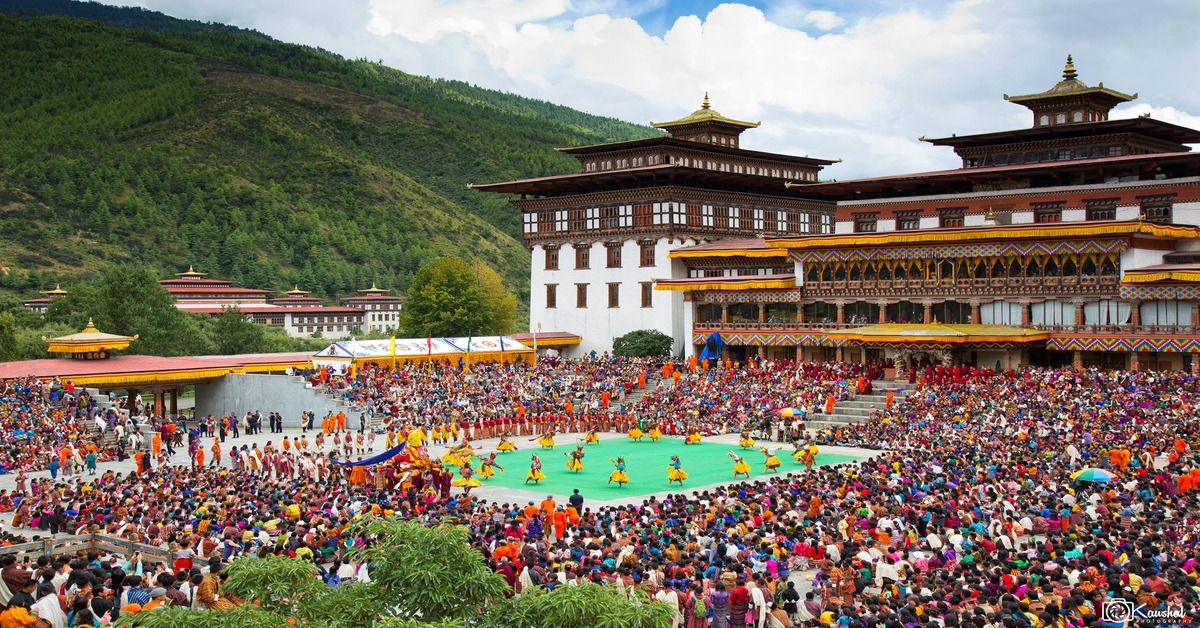
DAY 1
The Dance of the Four Stags (Shazam Cham or Shacham)
This masked dance commemorates Guru Rinpoche’s subduing of the God of the Wind, who rides a stag and causes widespread suffering in this world. The dancers wear yellow, knee-length skirts and horned stag masks. The first incarnation of Lama Namkhai Nyingpo revealed this dance.
Dance of the Three Kinds of Ging (Peling Gingsum)
Pema Lingpa initiated this sacred masked dance. The dancers show how to subdue demons that obstruct religious practice. In the stick dance, the Ging wear animal masks; in the sword-and-drum dance, they wear terrifying masks.
Dance of the Heroes (Pacham)
Pema Lingpa introduced this sacred dance after witnessing heroes (pawo) and heroines (pamo) dance within a rainbow mandala in Zangdo Pelri. The dancers wear yellow skirts and golden crowns, and wear no masks. They carry a small bell (drilbu) and a small drum (damaru).
Dance of the Stag and the Hounds (Shawo Shachi)
This dance represents Milarepa’s conversion of the hunter Gonpo Dorji to Buddhism. Also known as Acho Phen-To (The Hunter and the Servant), it is performed as a two-part play. The first part takes place on the first day, and the second on the second day. The first part shows the hunter and his servant performing good-luck rituals before hunting, with a priest performing them in ways that contradict Buddhist tradition.
Dance with Guitar (Dranyen Cham)
This cheerful dance celebrates the spread of the Drukpa lineage in Bhutan under Zhabdrung Ngawang Namgyal. The dancers carry swords and wear circular headdresses, heavy woolen clothes, felt boots, a long black skirt, a yellow shirt, and a brown coat. One dancer carries a traditional guitar called a dranyen.
DAY 2
Black Hat Dance (Zhana Cham)
This sacred dance comes from tantric traditions, where black-hat dancers assume the appearance of powerful yogis with the power to kill and recreate life. The dance commemorates the 842 A.D. assassination of the anti-Buddhist Tibetan King, Langdarma, by a Buddhist monk named Lhalung Pelki Dorji.
Dance of the 21 Black Hats with Drums (Zhana Nga Cham)
Zhabdrung Ngawang Namgyal performed this ritual dance in honor of religion’s victory over its enemies in the 17th century. Today, the black-hat dancers beat the great drums of Buddhism, whose wrathful ritual movements are said to transfix and terrify onlookers.
Dance of the Noblemen and the Ladies (Pholeg Moleg)
This dance depicts key events in King Norzang’s life. The two princes go to war and leave the princesses in the care of an old couple. As soon as they depart, the clowns frolic with the princesses and corrupt the old woman, who is also misbehaving. When the princes return, they are scandalized by the behavior and cut off the princesses’ and the old lady’s noses as punishment. Then a doctor is called to put the nose back. Finally, the princes marry the princesses, and everybody is reconciled.
Dance of the Drums from Drametse (Drametse Nga Cham)
This sacred mask dance originated in the 16th century at the Drametse Monastery in eastern Bhutan. Legend says that Lama Kuenga Gyeltshen, the great-grandson of Terton Pema Lingpa, had a vision of Guru Rinpoche’s deities dancing, each carrying a large drum in their left hand and a drumstick in their right. UNESCO first proclaimed the dance a “Masterpiece of the Oral and Intangible Heritage of Humanity” in 2005; it was incorporated into the Representative List of the Intangible Cultural Heritage of Humanity in 2008.
Dance of the Stag and the Hounds (Shawo Shachi)
This is a spiritual resolution; the conclusion of the dance staged on the first day. Milarepa appears wearing a long white dress and a white hat. He holds his right hand near his ear and sings Gurma, a spiritual song of realization. Milarepa converts them with his song as the dogs, the stag, and the hunter arrive to listen.
DAY 3
The unfurling of the Thongdrol
The final day begins before sunrise with the unfurling of Neten Chudrug (the Sixteen Arhats surrounding Buddha Shakyamuni), the Thongdrol. They roll it back up before direct sunlight touches the fabric. Thongdrol translates to “liberation upon sight” and is believed to liberate anyone who witnesses it.
Dance of the Lords of the Cremation Grounds (Durdag Cham)
Zhabdrung Ngawang Namgyal composed this dance. The dancers represent the protectors of the religion who live in the eight cremation grounds on the external edges of the symbolic Mount Sumeru. They wear short white skirts, white boots, and white skull masks.
Dance of the Terrifying Deities (Tungam Cham)
This sacred dance symbolizes the destruction of ego and ignorance through compassionate wrath. Dancers wear fierce, demonic masks, skull crowns, and bright silk brocades to portray Dorje Drakpo, a violent form of Guru Rinpoche. The performance symbolizes a sacrifice in which evil spirits are trapped in a circle and killed with a ritual dagger (Phurba) to save the world.
Dance of the Rakshas and the Judgement of the Dead (Raksha Mangcham)
The dance is based on the Bardo Thoedrol (Book of the Dead), a text that Guru Rinpoche hid and that Karma Lingpa rediscovered in the 14th century. It dramatizes a soul’s karmic trial in the intermediate state. The performance serves as a profound moral and visual lesson on karma, showing how a deceased human soul is judged for the virtues and sins it accumulated in life.
Planning Your Visit to Thimphu Tshechu 2027
Dates and venue: The tentative dates are 10–12 October 2027 at Tendrel Thang, Thimphu. The annual programme follows the Bhutanese lunar calendar, so dates published in advance should be treated as provisional until reconfirmed.
Attend the preceding Drubchen: The Thimphu Drubchen is listed for 6 October 2027. If you have several days in Thimphu, consider including it in your itinerary as a separate religious event before the three-day Tshechu.
Arrive early: The festival ground can become very crowded, particularly on the final morning when the thongdrel is traditionally displayed before sunrise. Plan your transport in advance, allow extra time for traffic controls and follow instructions from event staff.
Respect the religious setting: Dress modestly, keep the performance space clear, silence your phone and follow the directions of monks, organisers and guides. Do not cross into the dance area or touch ritual objects. Ask before taking close-up photographs.
Check the programme: The dances described in this guide introduce important performances associated with the festival; the exact order and daily programme can vary. Confirm the current year’s schedule locally rather than treating this overview as a guaranteed timetable.
Plan your stay: Thimphu is Bhutan’s capital, but accommodation and transport can be busy during major festivals. Book early if you are travelling from outside the city, and check the latest visa or entry-permit requirements for your nationality before departure.
Related event listings: See the Thimphu Tshechu 2027 event and the preceding Thimphu Drubchen 2027 listing for planning details.
Conclusion
Thimphu Tshechu is one of Bhutan’s major annual religious gatherings. Held at Tendrel Thang beside Tashichho Dzong, it brings together devotees from across the country for sacred mask dances, prayers and the opportunity to receive blessings. The festival also brings families and communities together, with many people attending in their finest gho and kira. For visitors, it is an opportunity to witness Bhutanese Buddhist traditions as a living religious practice rather than simply a cultural performance. If you are planning a visit, check the tentative dates and practical guidance below, and allow time for the preceding Thimphu Drubchen.
Frequently Asked Questions
What is Thimphu Tshechu?
Thimphu Tshechu is a major annual Buddhist festival in Bhutan’s capital. It honours Guru Rinpoche and features sacred mask dances, music and religious ceremonies at Tendrel Thang, beside Tashichho Dzong.
When is Thimphu Tshechu 2027?
The 2027 Thimphu Tshechu is tentatively scheduled for 10–12 October 2027. The dates appear in the tentative festival calendar published by the Association of Bhutanese Tour Operators and should be reconfirmed before travel.
Where is Thimphu Tshechu held?
The festival takes place at Tendrel Thang, the festival ground outside and beside Tashichho Dzong in Thimphu. It is not held inside the dzong’s main courtyard.
What is the Thimphu Drubchen, and when is it held in 2027?
The Thimphu Drubchen is a religious ceremony held before the Tshechu in honour of Pelden Lhamo, Bhutan’s protective deity. The 2027 event listing gives 6 October 2027 for the Drubchen. See the Thimphu Lhamoi Dromchoe guide on Bhutan Pilgrimage for more information.
Do foreign visitors need a visa or permit to attend Thimphu Tshechu?
Entry requirements depend on nationality. Most international visitors need a Bhutanese visa and must meet the applicable Sustainable Development Fee requirements, while visitors from India generally require an entry permit. Check the latest requirements with Bhutan’s Department of Immigration before travelling; do not rely on older festival advice for current entry rules.
What should visitors wear to Thimphu Tshechu?
Wear neat, modest clothing suitable for a religious gathering. Cover your shoulders and knees, and dress respectfully if entering a temple or other sacred area. Comfortable footwear is useful because you may stand or sit for extended periods.
Can tourists take photographs during Thimphu Tshechu?
Photography rules can vary by location and ceremony. Follow signs and instructions from festival staff, monks and guides, and ask before photographing restricted rituals or people at close range. Avoid using flash where it may disturb a ceremony.
Which day is best to attend Thimphu Tshechu?
Each of the three days has its own programme. The final day is especially significant because the large sacred thongdrel is traditionally unfurled before sunrise. Arrive very early if you wish to witness this ceremony, and check the official programme for the year you plan to attend.
Why do Bhutanese people attend Thimphu Tshechu?
Devotees attend to participate in religious ceremonies, receive blessings and accumulate spiritual merit. The festival is also an important occasion for families and communities to gather and preserve Bhutan’s living cultural and religious traditions.
Explore more celebrations, dates and regional events in our Festivals of Bhutan guide.
Make Thimphu Tshechu Part of Your Bhutan Journey
Experience the festival as part of a thoughtful visit to Thimphu. Tell us your travel dates, group size and interests, and we can help you plan around the ceremonies and explore nearby cultural and spiritual places.
