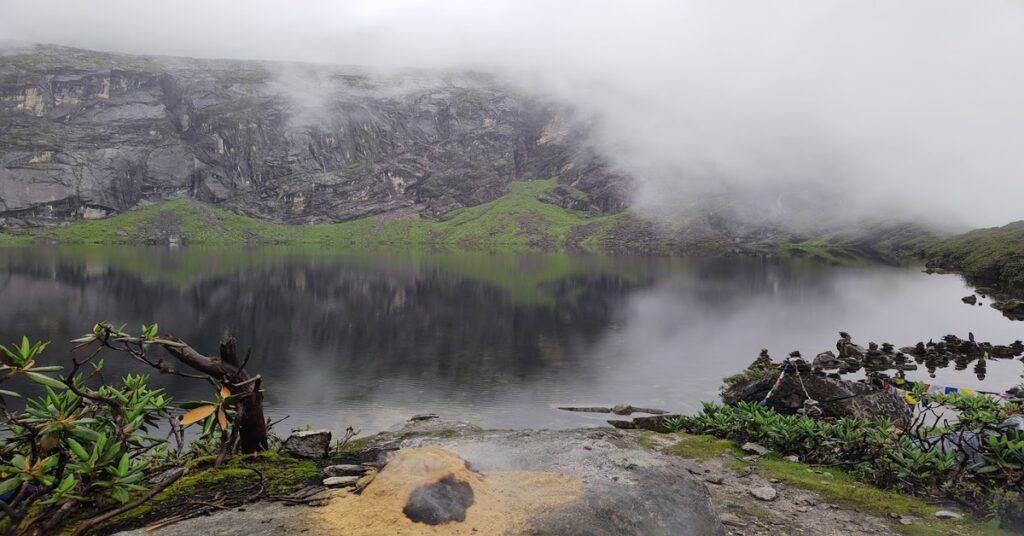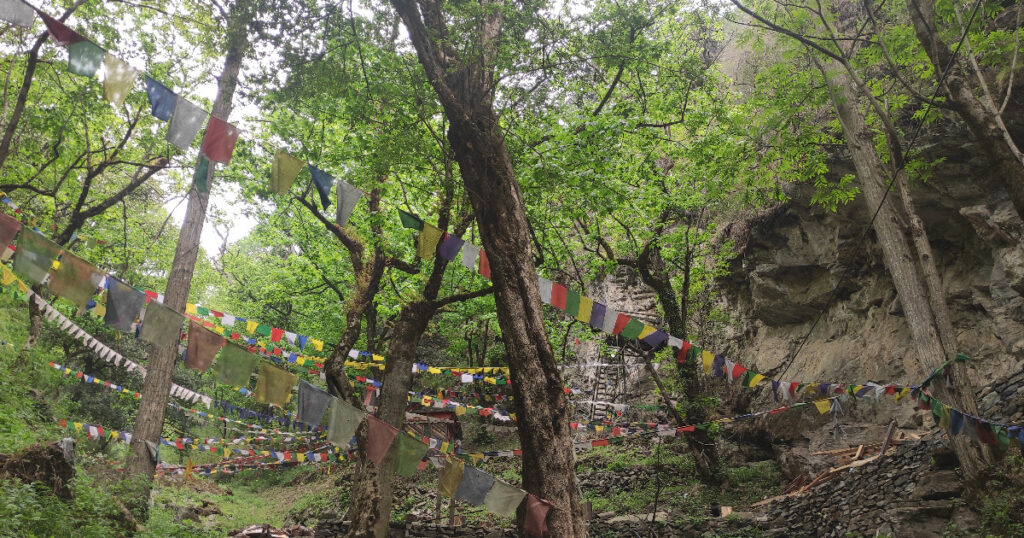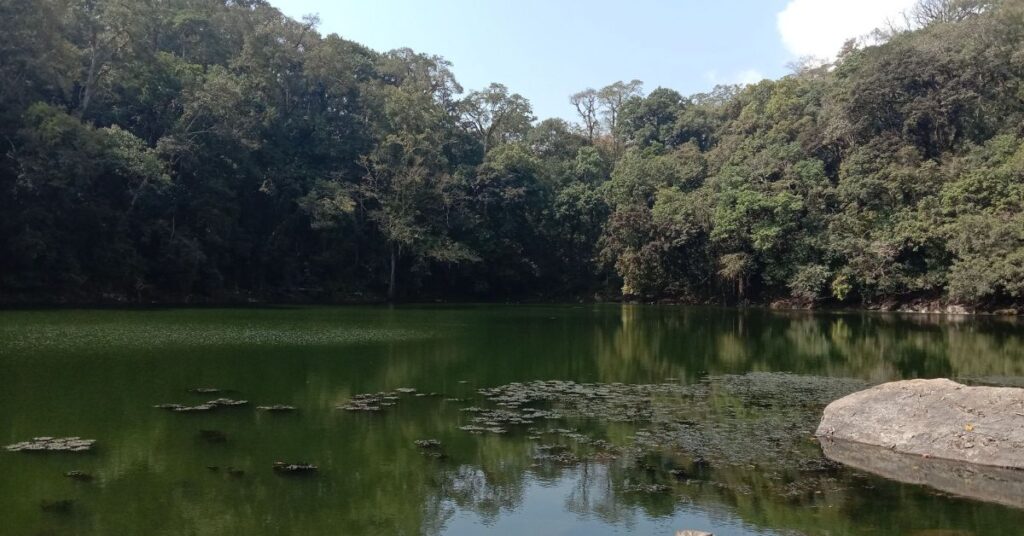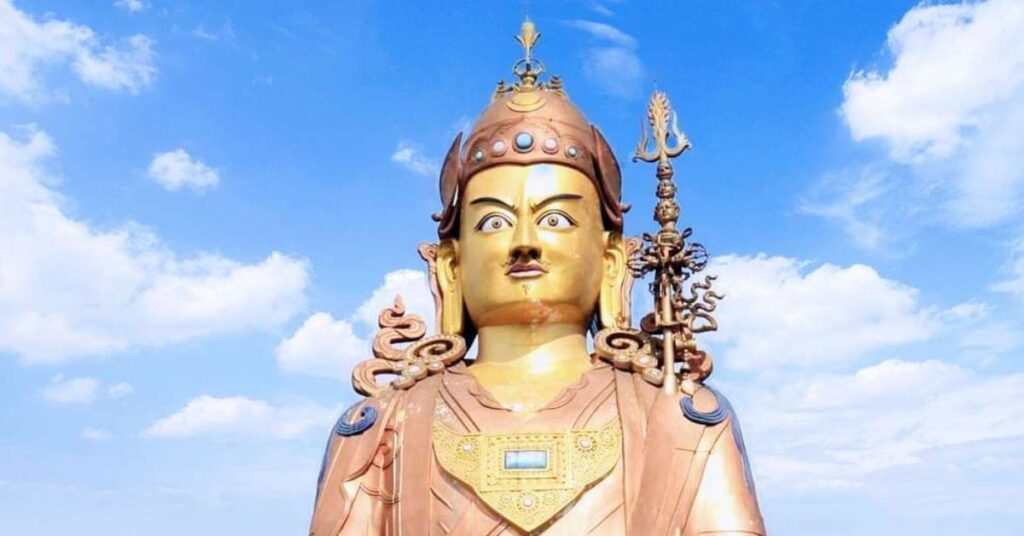
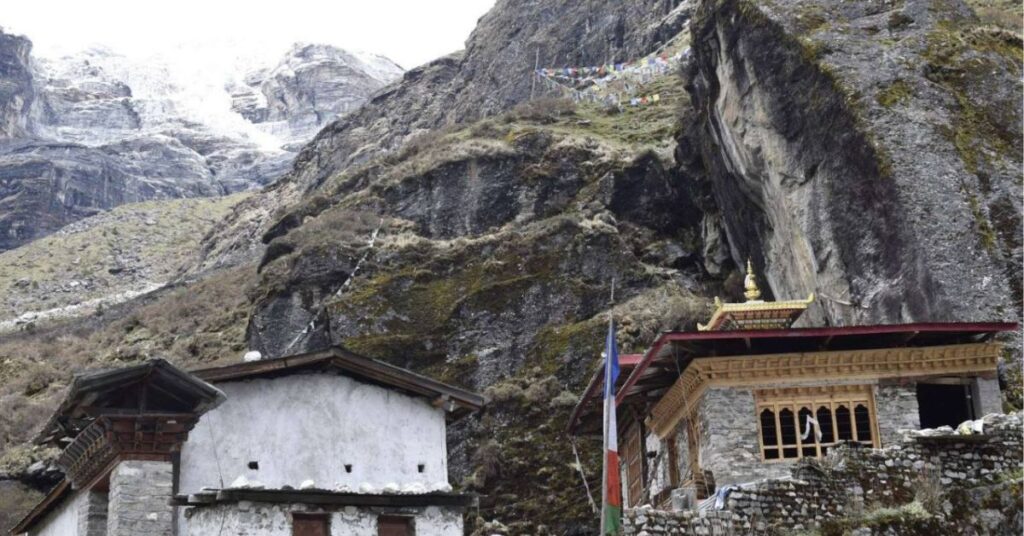
Jomolhari is a sacred mountain with a meditation cave of Guru Rinpoche and Khandro Yeshe Tsogyal located at an altitude of more than 4,600 meters above sea level. The Jomolhari Temple is built near the cave within the Jurisdiction of Soe Gewog of Lingzhi Drungkhag under Thimphu Dzongkhag. However, not many people visit this holy site due to the altitude and distance.
How to Reach Guru Rinpoche’s Meditation Cave at Jomolhari
To get to the meditation cave of Guru Rinpoche, visitors must trek through the Chomolhari mountain range. It is a full two-day Journey on foot from Misi Bridge in Paro to the temple, and it usually takes three days to reach the temple from the same point, traveling with a porter and pony. The most popular trek is the Jomolhari Base Camp Trek, a 7-day trek from Paro to Chomolhari Base Camp at Jangothang, returning via the same route or by an alternative trail to Paro.
Jomolhari Base Camp Trek
The Jomolhari Base Camp Trek, also known as the Chomolhari Trek, is a trek from Paro to Jomolhari and covers a distance of approximately 70 kilometers. It takes 6-7 days to complete the trek. The trek starts from the historic Drugyal Dzong and follows the Pachhu (Paro River) valley to Jomolhari Base Camp, also known as Jangothang Base Camp. The base camp is at an altitude of 4,115 meters and offers trekkers a stunning view of Mount Chomolhari. The trek involves crossing two mountain passes, Nyile La and Yeli La, and passing through remote locations and yak herder settlements. The trek is graded as medium to hard in difficulty and requires a fairly high level of physical fitness.
Sacred Relics to See at Jomolhari Ney
- Meditation cave of Guru Rinpoche;
- A holy water of Guru Rinpoche;
- A meditation cave of Milarepa;
- A meditation cave of Gyalwa Lorepa;
- A pair of horns (dung);
- A mountain of 108 naturally formed golden stupas;
- Image of Buddha formed of natural rock;
- Jomolhari temple;
- A statue of Gyalwa Lorepa;
- A holy script gifted to Gyalwa Lorepa by Aum Jomo;
- A unique Kongbu;
- A statue of Goddess Tsheringma.
Also Read: Guru Rinpoche in Bhutan: His Visits to Bhutan and Sacred Sites
Historical Significance of Guru Rinpoche’s Meditation Cave at Jomolhari
During Guru Rinpoche’s second visit to Bhutan with Khandro Yeshe Tsogyal from Tibet, he blessed many places across the country and finally came to Jomolhari from Haa Rangtse Ney. It is believed that Guru Rinpoche meditated before flying back to Tibet. Therefore, the Meditation Cave of Guru Rinpoche at Chomolhari is a sacred site in Bhutan.
Jomolhari Ney was also visited, meditated, and blessed by many prominent religious masters, including Milarepa, Gyalwa Lorepa, Phajo Drugom Zhigpo, and Drukpa Kunley.
Description of Guru Rinpoche’s Meditation Cave
When you pilgrimage to Jomolhari, the first entrance to the sacred place you reach is Tshogdugang, where there is a pair of horns (dung). These horns are said to be used by Aum Jomo to receive Guru Rinpoche in ceremonial processions, which were later hidden as treasure.
After walking about one hour from there, you reach the second entrance to the sacred mountain of 108 naturally formed golden stupas. After walking a little further, in the middle of the cliff, one can see the image of Buddha formed of natural rock, and to the side, the forms of the hunter Gonpo Dorje’s bow, arrow, and hounds. On the other side, there is a cave where Jetsun Milarepa meditated.
As one goes up further, three rocks appear naturally like forms of the Lord of the three families; on the left rock, one can see a meditation cave and a blessed water source of Guru Rinpoche in the form of the wish-granting tree. People say something like a treasured door is a golden door in the middle of the rock. On the right rock are a single and a pair of clockwise white conches, and traces of the treasures discovered earlier.
Since Guru Rinpoche’s treasures are inside these three rocks, one can see the natural inscription of the Dakini Code Script (khandro dayig) from the outside.
There is also a Drubkhang of Khandro Lhachoe Drolma. She was one of the thirteenth favorite consorts of Lama Drukpa Kinley. Lam Drukpa Kinley instructed her to meditate at Jumolhari. It is said that she attained enlightenment after three years of meditation.
Jomolhari Temple
Gyalwa Lorepa himself built the Jomolhari Temple in the 12th century. However, except for the important relics, the temple was believed to have been washed away by a flash flood. Later, the temple was restored adjacent to the cave of Gyalwa Lorepa and can still be seen. The temple has a statue of Gyalwa Lorepa, a holy scripture gifted to Gyalwa Lorepa by Aum Jomo, a unique Kongbu, and a set of bowls as the main ancient relics. A statue of Goddess Tsheringma was also installed later. The temple, which stands in solitude in the wilderness, is cared for by a local caretaker and a Lama appointed by the Zhung Dratshang.
Accommodation at Guru Rinpoche’s Meditation Cave
There is no accommodation at Jomolhari. Religious practitioners and pilgrims visiting Mount Chomolhari stay at the temple. You can also stay at the Chomolhari Base Camp.
Best Time to Visit Jomolhari
The best time to visit Jomolhari Temple and the surrounding area is Spring (March to May) and Autumn (September to November). During these months, the weather is usually dry, and the clear skies make it easier to trek and offer better mountain views. During these seasons, you can also enjoy the beautiful landscapes, fauna, and flora. However, it is important to note that the weather in Bhutan can be unpredictable, and trekkers should be prepared for sudden changes in weather conditions. You can visit major pilgrimage sites in Thimphu with the Bhutan Pilgrimage Package.
Frequently Asked Questions
What is Jomolhari?
Jomolhari is one of Bhutan’s most sacred and iconic mountains, standing at 7,326 meters (24,035 ft) on the border between Bhutan and Tibet. Revered as the abode of the goddess Tseringma, one of the five long-life sisters in Tibetan Buddhism, it is a major pilgrimage and trekking destination. The mountain’s dramatic pyramid shape and spiritual significance make it a centerpiece of Bhutanese cultural and adventure tourism.
Where is Jomolhari located in Bhutan?
Chomolhari is located in the Paro district of Bhutan, straddling the border with China’s Tibet Autonomous Region. There is a sacred site of Guru Rinpoche called Jomolhari Nye.
What is the cultural significance of Jomolhari in Bhutan?
Jomolhari is spiritually significant as the dwelling place of Tseringma, the chief of the five long-life sisters who protect the Dharma and grant longevity to devotees. The mountain and its surrounding ney are associated with Guru Rinpoche, who meditated in caves here and left behind sacred imprints. Pilgrims believe that visiting Chomolhari Ney and praying at Jomolhari Lhakhang brings blessings, purification, and protection from harm. The site is especially powerful during full moon days and religious festivals when rituals are performed by lamas.
What is Jomolhari Ney?
Jomolhari Ney refers to the sacred pilgrimage site at the base of Mount Chomolhari, particularly around the Jomolhari Lhakhang and surrounding meditation caves. “Ney” means sacred place in Dzongkha, and this area is believed to be blessed by Guru Rinpoche and other great masters. Pilgrims visit to perform circumambulation (kora), offer prayers, and meditate in caves where saints once practiced. The site is accessible via the Jomolhari Trek and is especially popular during religious festivals and auspicious dates.
What is Jomolhari Lhakhang?
Jomolhari Lhakhang is a small but highly revered temple located near the Jomolhari base camp, traditionally used by trekkers and pilgrims as a spiritual stopover. Built in honor of the guardian deity of Mount Chomolhari, the lhakhang houses sacred relics, prayer wheels, and murals depicting Buddhist deities. It serves both as a place of worship and a cultural landmark along the trekking route, offering visitors a chance to connect with Bhutan’s spiritual heritage amidst the high Himalayas.
How do I visit Jomolhari Ney and Lhakhang?
Visiting Jomolhari Ney and Lhakhang requires joining the official Jomolhari Trek, which starts from Drugyel Dzong in Paro and takes 5–7 days round-trip. The trek passes through rhododendron forests, alpine meadows, and high-altitude camps before reaching the sacred sites near the mountain’s base. All travelers must book through a licensed Bhutanese tour operator, obtain the necessary trekking permits, and be accompanied by a guide. The best time to visit is during spring (April–June) and autumn (September–November) for stable weather and clear views.
Is Jomolhari Trek suitable for beginners?
The Jomolhari Trek is considered moderately challenging due to high altitudes (up to 4,900 m at Jomolhari La Pass) and multi-day hiking. While not technically difficult, it requires good physical fitness, prior hiking experience, and acclimatization. Beginners with reasonable stamina can complete it with proper preparation, a slow pace, and guidance from experienced guides. It’s recommended to spend a few days in Paro or Thimphu beforehand to adjust to the altitude.
What permits are needed for Jomolhari Trek?
All foreign tourists need a Bhutan visa and a special trekking permit for the Chomolhari region, which your licensed tour operator will arrange. The permit process requires passport details, itinerary confirmation, and payment of the Sustainable Development Fee (SDF). Indian nationals require a permit but not a visa, while Bangladeshi and Maldivian citizens need an entry permit. Permits are checked at multiple points along the route, so carrying original documents is essential.
What should I pack for the Jomolhari Trek?
Pack layered clothing for cold nights and warm days, including a down jacket, thermal wear, waterproof outer shell, and sturdy trekking boots. Bring a sleeping bag rated for -10°C, trekking poles, a headlamp, sunscreen, and personal medication. Most tour operators provide tents, meals, and porters or pack animals, but carrying a small daypack with water, snacks, and essentials is advisable. Don’t forget a camera and power bank, as there’s no electricity on the trail.
Are there accommodation options near Jomolhari Lhakhang?
There are no permanent lodges or hotels near Jomolhari Lhakhang; accommodation is exclusively in tented camps set up by tour operators along the trekking route. Campsites are strategically located near water sources and offer basic facilities like dining tents and toilet tents. The experience is part of the adventure, allowing trekkers to sleep under the stars with panoramic views of the Himalayas. All meals and camping gear are provided as part of the trek package.
Can I combine Jomolhari Trek with other Bhutan tours?
Yes, many travelers combine the Jomolhari Trek with cultural tours in Paro, Thimphu, and Punakha before or after the trek. Popular add-ons include visiting Tiger’s Nest Monastery, Punakha Dzong, and the National Memorial Chorten. Some itineraries also extend to the Laya-Gasa region for a longer high-altitude adventure. Combining trekking with cultural sightseeing offers a well-rounded Bhutan experience, balancing spiritual, historical, and natural attractions.
How do the Bhutanese people celebrate Jomolhari?
The Bhutanese people celebrate Chomolhari through the Jomolhari Mountain Festival, a two-day event held at the mountain’s base. In addition to celebrating the distinctive culture and way of life of Bhutan’s highlanders, the festival seeks to advance the conservation of the snow leopard. It includes traditional sporting activities such as darts and horse riding, and cultural programs, showcasing the delicacies of the highland people. The event is organized at the base of Mount Chomolhari, allowing tourists to experience the picturesque landscape, diverse flora and fauna, and the spectacular view of the mountain during their trek.