
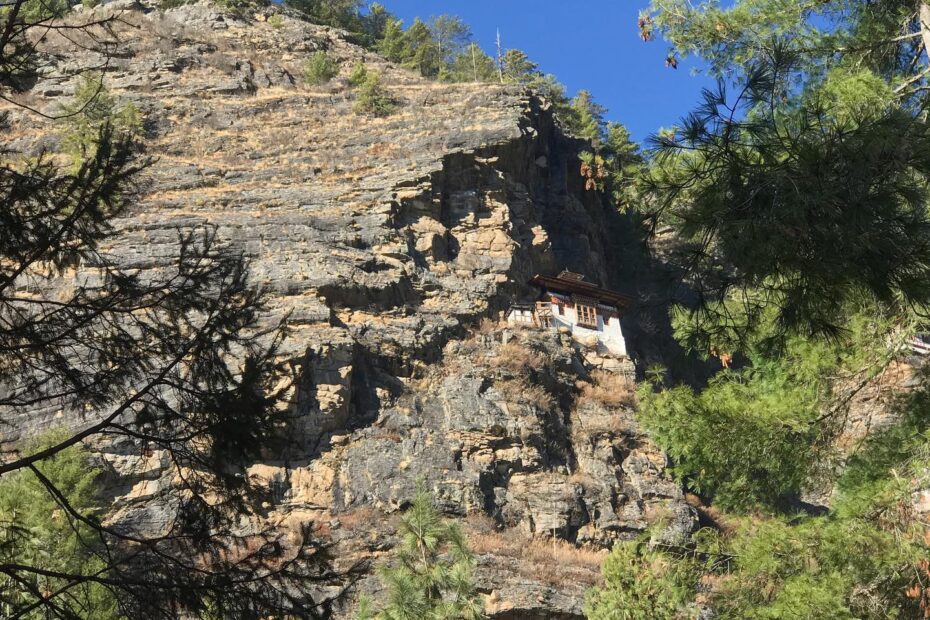
Jungney Dra Lhakhang, also known as Juneydrak or Jungney Drak, is a sacred cliffside temple in Katsho Gewog, Haa Dzongkhag. Perched at approximately 2,900 metres above sea level, it is revered as a meditation place associated with Guru Rinpoche and Machig Labdron, and is traditionally regarded as the abode of 100,000 dakinis.
Planning a Cultural or Spiritual Journey in Bhutan?
Tell us which sacred places, monasteries or festivals you would like to experience and when you plan to visit. We’ll help you plan a meaningful journey through Bhutan.
Often called the “Tiger’s Nest of Haa” or Bhutan’s second Taktsang, Jungney Dra is among the valley’s lesser-visited pilgrimage places. The climb through pine and rhododendron woodland leads to a temple set against a dramatic rock face, where devotees come to pray, meditate, and pay homage to the sacred imprints associated with Guru Rinpoche.
This guide introduces the spiritual significance of Jungney Dra, the sacred features to look for, the walking routes from Katsho and Wangtsa, and practical advice to help you prepare for a safe and respectful pilgrimage.
Table of Contents
Spiritual Significance of Jungney Dra
Jungney Dra is regarded as an important sacred site blessed by Guru Rinpoche during his visit to Bhutan in the 8th century. According to local religious tradition, Guru Rinpoche meditated at this cliff and subdued a demoness known as Mara by removing one of her eyes and a fang. These were placed on the cliff along with his sacred teachings, and marks associated with the account are believed to remain visible at the site.
The place is also associated with hidden spiritual treasures, or terma, connected with Guru Rinpoche’s teachings. Local tradition holds that these treasures are destined to be revealed in the future. For devotees, Jungney Dra is therefore not simply a remote cliff temple; it is a place connected with Guru Rinpoche’s spiritual activities, meditation, and the tradition of hidden teachings.
Jungney Dra is especially valued by local people in Haa as a place for prayer and meditation. Visitors are encouraged to approach it as a living religious site and to respect those who come for spiritual practice.
Meaning of the Name Jungney Dra
The name Jungney Dra is traditionally explained through three elements: Jung, meaning origin or source; Ney, meaning place or sacred abode; and Dra, meaning cliff. The name is associated with the source of Guru Rinpoche’s hidden treasures and sacred teachings.
The site is also referred to as Juneydrak, Juneydrag, and Jungney Drak. You may encounter these different spellings when asking for directions or reading about the pilgrimage site.
Sacred Features of Jungney Dra
The cliffs around Jungney Dra are associated with several sacred imprints and naturally formed shapes. These features are part of the religious significance of the site and are traditionally identified with enlightened beings and protective deities.
- Guru Rinpoche’s back imprint: The temple preserves an imprint on the rock believed to have been left when Guru Rinpoche rested against the cliff.
- Machig Labdron’s footprint: The temple is associated with the right footprint of Machig Labdron, the renowned Tibetan Buddhist practitioner connected with the Chöd tradition. According to local belief, her other footprint is at Pelphug Cave in Paro Taktsang.
- Imprints of sacred figures: Rock formations are associated with Buddha Amitayus and Pal Mahakali.
- Other sacred formations: Visitors may be shown a stone resembling a ritual torma, forms identified as golden and silver bowls, the Frowning Face of the Guardian of the Gate, a naturally formed rock stupa, and the Yoni of a Dakini.
Take time to listen to the explanations of a knowledgeable local or the temple caretaker. The meaning of individual imprints is best understood through the traditions associated with the site. Avoid touching or climbing on sacred rock formations.
How to Reach Jungney Dra Lhakhang
Jungney Dra is approximately 3 kilometres from Haa town. The usual approach begins at Katsho village, about a kilometre north of the town. Just before the main bridge, take the paved road branching east and continue for roughly a kilometre to reach the village and the start of the walking trail.
The walk from Katsho village to the temple takes about one hour for many visitors. The route is uphill and includes a steep final section, so allow extra time if you plan to stop for prayers, rest, or to explore the sacred features.
The Pilgrimage Walk from Katsho Village
1. Begin at Katsho Village
Start from Katsho Village and follow the trail towards the stream. Before setting out, confirm the route with a local resident or guide, particularly if it is your first visit.
2. Pass Mani Dangrim Chorten
The trail follows the stream and passes Mani Dangrim Chorten, a long, wall-like stupa structure with prayer wheels. Pilgrims may pause here for prayers before continuing uphill.
3. Climb through the Pine Forest to Khonying
Continue uphill through the pine forest for approximately 40 minutes until you reach Khonying, a distinctive chorten gate supported by two arched legs.
4. Continue through the Rhododendron Woodland
Beyond Khonying, the path climbs through rhododendron woodland. At the marked junction, follow the upward trail towards the sacred cliff.
5. Make the Final Ascent to the Lhakhang
The final approach includes steep stairs leading to Jungney Dra Lhakhang. Take care, especially if the steps are damp or you are uncomfortable with heights. Pause when needed and avoid rushing the ascent or descent.
Alternative Route from Wangtsa Village
Another approach is from Wangtsa village, joining the main trail near the Chorten Dangrim Mani wall. This route takes approximately 2.5 hours.
For a longer day walk, Jungney Dra and Katsho Goemba can also be included in the Haa Panorama Trail. The approximately 11-kilometre route takes around six hours and runs from Yangthang Monastery to Wangtsa village through pine forest. It offers views of all three Meri Puensum peaks. This is a longer hiking itinerary rather than the short approach from Katsho, so plan transport and timing accordingly.
What to Expect at Jungney Dra Lhakhang
Jungney Dra is a small and secluded cliffside temple rather than a large monastery complex. Before entering the main temple, visitors pass through a narrow natural-stone opening. A caretaker and a small community of nuns live near the temple.
The temple houses a revered statue of Guru Rinpoche and the rock imprint associated with his back. Its interior has traditional Bhutanese architectural features, intricate carvings, and murals depicting Buddhist deities and teachings. The sacred footprint associated with Machig Labdron is another important focus for pilgrims.
Keep your visit quiet and unhurried. If you wish to make offerings, receive a blessing, or learn more about the sacred imprints, ask the caretaker what is appropriate. Photography inside the temple should only be done with permission.
Best Time to Visit Jungney Dra
A visit is best planned during a period of stable, dry weather. The rainy season is not recommended because the forest trail, rocks, and steep steps can become slippery. Conditions can change quickly in the mountains, so check the local forecast and ask about trail conditions before setting out.
If you hope to visit on an auspicious Buddhist day or during a special religious observance, check with local residents or the temple caretaker in advance. Do not assume that a ceremony or special access will be available without confirmation.
Pilgrimage Preparation and Safety
Although the walk from Katsho village is relatively short, the climb is steep in places, and the temple is perched on a cliff. The route is not suitable for everyone, particularly visitors who are uncomfortable with heights or who have difficulty walking on uneven ground and steep steps.
- Wear suitable footwear: Choose comfortable walking shoes with good grip.
- Carry water and light snacks: There may be no facilities along the trail.
- Dress for changing weather: Bring a light rain jacket and an extra layer when needed.
- Use a walking stick if helpful: It may provide additional support on the uphill and downhill sections.
- Allow enough time: Do not rush the walk, temple visit, or return journey.
- Consider a local guide: A guide or someone familiar with the route can help with navigation and local context.
- Assess fitness and mobility: Older pilgrims and anyone with mobility limitations should carefully consider the steep approach before deciding to go.
At the temple, dress modestly, remove footwear where requested, speak softly, and follow the caretaker’s instructions. Do not touch sacred objects or imprints without permission, and carry all rubbish back with you.
Other Sacred Places to Explore in Haa
If you are spending more time in Haa, consider adding other sacred places in the valley to your pilgrimage itinerary:
Rangtse Ney: A sacred site associated with Guru Rinpoche and Khandro Yeshe Tsogyel.
Shelkar Drak Lhakhang: Another cliffside temple in Haa, known as the White Crystal Cliff Temple.
Lhakhang Nagpo: The Black Temple, one of the best-known historic temples in Haa Valley.
Lhakhang Karpo: The White Temple, associated with Ap Chundu, the protective deity of Haa.
Jo Bay Tsho: A sacred lake in Haa for those wishing to explore more of the valley’s spiritual landscape.
Frequently Asked Questions
Where is Jungney Dra Lhakhang located?
Jungney Dra Lhakhang is in Katsho Gewog, Haa Dzongkhag, Bhutan, at approximately 2,900 metres above sea level. It is about 3 kilometres from Haa town, with the usual walking route beginning at Katsho village.
How long does it take to hike to Jungney Dra?
The walk from Katsho village generally takes around one hour. An alternative approach from Wangtsa village takes approximately 2.5 hours. Actual times depend on walking pace and trail conditions.
Why is Jungney Dra considered sacred?
Local religious tradition associates Jungney Dra with Guru Rinpoche’s meditation and spiritual activities in the 8th century. The cliffs contain sacred imprints associated with Guru Rinpoche, Machig Labdron and other Buddhist figures.
Is the hike to Jungney Dra suitable for elderly visitors?
The route includes a steep uphill walk and stairs on a cliffside. It may not be suitable for people with mobility difficulties or those uncomfortable with heights. Elderly visitors should assess their fitness carefully and seek local advice before attempting the climb.
Can I visit Jungney Dra during the rainy season?
A rainy-season visit is not recommended because the forest trail and steep steps can become slippery. Check local weather and trail conditions before travelling.