
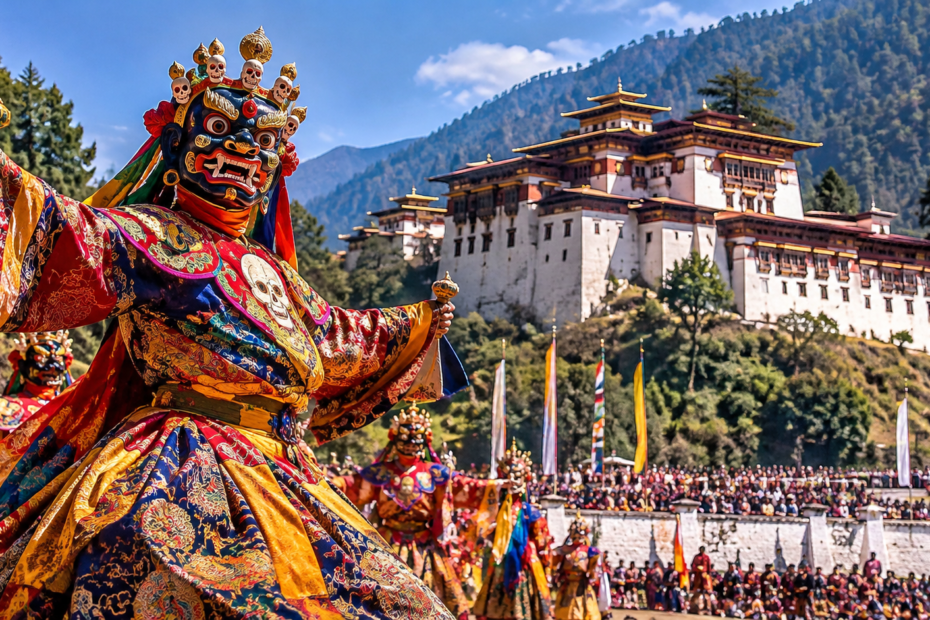
Trongsa Lhamoi Dromchhen, also known as Lhamoi Drubchen or Lhamoi Dromchen, is a sacred three-day annual Buddhist ritual festival held at Trongsa Dzong in central Bhutan. Dedicated to Pelden Lhamo (also written Palden Lhamo), the female Dharma protector, the observance brings together prayers, tantric rituals, and sacred masked dances. Its purpose is religious: to invoke protection, dispel obstacles, and pray for the well-being of Bhutan and its people.
The 2027 dates are listed tentatively as 11–13 February 2027.
Planning a Cultural or Spiritual Journey in Bhutan?
Tell us which festivals, monasteries or sacred places you would like to experience and when you plan to visit. We’ll prepare a tailored itinerary and quotation for your journey.
Unlike a festival whose main attraction is a public programme of dances, Lhamoi Dromchhen is a Drubchen, an intensive period of collective Vajrayana practice. Some ceremonies take place in restricted areas and are not open to general viewing. The secret Nangcham, in particular, is a religious ritual rather than a public performance. Visitors should therefore approach the event first as a sacred observance and confirm which, if any, parts may be attended by the public.
Table of Contents
Trongsa Lhamoi Dromchhen: Festival Overview
Lhamoi Dromchhen is observed over three days during the first lunar month of the Bhutanese calendar, generally falling in February or March. In Trongsa, the ceremonies are held at Trongsa Dzong, the historic fortress overlooking the Mangde Chhu valley and a landmark closely associated with Bhutan’s spiritual and political history.
| Festival | Trongsa Lhamoi Dromchhen (Lhamoi Drubchen) |
|---|---|
| Duration | Three days |
| 2027 dates | 11–13 February 2027 (tentative) |
| Location | Trongsa Dzong, Trongsa, Bhutan |
| Dedicated to | Pelden Lhamo (Palden Lhamo) |
| Main observances | Prayers, tantric rituals, cham and the secret Nangcham |
History and Origins of Lhamoi Dromchhen
The religious tradition of Lhamoi Drubchen is associated with the early eighteenth century and the spiritual history of Kuenga Gyeltshen, who served as Bhutan’s chief abbot. According to the traditional account, Pelden Lhamo appeared to him in a dream and revealed sacred tantric dances. These ritual movements became part of the Drubchen tradition.
The establishment of the observance at Trongsa is also associated with 1988, when His Majesty the Fourth Druk Gyalpo, Jigme Singye Wangchuck, and the 68th Je Khenpo, Tenzin Dendup, introduced the ceremony there. This local milestone is distinct from the much older religious tradition from which the Drubchen developed.
The word Drubchen refers to a great accomplishment practice: an intensive period of collective Vajrayana prayers and rituals. Lhamoi refers to the female protector to whom the ceremonies are dedicated.
Who is Pelden Lhamo?
Pelden Lhamo (also written Palden Lhamo) is a powerful female Dharma protector revered in Tibetan and Bhutanese Vajrayana Buddhism. She is often associated with the Sanskrit name Mahakali and is regarded as a guardian of the Buddhist teachings and their practitioners.
Through prayers and ritual offerings, devotees seek protection from obstacles, misfortune and harmful influences. The Trongsa Drubchen is performed with aspirations for the well-being of Bhutan, the flourishing of the Dharma, and peace and prosperity for all beings.
Rituals, Cham and Nangcham
The three-day observance brings together prayers, ritual preparations and sacred dances. The masked dances, or cham, are not simply performances. Within the Vajrayana tradition, they are ritual expressions of enlightened activity and the transformation or subjugation of negative forces.
A particularly significant element is Nangcham, a secret tantric dance performed as part of the Drubchen. The word nang means inner or secret, reflecting the restricted and sacred nature of this ritual. It is not a public spectacle; access is governed by the religious authorities.
The prayers and dances are understood as ways of invoking protection, dispelling obstacles and reaffirming spiritual commitments. The solemn and devotional character of the Drubchen distinguishes it from larger tshechus whose public programmes are generally more accessible to visitors.

2027 Dates and Location
The tentative dates for Trongsa Lhamoi Dromchhen in 2027 are 11–13 February. These dates appear in the published tentative festival calendar and should be reconfirmed before travel, as Bhutanese festival dates and programmes can be adjusted.
The ceremonies take place at Trongsa Dzong in central Bhutan. The dzong stands above the Mangde Chhu valley and is one of the country’s most important historic fortresses. Read our guide to Trongsa Dzong to learn more about its history and setting.
Can Visitors Attend Trongsa Lhamoi Dromchhen?
Visitors should understand that Lhamoi Dromchhen is a sacred religious observance and that not every part of it is open to the general public. Some tantric rites, including Nangcham, are private or restricted to authorised participants. Public access to any visible ceremonies or areas of the dzong may vary from year to year.
Before travelling, confirm the schedule, entry arrangements, photography rules and permitted viewing areas with the Trongsa Dzongkhag Administration or the monastic authorities. Do not assume that visitors can enter inner sanctums or witness secret rituals.
If public viewing is permitted, observe quietly, dress respectfully, follow instructions from officials and monks, and ask before taking photographs. Respect for the religious purpose of the Drubchen should take priority over a visitor’s itinerary.
Planning a Visit to Trongsa
Trongsa is in central Bhutan and is commonly included in journeys between western and eastern Bhutan. Because the festival falls in winter, allow flexibility for road conditions and travel time, and arrange accommodation in advance if you plan to visit during the festival period.
Pack warm layers, comfortable walking shoes and sun protection. The dzong complex has stairs and uneven surfaces, so visitors should be prepared for walking. Dress modestly, follow posted instructions and check whether photography is permitted before taking pictures.
Travellers exploring the wider district may also be interested in Nabji Lhakhang Drup and the sacred site of Nabji Lhakhang. For a related observance dedicated to the same protector, read our guide to Thimphu Lhamoi Dromchoe.
Frequently Asked Questions
How long does Trongsa Lhamoi Dromchhen last?
The Trongsa Lhamoi Dromchhen is a three-day annual religious observance.
When will it take place in 2027?
The tentative dates are 11–13 February 2027. Confirm the final dates and public programme with local authorities before travelling.
Who is the festival dedicated to?
The observance is dedicated to Pelden Lhamo, also written Palden Lhamo, a female Dharma protector revered in Bhutanese Vajrayana Buddhism.
Can visitors watch the Nangcham?
Nangcham is a secret tantric ritual, not a public performance. Access is restricted to authorised participants.
Where is the festival held?
It is held at Trongsa Dzong in Trongsa, central Bhutan.
Is photography allowed?
Photography rules may differ by location and ceremony. Ask the dzong or monastic authorities before taking photographs, and never photograph restricted rituals.
Planning note: The 2027 dates and visitor arrangements should be reconfirmed with local authorities and the monastic body. The sacred nature of the ceremonies and any access restrictions take precedence over visitor itineraries.