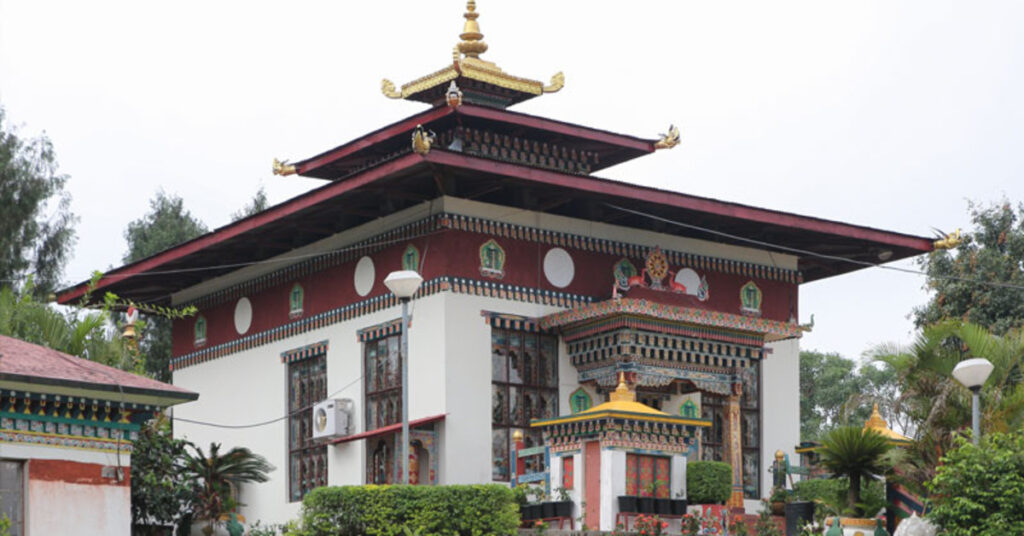
Kharbandi Monastery, also known as Rinchending Goemba, is a Buddhist Monastery perched 400 meters above sea level on a precious hill of Rinchending below the Phuntsholing–Thimphu Highway. The Royal Grandmother, Ashi Phuntsho Choden, built Kharbandi Gompa monastery in 1967.
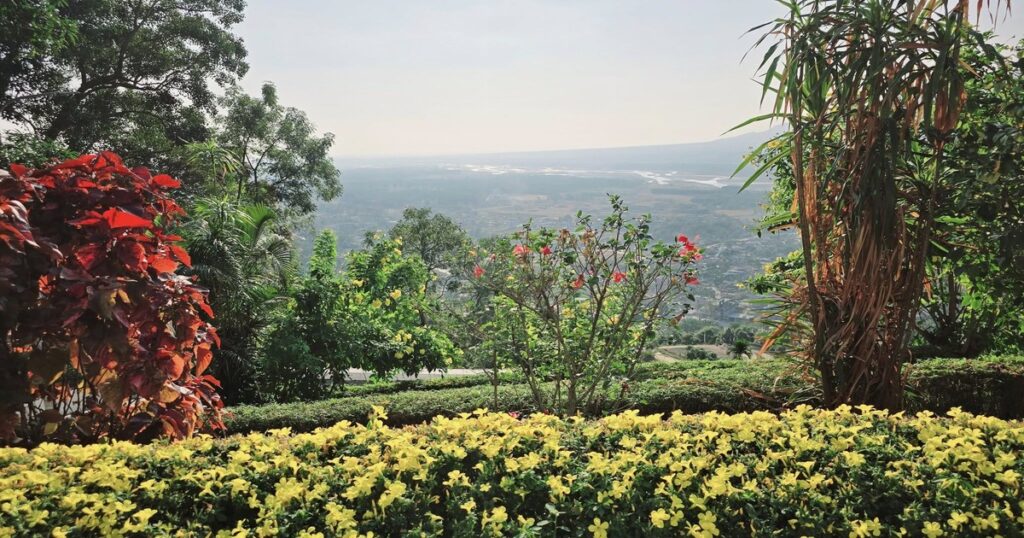
With its deep historical significance and breathtaking views of Phuentsholing town and the plains of Jaigaon, West Bengal, the Kharbandi Gompa has become one of the best pilgrimage sites and a popular tourist attraction in Phuentsholing among Indian tourists.
Whether you seek spiritual solace or want to immerse yourself in Bhutan’s stunning natural beauty, Karbandi Monastery is a must-visit place in your Bhutan travel itinerary. So, on your Phuentsholing sightseeing, don’t miss Rinchending Goemba. The picturesque scenery, lush surroundings, serene ambiance, and breathtaking views make the Karbandi Gompa worth visiting in Phuentsholing.
How to Reach Kharbandi Monastery
The Karbandi Monastery in Phuentsholing is located at a distance of 1 kilometer from Phuentsholing. It takes 30 minutes to drive from the Indian border of Jaigaon. You can enjoy picturesque views of the lush surroundings while driving on a well-maintained road. The nearest major railway station to enter Bhutan is in Hasimara, India, about 18 kilometers from the border town of Phuentsholing, while the closest airport is Bagdogra Airport, approximately 160 kilometers away.
Sacred Relics to See at Karbandi Monastery
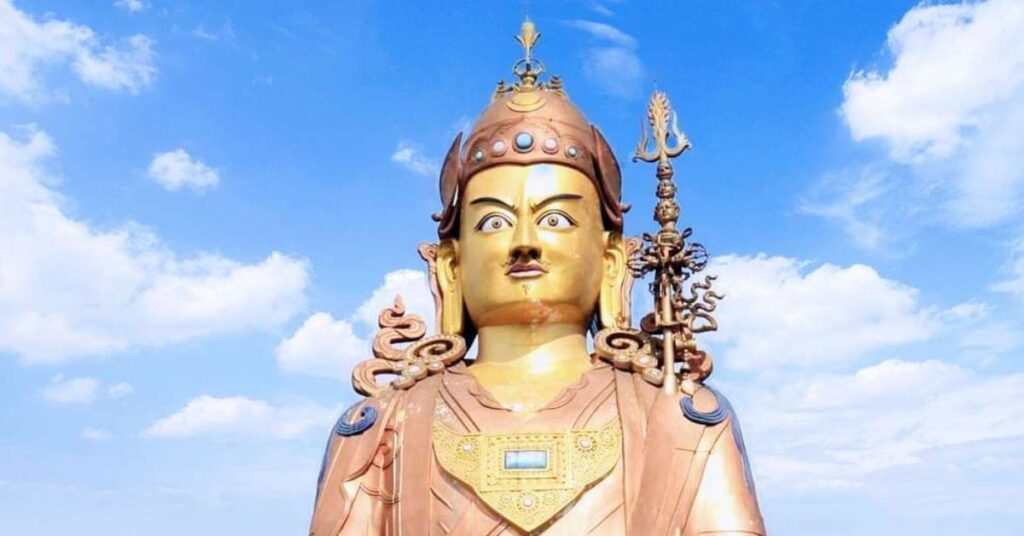
- 10-foot-high sculpture of Guru Rimpoche;
- Statues of Shakyamuni Buddha;
- Statues of Zhabdrung Ngawang Namgyal;
- Paintings that depict the life of Buddha Shakyamuni;
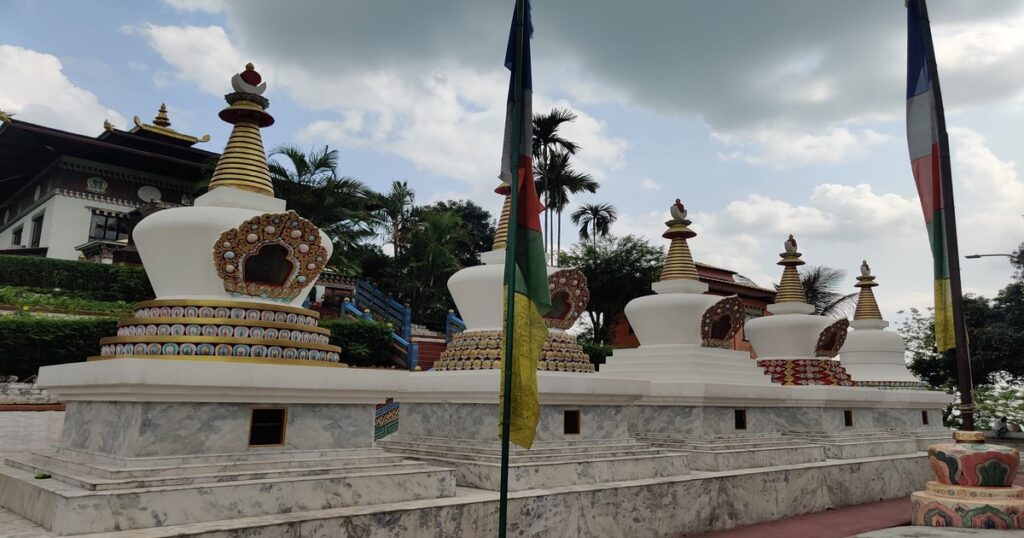
- 8 great Buddhist stupas that commemorate eight important events in the life of Buddha.
Also Read: Guru Rinpoche in Bhutan: His Visits to Bhutan and Sacred Sites
Historical Significance of Kharbandi Monastery
Kharbandi Gompa was built by the Royal Grandmother, Ashi Phuntsho Choden, in 1967. The Monastery was the winter residence of Ashi Phuntsho Choden.
Couples visit the monastery to seek fertility blessings. If couples with infertility visit the Karbandi monastery, they are believed to be blessed with a child. According to a legend, an Indian pilgrim prayed to be showered with the blessing of being a mother at Kharbandi Gompa, and she was blessed with a child. After that miracle or coincidence, the Monastery has become a pilgrimage site for many couples.
Also Read: Zangdo Pelri Lhakhang, a Replica of Guru Rinpoche’s Paradise in Phuentsholing
Description of Kharbandi Goenpa
Kharbandi Monastery is one of the oldest Buddhist Temples in Bhutan. As you approach, the monastery’s wide gate welcomes visitors. The serene atmosphere envelops you, inviting you to explore its peaceful surroundings.
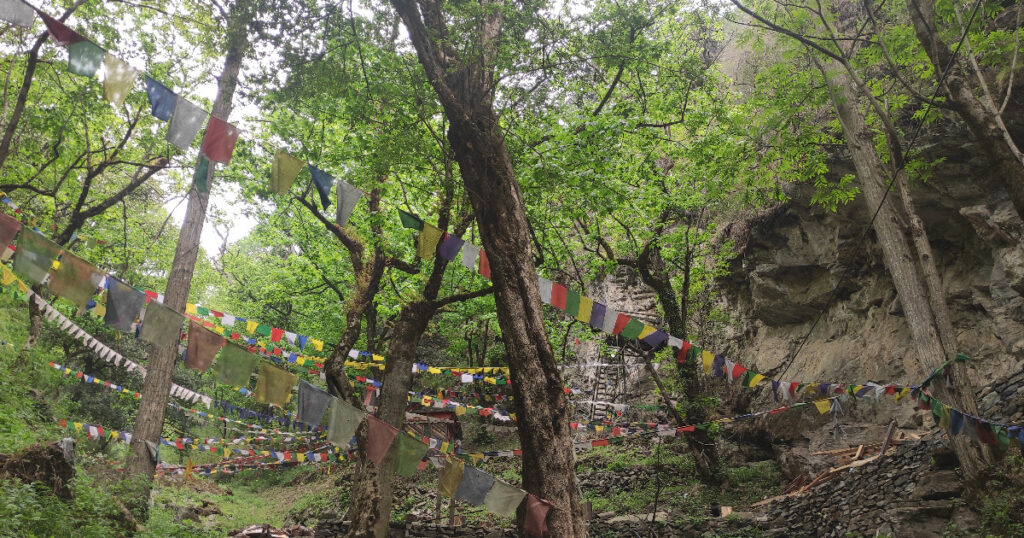
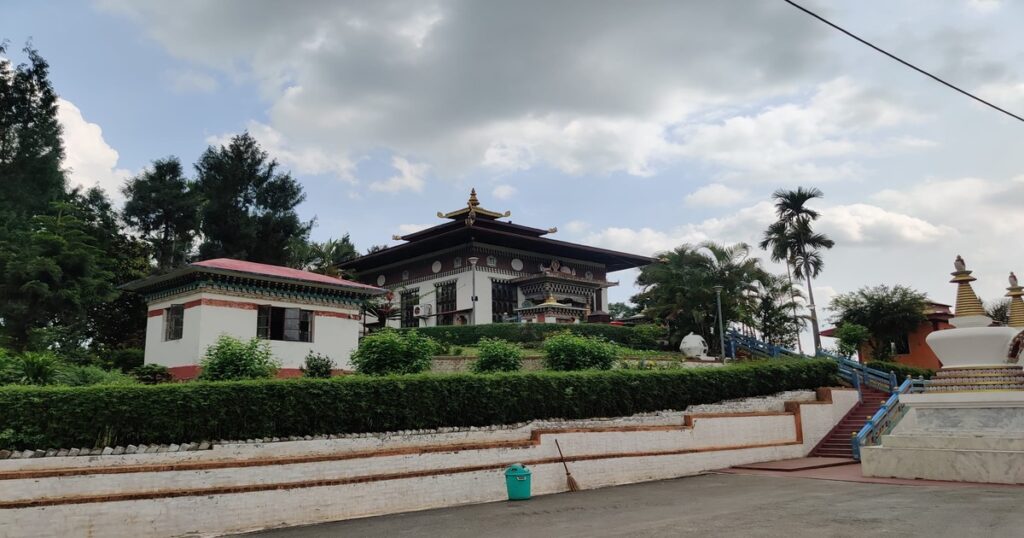
The monastery has a beautiful garden of tropical plants and flowers dotted with eight white-washed Buddhist Chortens (stupas) commemorating eight important events in Buddha Shakyamuni’s life. The garden also features a long stretch of vibrant prayer flags, enormous prayer wheels, and traditional Bhutanese architecture.
Inside, the monastery features beautifully crafted statues and intricate murals depicting various aspects of Buddhist teachings. The main hall of the Karbandi Goenpa is adorned with an impressive 10-foot statue of Guru Padmasambhava, magnificent life-size statues of the Shakyamuni Buddha, Zhabdrung Ngawang Namgyal, and other Buddhist deities, and paintings portraying the life of Lord Buddha.
The shrine also has a separate room with burning butter lamps. Visitors can participate in lighting butter lamps and offering daily prayers as the monks carry out ceremonies inside the monastery with pounding drums, trumpets, and chanting.
Kharbandi Monastery also offers a panoramic view of Phuntsholing town, the plains of West Bengal, and Jaigaon. The site is the perfect place to take bird’s-eye photos of the town, plains, and the mountains.
Best Time to Visit Kharbandi Goemba
Karbandi monastery can be visited throughout the year and is open to anyone who wishes to visit from 7 am to 6 pm, Bhutan standard time. The best time is early morning from 7 am to 9 am when the monks start chanting prayers. Visit the temple in the late afternoon or evening to see its golden rooftops bathed in magical sunlight, enhancing its beauty. You can visit the major pilgrimage sites of Phuentsholing and Chhukha with the Bhutan Pilgrimage Package.
Sacred Places to Explore in Chhukha
Dokhachu Goenpa: Also known as Chapcha Dargay Choeling Goenzin Dratshang, it is an Ekajati Lhakhang in Bhutan near a boulder cave pointing to the sky. It is located in Chapcha Gewog under Chukha Dzongkhag at an elevation of 3048m overlooking the village of Rin Thangkha. Lama Choeje Thinley Jamtsho, a grandson of Phajo Drugom Zhigpo, founded Dokhachu Goenpa in 1650.
Tumdra Ami Ney: This sacred site is the chief abode of the wish-granting goddess Lhamo Ekajati, located in Darla Gewog under Chhukha Dzongkhag in Bhutan. The sacred site is said to have been visited and blessed by Guru Rinpoche in the 8th century. Later in the 15th century, Thangthong Gyalpo discovered the Tumdra Aminey. In the early 18th century, Terton Drukdra Dorji spent a few years meditating and discovering “Ters” from the Ney.
Zangdo Pelri Lhakhang: The zangtopelri in Phuentsholing is a small monastery representing the “celestial abode of Guru Rimpoche,” built in the 1900s by Dasho Aku Tongmi. The temple is located in the middle of Phuentsholing town, just a few steps from the Bhutan-India border gate, enclosed by a recreational park.
Places to Explore in Phuentsholing
Phuentsholing, the second largest town in Bhutan, is a bustling border town that serves as an important entry point for travelers from India. Phuentsholing blends traditional Bhutanese architecture with modern infrastructure. Here are some of the popular attractions in Phuentsholing:
Zangto Pelri Lhakhang: A small temple representing the celestial abode of Guru Rimpoche, located in the heart of Phuentsholing.
Palden Tashi Chholing Shedra: A Buddhist institute in Phuentsholing, dedicated to Buddhist education and spiritual learning.
Milerapa Lhakhang: Sangye Migyur Ling Monastery, also known as Mila Serkhar Guthog Lhakhang, is a nine-story replica of an 11th-century structure built by Milarepa in Tibet.
Frequently Asked Questions
What is Kharbandi Monastery?
Kharbandi Monastery, also known as Karbandi Goenpa, is a serene Buddhist monastery perched on a hilltop 400 meters above Phuntsholing town in Chukha district, southern Bhutan. Founded in 1967 by the Royal Grandmother, Ashi Phuntsho Choedron, it serves as a spiritual retreat and winter residence for the royal family. The monastery is renowned for its peaceful ambiance, stunning views of the Indian plains, and sacred temples dedicated to Guru Rinpoche and Avalokiteshvara. It is a popular pilgrimage site for blessings, especially for couples seeking fertility, and offers a tranquil escape from the bustling border town below.
Who founded Kharbandi Monastery and why?
Kharbandi Monastery was established in 1967 by Ashi Phuntsho Choedron, the Royal Grandmother of Bhutan, as a spiritual retreat and winter residence for the royal family. The site was chosen for its elevated location, offering panoramic views of Phuntsholing and the Indian border, and its serene environment ideal for meditation and prayer. The monastery was built to honor Guru Rinpoche, who is believed to have blessed the area, and to provide a sacred space for devotees to accumulate merit and seek blessings.
Why is Kharbandi Monastery spiritually important?
Kharbandi is revered as a place of spiritual solace and healing, particularly for couples seeking fertility blessings. The monastery houses sacred statues, thangkas, and relics, and is a site for daily prayers, meditation, and ritual offerings. Its elevated position and tranquil gardens create an atmosphere conducive to spiritual reflection, making it a favored destination for pilgrims and travelers seeking peace and divine intervention.
What does Kharbandi Monastery look like?
Kharbandi Monastery features traditional Bhutanese architecture with whitewashed walls, intricate wood carvings, and golden roofs. The complex includes a main temple hall, prayer rooms, residential quarters for monks, and beautifully maintained gardens. The monastery’s hilltop location offers breathtaking views of Phuntsholing town, the Indian plains, and surrounding hills, enhancing its spiritual and aesthetic appeal.
When is the best time to visit Kharbandi Monastery?
The ideal time to visit is during the cool, dry seasons of March to May and September to November, when the weather is pleasant and the skies are clear. Early morning visits (7 AM to 9 AM) are recommended to experience the peaceful ambiance, hear monks chanting prayers, and enjoy the aromatic incense filling the air. The monastery is accessible year-round, but summer months can be hot and humid in this subtropical region.
What are the visiting hours and entry requirements?
Kharbandi Monastery is open daily from 7 AM to 6 PM, with free entry for all visitors. An entry fee of Nu 30 is required, and the monastery is accessible to anyone wishing to visit. As an active monastic institution, some areas may be restricted during private prayers or ceremonies; visitors should respect local customs and follow guidance from monks and staff.
How do I reach Kharbandi Monastery?
Kharbandi Monastery is located approximately 1 kilometer from the Bhutan Gate in Phuntsholing, accessible via a 20-minute uphill walk or short drive along switchback roads. The monastery sits on a hilltop above the town, offering panoramic views.
Is photography allowed inside Kharbandi Monastery?
Photography is typically permitted in the monastery gardens and exterior areas, but prohibited inside temple halls during prayers or rituals. Always ask for permission before photographing monks, sacred objects, or other visitors to respect the sanctity of the site.
What should I wear and bring?
Dress modestly with shoulders and knees covered; remove hats and shoes before entering temple areas. Wear comfortable walking shoes for the uphill climb and bring water, sun protection, and layers for changing weather. During visits, carry small cash for offerings and respect local customs by speaking softly and following circumambulation directions.