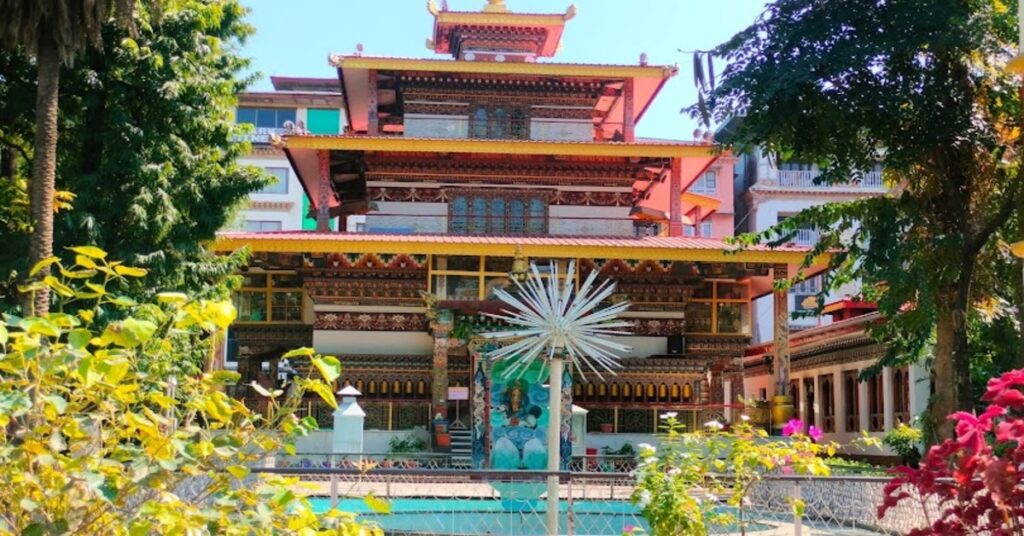
Zangdo Pelri Lhakhang in Phuentsholing is a small monastery representing the “celestial abode of Guru Rimpoche,” built in the 1900s by Dasho Aku Tongmi. The temple is located in the middle of Phuentsholing town, just a few steps from the Bhutan-India border gate, enclosed by a recreational park.
Zangto Pelri Lhakhang Phuentsholing is one of the most popular tourist destinations in Phuentsholing Gewog under Chhukha Dzongkhag. This three-story monastery, which features exquisite ancient Bhutanese architecture, is well-known for its eye-catching statues and intriguing murals. The Lhakhang has become one of the best pilgrimage sites and a popular tourist attraction in Phuentsholing among Indian tourists.
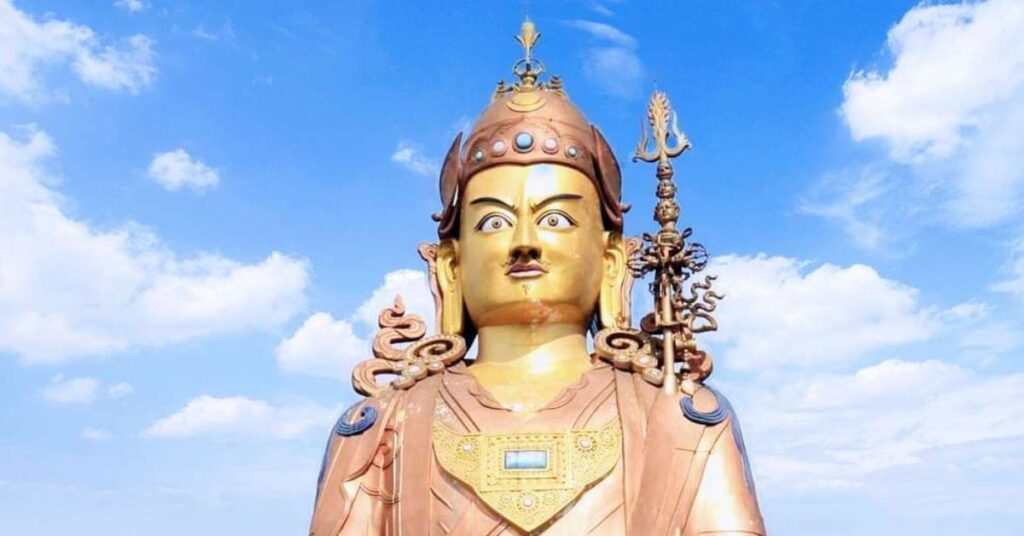
Zangdopelri, meaning “Copper-Colored Mountain” or “Copper-Coloured Celestial Abode,” is the pure land or paradise of Guru Padmasambhava. It’s often depicted as a three-tiered palace on a mountain, where Guru Rinpoche is revered and considered a place of enlightenment and liberation.
How to Reach Zangto Pelri Lhakhang, Phuentsholing
Zangto Pelri Lhakhang is in the heart of Phuentsholing town, near the Bhutan Immigration Office, offering peace and solace. Phuentsholing is the border town of Bhutan and India. From India, the only way to reach Zangto Pelri Lhakhang is via road. The Nearest Airport is Bagdogra Airport, and the nearest railway station is the Hasimara Railway Station. You will get several taxis or autos for hire to reach Jaigaon, the border town of India. The temple is open from 8 a.m. to 6 p.m. and has no entrance fee.
Sacred Relics to See at Zangdo Pelri Lhakhang
- Statue of Buddha Amitabha;
- Statue of Guru Rinpoche;
- Eight manifestations of Guru Rinpoche;
- Statues of Bodhisattvas;
- Statue of Avalokiteshvara;
- Statue of Zhabdrung Ngawang Namgyal;
- An elephant skull in a box.
Also Read: Guru Rinpoche in Bhutan: His Visits to Bhutan and Sacred Sites
Historical Significance of Zangdo Pelri Lhakhang
Zangdo Pelri Lhakhang in Phuentsholing, also known as the ‘Paradise of Guru Rinpoche’, is a site of great historical significance in Bhutan. It is said that an elephant skull was uncovered while digging the foundations for the construction of the older Mani Dungkhor Lhakhang. The skull can still be seen between the old and the modern Lhakhang, housed in a box.
Later, Dasho Aku Tongmi, a music composer of the National Anthem of Bhutan, built a modern Zangto Pelri Lhakhang in the 1900s. The Monastery was constructed to represent the celestial paradise of Guru Padmasambhava.
Also Read: Kharbandi Monastery, a Temple on the Precious Hill in Phuentsholing
Description of Phuentsholing Zangto Pelri Lhakhang
Zangto Pelri monastery is in the center of Phuentsholing city. The monastery is always abuzz with activity, with both locals and tourists doing the circumambulation and spinning the prayer wheels.
When you visit Zangto Pelri Lhakhang, respect the religious practices and culture by dressing conservatively and following the local traditions. The Lhakhang is not just a tourist site but also a place of deep spiritual importance to Bhutan. Circumambulate the temple or any other religious artifacts in a clockwise direction.
As you enter, the entrance is beautified by flower gardens and a nice park up front, with a huge ball fountain and a small pond. There are many miniature wheels around the temple and giant prayer wheels behind it, where visitors spin and circumambulate while they relax and soak in the spiritual vibes.
Zangto Pelri Lhakhang is a three-storied complex structure with splendid exteriors and equally marvelous interiors, with walls and ceilings adorned with colorful frescoes and murals. Considered one of the tallest Zangdo Pelri Lhakhangs in the country, it houses life-size statues of eight manifestations of Guru Rinpoche and other Bodhisattvas. The main statue of Zangto Pelri Lhakhang in Phuentsholing is Buddha Amitabha (Sangay Yuepamey) on the top floor of the monastery.
On the second floor, the shrine houses statues of Zhabdrung Ngawang Namgyal, Chenrezig, and the eight Bodhisattvas. A four-meter-tall statue of Ugyen Guru Rinpoche, flanked by his eight manifestations, is on the ground floor. The walls have paintings depicting the life of Lord Buddha. You can take part in lighting butter lamps and observing the daily rituals and prayers here.
Best Time to Visit Phuentsholing Zangdo Pelri Lhakhang
The best time to visit Phuentsholing is from November to April. You can visit the Zangto Pelri Lhakhang any time between 8 AM and 6 PM. However, the park is open till 10 PM. Visit to relax and soak in the spiritual vibes in the evening, as a fountain lights up the monastery and its vicinity. You can visit the major pilgrimage sites of Phuentsholing with the Bhutan Pilgrimage Package.
Sacred Places to Explore in Chhukha
Dokhachu Goenpa: Also known as Chapcha Dargay Choeling Goenzin Dratshang, it is an Ekajati Lhakhang in Bhutan near a boulder cave pointing to the sky. It is located in Chapcha Gewog under Chukha Dzongkhag at an elevation of 3048m overlooking the village of Rin Thangkha. Lama Choeje Thinley Jamtsho, a grandson of Phajo Drugom Zhigpo, founded Dokhachu Goenpa in 1650.
Tumdra Ami Ney: This sacred site is the chief abode of the wish-granting goddess Lhamo Ekajati, located in Darla Gewog under Chhukha Dzongkhag in Bhutan. The sacred site is said to have been visited and blessed by Guru Rinpoche in the 8th century. Later in the 15th century, Thangthong Gyalpo discovered the Tumdra Aminey.
Kharbandi Monastery: Also known as Rinchending Goemba, it is a Buddhist monastery perched 400 meters above sea level on a precious hill of Rinchending below the Phuntsholing–Thimphu Highway. The Royal Grandmother, Ashi Phuntsho Choden, built the monastery in 1967.
Places to Explore in Phuentsholing
Phuentsholing, the second largest town in Bhutan, is a bustling border town that serves as an important economic hub and entry point for travelers from India. Phuentsholing blends traditional Bhutanese architecture with modern infrastructure. Here are some of the popular attractions in Phuentsholing:
Kharbandi Monastery: Also known as Rinchending Goenpa, it is a monastery near Phuentsholing that provides a tranquil spiritual escape.
Milarepa Lhakhang: Sangye Migyur Ling Monastery, also known as Mila Serkhar Guthog Lhakhang, is a nine-story replica of an 11th-century structure built by Milarepa in Tibet.
Palden Tashi Chholing Shedra: Dedicated to Buddhist education and spiritual learning, it is a Buddhist institute in Phuentsholing.
Frequently Asked Questions
What is Zangdo Pelri Lhakhang?
Zangdo Pelri Lhakhang in Phuentsholing is a revered Buddhist temple representing the celestial paradise of Guru Rinpoche (Padmasambhava). Located in the heart of Phuentsholing town near the Bhutan Gate and Immigration Office, this three-storied lhakhang serves as both an active place of worship and a popular spiritual landmark for pilgrims and tourists visiting southern Bhutan.
History and Significance
The temple was built in the early 1990s by Dasho Aku Tongmi, the celebrated musician who composed Bhutan’s national anthem. According to local accounts, an elephant skull was discovered while digging the foundations for the older Mani Dungkhor Lhakhang at the site. This sacred relic is now preserved in a box between the old and modern structures and is believed to shower blessings on devotees who view it. The lhakhang’s architecture symbolizes Guru Rinpoche’s heavenly abode, with three levels representing different aspects of his life and teachings, making it a site of profound religious importance in Bhutanese Vajrayana Buddhism.
Architecture and Interior Highlights
Zangdo Pelri Lhakhang features traditional Bhutanese temple design with intricate woodwork, tiered roofs, and vibrant murals. Inside, visitors will find statues of the eight manifestations of Guru Rinpoche, along with paintings depicting scenes from the life of Buddha and important Buddhist mythology. The temple also houses images of Avalokiteshwara and other bodhisattvas, creating a serene atmosphere for meditation and prayer. The well-maintained gardens surrounding the lhakhang provide a peaceful space for reflection and relaxation.
Visiting Hours and Entry Details
The temple is generally open from 8:00 AM to 6:00 PM daily, though some sources indicate extended or flexible hours depending on religious activities and local events. There is no entrance fee to visit Zangdo Pelri Lhakhang, making it accessible to all pilgrims and travelers. Visitors are advised to dress modestly, remove shoes before entering the prayer halls, and maintain respectful behavior inside the sacred premises. The best time to visit is during the cooler months from October to March when the weather in Phuentsholing is pleasant for sightseeing.
How to Reach Zangdo Pelri Lhakhang
Zangdo Pelri Lhakhang is located in central Phuentsholing, just a short walk from the Bhutan-India border crossing at Jaigaon. Travelers entering Bhutan via the Phuentsholing border can reach the temple within minutes on foot or by local taxi. The address is commonly listed as V96M+P3W, Phuentsholing, Bhutan, and the lhakhang is surrounded by a recreational park built by Dasho Aku Tongmi, making it easy to spot in the town center.
Nearby Attractions
Visitors to Zangdo Pelri Lhakhang can easily explore other key sites in Phuentsholing, including the Bhutan Gate, Torsa River, and the recreational park surrounding the temple. The town’s proximity to the Indian border makes it a convenient stopover for travelers heading to Paro, Thimphu, or Punakha. Phuentsholing also offers shopping opportunities, local eateries, and cultural experiences that complement a spiritual itinerary focused on Guru Rinpoche’s sacred sites.
Practical Tips for Visitors
Plan to spend 1–2 hours at the temple to fully appreciate its architecture, murals, and spiritual ambiance. Photography may be restricted inside the prayer halls, so always ask for permission before taking pictures. Local guides or temple caretakers can provide valuable insights into the symbolism of the statues and paintings. Combine your visit with nearby attractions for a half-day cultural tour of Phuentsholing, and consider visiting during religious festivals for a deeper immersion into Bhutanese Buddhist traditions.