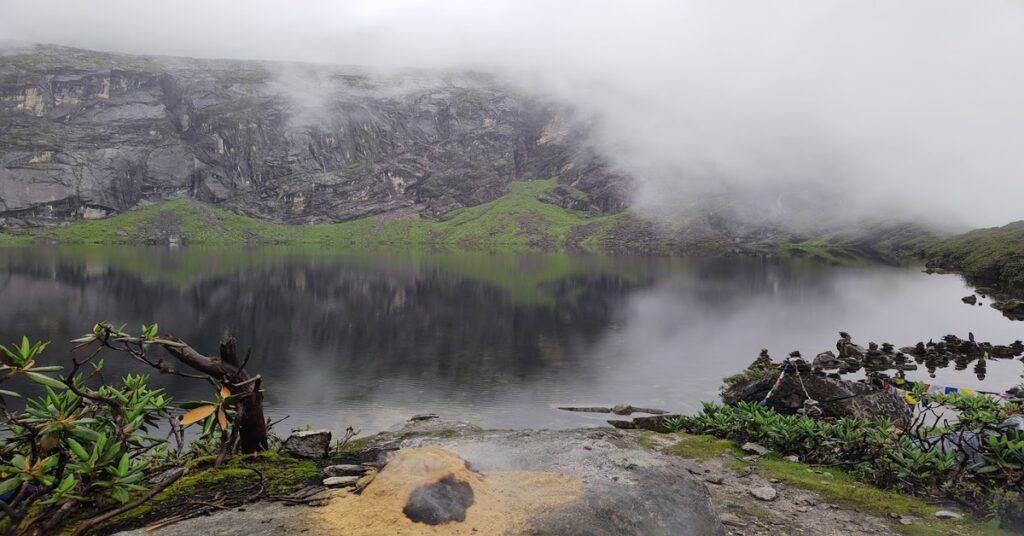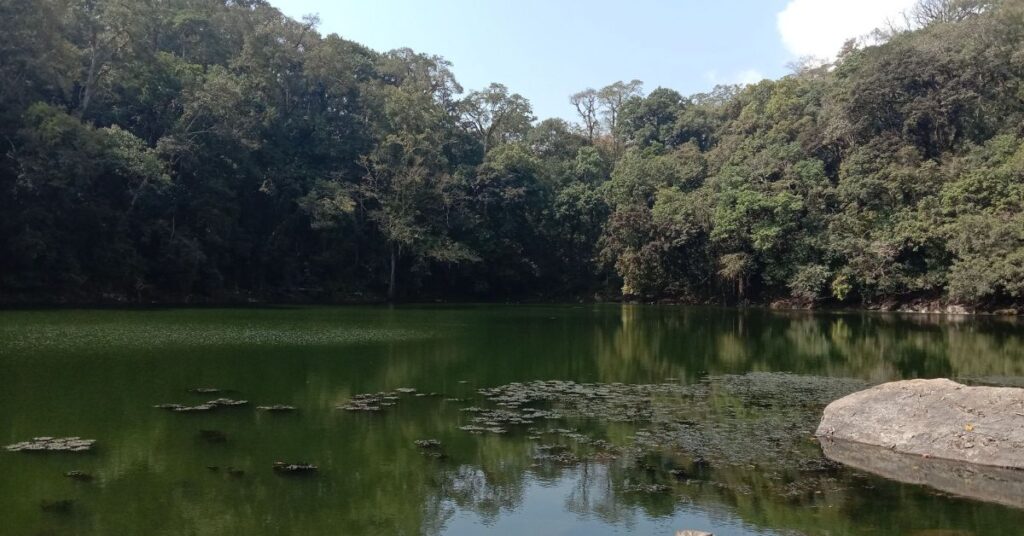
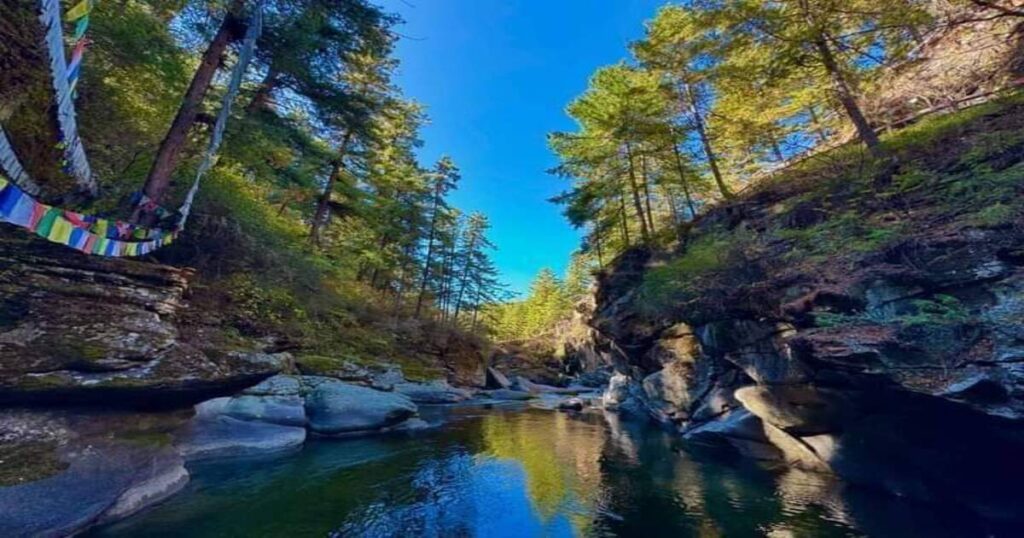
Mebar Tsho, the Burning Lake of Bhutan, is the most sacred in Bhutan, where Pema Lingpa, a disciple of Guru Rinpoche and the greatest Terton, discovered several terma in 1475. Tang Membartsho is located in a gorge in the southern part of the Tang Valley in Bumthang Dzongkhag.
Tang Mebar Tsho, or the burning lake, is truly a blessing to all sentient beings. Enlightened beings are reported to have seen the temple at the lake’s bottom, from where Terton Pema Lingpa discovered treasures. People with fewer sins and spiritual minds are said to be able to see astounding sights in the lake.
How to Reach Bumthang Mebar Tsho
Membartsho is in the southern Tang valley. The route is the same as Tharpaling Monastery. It is a 30-minute drive from Chamkhar town. The walk from the road to the lake takes around five minutes.
Also Read: How to reach Domendrel Tsho, a Spiritual Journey to Mandala Offerings of Gyalse Tenzin Rabgye.
Sacred Relics to See at Membartsho
- The Burning Lake;
- Portrait of Pema Lingpa and his two sons carved on the rock;
- An altar dedicated to Terton Pema Lingpa;
- An array of small conical clay mounds called tsatsas.
Also Read: Guru Rinpoche in Bhutan: His Visits to Bhutan and Sacred Sites
How did Mebar Tsho get its name?
According to legend, Terton Pema Lingpa entered the lake with a burning butter lamp and magically reappeared with the butter lamp still glowing, a chest, and a scroll of parchment. The lake was thus called Mebar Tsho, or “burning lake.”
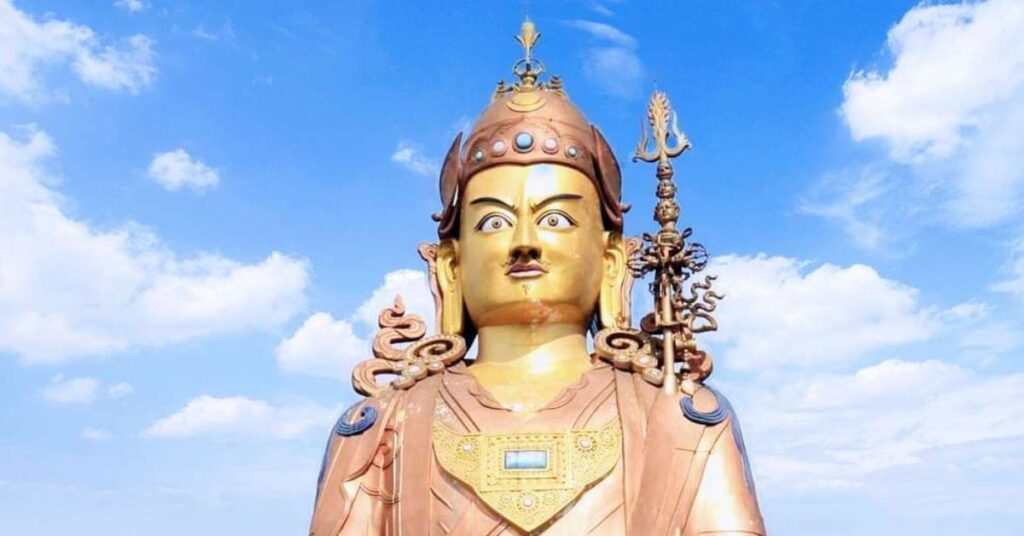
The lake is considered important because Pema Lingpa, an incarnate disciple of Guru Rinpoche and the greatest Terton (treasure discoverer), discovered several of Guru Rinpoche’s terma (hidden treasures) from the lake.
Also Read: How did Drakey Pangtsho, the Treasure Lake of Guru Rinpoche on the Lap of Jowo Drake, get its name?
Historical Significance of Mebar Tsho
Terton Pema Lingpa discovered Tang Membartsho in 1477.
What is the Mebar Tsho story? According to legend, Terton Pema Lingpa had a vision urging him to go to that particular spot in the Tang Chhu and discover the sacred treasures that Guru Rinpoche had hidden centuries earlier. However, the people of Tang and the local ruler were cynical of his claims and questioned the validity of his prediction.
To this, Pema Lingpa said, “If I am a demon, I shall die! If I am not, and I am Guru Rinpoche’s actual spiritual son, this lamp will continue to burn, and I will recover hidden treasures!”
Saying these words, he drove into the lake holding a burning lamp. He resurfaced after a long period under the lake, holding a self-spoken Guru statue, a scroll of script, the Cycles of the Luminous Expanse of the Great Perfection, a ritual skull, and the butter lamp still glowing. However, the self-spoken Guru statue with a few holy relics, such as 108 daggers from Mebar Tsho, has flown to Neychen Dongkola. A statue of Dorji Sempa/Vajrasattava discovered from the Mebar Tsho by Pema Lingpa is housed in Tamzhing Lhakhang.
However, a different oral account claims that the name Mebar Tsho alludes to another treasure discoverer named Terton Sherab Mebar, who is supposed to have unearthed treasures from the lake before Terton Pema Lingpa. The former is widely accepted and known among the pilgrims.
Drung Drung Zhenda Gyeltshen, one of the descendants of Phajo Drugom Zhigpo, also revealed two coins and a zee from Membartsho.
Also Read: The Historical Significance of Kabji-Hoka Tsho, a Lake with an Opening to Stop Overflowing
Description of Membartsho
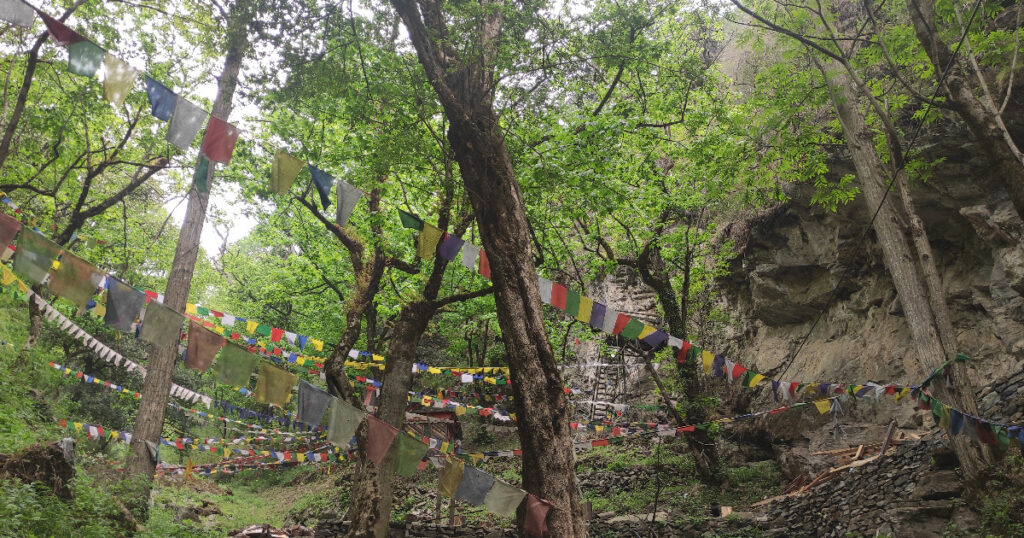
Membartsho is a sacred pilgrimage destination in Bumthang. The site has an altar dedicated to Terton Pema Lingpa and a holy lake encircled by beautiful multi-colored prayer flags. Pema Lingpa’s portrait with his two sons is etched into a rock near the entrance.
Tsatsas, or little conical clay mounds, can be found in several locations surrounding the lake, carved with a sacred Buddhist symbol, and may include human ash or bone of the deceased. The nuns of Pema Tekchok Choling Nunnery take care of the site.
Also Read: Zhemgang Kheng Buli Tsho, a Promised Lake of Buli Moenmo Kuntu Zangmo
Best Time to Visit Bumthang Mebar Tsho
Mebar Tsho of Bumthang is open to the public at all times of the year. Make a wish and offer a small floating lamp over the lake when you’re at the flaming lake.
Pilgrims are advised to be cautious while visiting the place. The place is also dangerous because it is slick and has a fast current. Since 2011, five individuals have drowned there, including a French tourist and his Bhutanese guide who drowned in 2015. You can visit the sacred lakes in Bhutan with the Bhutan Pilgrimage Package.
Also Read: Jo Bay Tsho, a Hidden Lake with a Golden Pillar in Haa
Conclusion
Mebar Tsho, the Burning Lake of Bhutan, offers a profound glimpse into the intersection of spirituality, legend, and natural beauty. Revered as a sacred site, Mebar Tsho is steeped in the rich history of Terton Pema Lingpa, who discovered numerous treasures hidden by Guru Rinpoche. This miraculous connection to the past invites pilgrims and visitors to engage deeply with the spiritual practices that have flourished in this region for centuries.
Also Read: Dangling Tsho, the Sacred Summer Abode of Meme Dangling
Frequently Asked Questions
What is Mebar Tsho?
Mebar Tsho, also known as the Burning Lake, is a sacred Buddhist pilgrimage site in Tang Valley, Bumthang, Bhutan. It is a narrow gorge with flowing water rather than a conventional lake and is closely associated with Bhutanese Buddhist history.
What is the meaning of Mebar Tsho?
Mebar Tsho means the Burning Lake. The lake got its name from the legend of Terton Pema Lingpa. According to the legend, Pema Lingpa submerged himself in the lake with a burning lamp and emerged with the lamp still burning, along with a treasure chest and a scroll of paper. This miraculous event led to the lake being named Mebar Tsho, which means “the burning lake”.
Why is Mebar Tsho called the Burning Lake?
Mebar Tsho is called the Burning Lake because of the legendary butter lamp carried by Tertön Pema Lingpa. According to Bhutanese Buddhist tradition, the lamp remained lit when he returned from the water with sacred treasures.
Who discovered Tang Membartsho?
Where is Tang Membartsho located?
Mebar Tsho is located in the Tang Valley of Bumthang District in central Bhutan. The sacred site is reached by travelling from Chamkhar or Jakar toward the Tang Valley.
How far is Mebar Tsho from Jakar?
Mebar Tsho is approximately 30 kilometres from Jakar, the main town of Bumthang. The journey may take around 30 to 45 minutes by road, depending on road conditions and the exact starting point.
How long does it take to reach Mebar Tsho from the road?
After reaching the roadside area, visitors usually walk for a few minutes along a short trail to reach the gorge and sacred site. The path may be slippery, particularly during wet weather.
Is Mebar Tsho open to visitors?
Yes, visitors can generally visit Mebar Tsho throughout the year. However, travel conditions may vary during the monsoon and winter seasons, so checking local road and weather conditions is advisable.
Why is Tang Membartsho important?
Tang Membartsho is an important pilgrimage site because it is connected with Pema Lingpa’s discovery of sacred treasures. Many visitors come to experience its spiritual atmosphere and learn about Bhutan’s Buddhist heritage.
Is Mebar Tsho suitable for elderly visitors?
The approach to Membartsho is short, but the trail and rocks can be uneven and slippery. Elderly visitors and people with mobility concerns should walk carefully and consider visiting with assistance from a guide or family member.
Is Mebar Tsho safe for visitors?
Membartsho has strong currents, slippery rocks, and unfenced sections, making it potentially dangerous. Visitors should remain in safe viewing areas, avoid climbing onto wet rocks, and never enter the water.
What should visitors wear when visiting Membartsho?
Visitors should wear comfortable walking shoes with good grip and modest clothing suitable for visiting a sacred Buddhist site. A rain jacket or warm layer may also be useful because weather conditions in Bumthang can change quickly.
What are the Mebar Tsho treasures discovered by Pema Lingpa?
The Mebar Tsho treasures discovered by Pema Lingpa include a self-spoken Guru statue, a scroll of the script, and a ritual skull.
What do people do to preserve the Tang Membartsho?
People take several measures to preserve the sanctity and safety of Tang Membartsho by maintaining the site, making religious offerings, and improving safety measures.
What other places can be visited near Mebar Tsho?
Membartsho can be combined with other Bumthang attractions, including Jakar Dzong, Kurjey Lhakhang, Jambay Lhakhang, Tamshing Lhakhang, and traditional villages in the Tang Valley.
Can Mebar Tsho be included in a Bhutan pilgrimage tour?
Yes, Membartsho can be included in a Bhutan pilgrimage tour focused on Pema Lingpa, Guru Rinpoche, and Bhutanese Buddhist heritage. It is especially suitable for itineraries covering the sacred temples and monasteries of Bumthang.