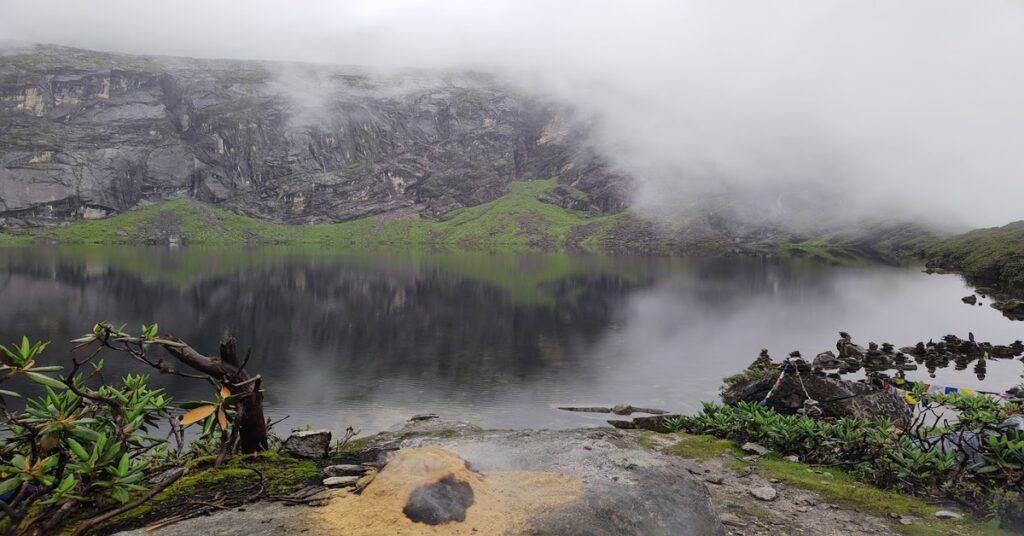

Domendrel Tsho is a sacred lake where Gyalsey Tenzin Rabgye offered a Mandala to consecrate the Palace of Sikkim’s King Chador Namgyal. The lake is one of the best short-day trips under Thimphu Dzongkhag. It is located at an elevation of 4047 meters above sea level and 4 kilometers from Tango Monastery. The hiking route starts from Dodena, the base of Tango-Cheri Monastery, and it takes 4-5 hours from the base.
The lake is also one of the best places for a day hike, a one-night camping, or glamping excursion like a Drakey Pangtsho hike. However, a pilgrimage to Kheng Buli Tsho is one of the best pilgrimage hikes in Bhutan.
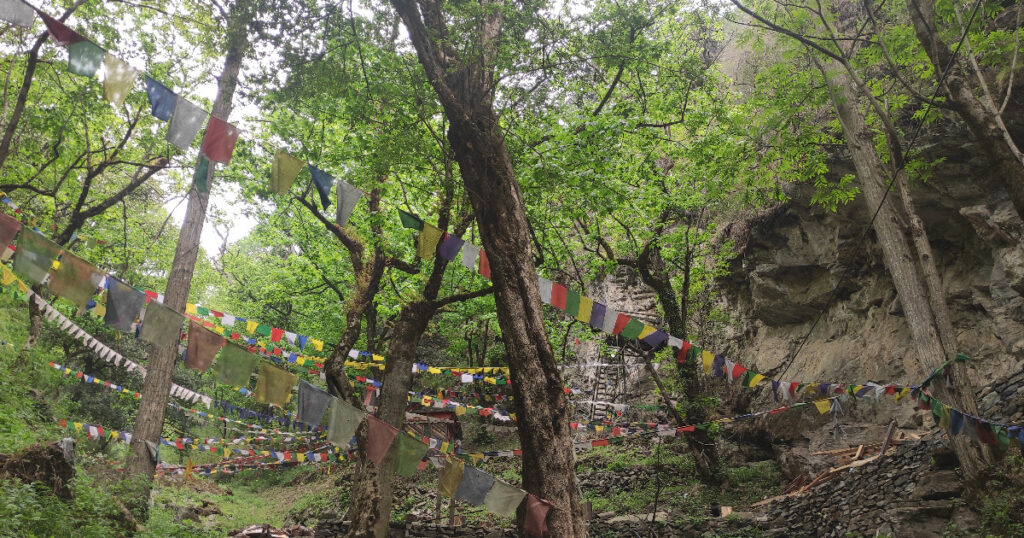
Along the way, you will have a visual treat of lush vegetation. Though the hike can be steep, it is rated as moderate in difficulty. You can see the amazing view of Thimphu city from the top. On clearer days, when you’re lucky, you can also have the opportunity to see the breathtaking views of Gasa Dzong and Punakha.
Also Read: The Best Time to Hike to Kabji-Hoka Tsho, a Lake with an Opening to Stop Overflowing
The hilltop is gorgeous with breathtaking views. It is a peaceful retreat away from the regular hustle-bustle, making it ideal for meditation practices.
Although many do carry offerings, it’s advised to carry incense and milk as offerings to the deity. You’re also advised not to defile the lake and the surroundings, as the history of defiling the lake can be a disastrous hike in your life.
Please avoid pouring milk into the lake or any water sources. You’re also advised not to defile the lake and the surroundings, as the history of defiling the lake can be a disastrous hike in your life.
How to Hike to Domendrel Tsho
Drive from the capital city of Thimphu toward Dodena, the base of Tango-Cheri Monastery. From the base, hike to Tango Monastery. From the Dzongkhag Meditation Centre, you will take one and a half hours to reach the famous Domendrel Tsho. Overall, you would take 4-5 hours to hike from the base to Domendrel. Some hikers can experience mountain sickness, so you must carry sweets and necessary medicines if required. At the end of the hike, you would have walked for almost 10 km.
Also Read: Trek to Jo Bay Tsho, a Hidden Lake with a Golden Pillar in Haa
Historical Significance of Domendrel Tsho
The historical significance of Domendrel is not the lake but the stone stacked in the shape of Mendrel, which translates to Mandala Offering.
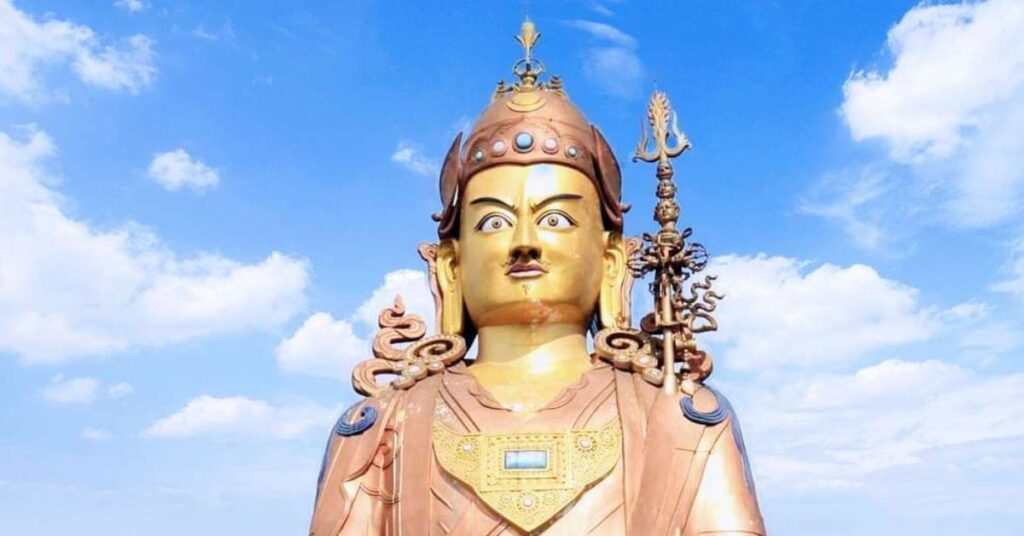
According to legend, the son of the first monarch of Sikkim (‘Dren Jong’, rice valley), Chador Namgyal, was a close friend of Gyalse Tenzin Rabgye in the 17th century AD. One day, the former invited the latter to Sikkim for the consecration rites of the former’s Palace at ‘Dren Jong’ (present-day Sikkim). Although he could not attend because of his advanced age, Gyalse Tenzin Rabgye set an auspicious time for the consecration ceremony, during which he threw grains into the air and made a ‘sorr’ noise. At the same time, certain grains of good fortune and tremendous auspiciousness are said to have mysteriously descended straight into the Palace of his close friend, Sikkim’s first king, as mentioned above.
Also Read: Mebar Tsho, the Burning Lake, where Pema Lingpa discovered Hidden Treasures
However, the Tsho at the Mandala Offering became famous as the Domendrel Tsho. The Tsho, or the lake, is also known for the tragic incident in the lives of 6 young boys who went hiking to Domendrel Tsho and lost 2 of their friends to starvation. The six boys lost their way after unknowingly infuriating the local deity by defiling the lake in 1996. They are said to have reached Punakha Dzongkhag. Even the movie “6 Boys” was made based on the true event in 2003.
Also Read: The History of Drakey Pangtsho, the Treasure Lake of Guru Rinpoche on the Lap of Jowo Drake
Sacred Wonders to See at the Domendrel Tsho
The boulders on this hilltop are generally in the shape of ‘Mandala Offerings,’ and thus the holy location is known as ‘Do Mendrel.’
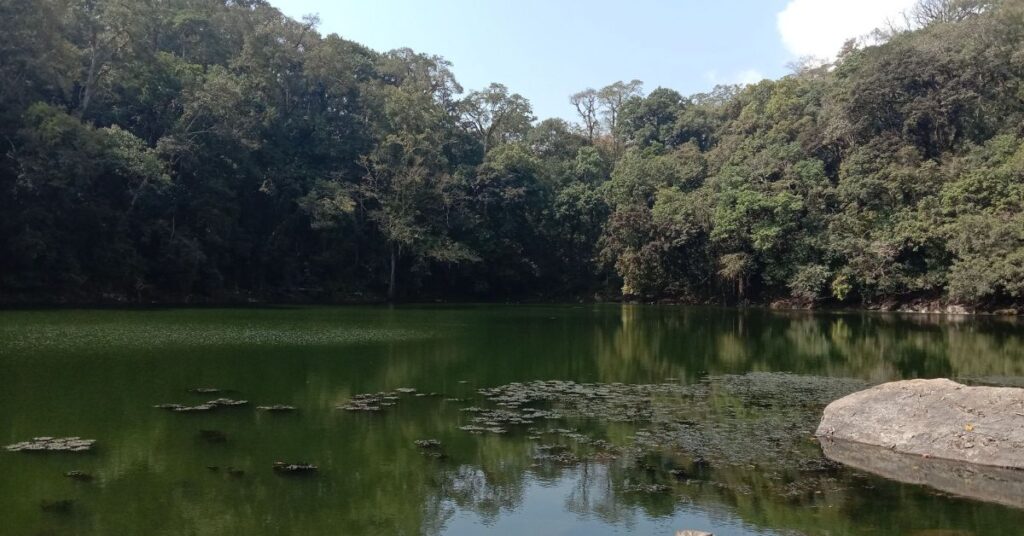
There are also two lakes (Lha Tsho) of God and Naga. They are claimed to belong to our Protector deities Pal Yeshey Goenpo and Tandin. According to another history, these two lakes are believed to be the palace of Nep Bak Yoepa, another protector deity of wakefulness and conscientiousness.
The meditation houses of Gyalse Tenzin Rabgye’s parents can be seen around these lakes. You can also see a temple on the hilltop above the lake.
Also Read: Dangling Tsho, the Sacred Summer Abode of Meme Dangling
Best Time for Hiking to Domendrel Tsho
Though you can hike any time of the year, summer would be tough. The rain is unexpected and can fall at any time of the day, making the hike not so enjoyable. The peak winters can also be harsh for hiking, although snow-capped hikes can be a must for some ardent hikers. You can choose to hike during the spring and autumn seasons, as these seasons offer grand views of mountains and spectacular views of rich flora.
Also Read: The best time for hiking to Buli Tsho, a Promised Lake of Buli Moenmo Kuntu Zangmo
Conclusion
The hike to Domendrel Tsho is not merely a physical challenge but a deeply spiritual journey that invites pilgrims and adventurers alike to connect with the sacred traditions of Bhutan. As you traverse the stunning landscapes, the experience culminates in the serene beauty of the lake, where the mandala offerings of Gyalse Tenzin Rabgye resonate with profound significance. This sacred site serves as a reminder of the rich cultural heritage and spiritual depth embedded in Bhutanese Buddhism. You can visit the sacred lakes in Bhutan with the Bhutan Pilgrimage Package.
Other Sacred Sites to Explore in Thimphu
Dechenphu Lhakhang: It is a monastery dedicated to Geynyen Jagpa Melen, a powerful protective deity, located at the northern end of the Thimphu Valley in Bhutan. The Temple was constructed in the 12th century by Dampa, the son of Phajo Drugom Zhigpo.
Pangri Zampa Monastery: It is one of Bhutan’s oldest monasteries, founded in the 16th century by Ngawang Chogyal, located 8 kilometers north of Thimphu on the west bank of the Thimphu River. The monastery now functions as Bhutan’s Royal College of Astrology, where monks study traditional astrology, and the college is responsible for determining dates for important national events.
Cheri Monastery: Also known as Chagri Dorjeden Monastery, it is the first monastery established in Bhutan by Zhabdrung Ngawang Namgyel in 1620. It is located in the Upper Thimphu Valley, about 15 kilometers north of Thimphu city, perched on a hill at an altitude of approximately 2,850 meters above sea level.
Tango Monastery: The Tango Choying Dzong was founded in the 13th century by Phajo Drugom Zhigpo and rebuilt in its current form in 1688 by the Fourth Temporal Ruler, Tenzin Rabgye. The monastery is perched on a forested hillside near Cheri Mountain, famed for its spiritual legends, particularly the prophecy involving the deity Hayagriva.
Thuji Dra Monastery: Also known as the Cliff of Compassion, it is one of the four cliffs prophesied by Guru Rinpoche to Phajo Drugom Zhigpo. The Thujidra Temple is located at an altitude of nearly 4,000 meters, where Phajo saw in a vision Phagpa Thujechenpo while meditating here.
Frequently Asked Questions
What is Domendrel Tsho?
Domendrel Tsho is a sacred lake in Bhutan known for its deep spiritual significance in Buddhist tradition. It is considered a holy site where devotees visit to seek blessings, peace, and spiritual merit.
Where is Domendrel Tsho located?
It is located at an elevation of 4047 meters above sea level and 4 kilometers from Tango Monastery. The hiking route starts from Dodena, the base of Tango-Cheri Monastery, and it takes 4-5 hours from the base.
How do I get to Domendrel Tsho?
Drive from Thimphu to Dodena/Tango Monastery parking.
From the monastery base, follow the trail (signposted) toward the lake.
Total hiking time is typically 4–6 hours one way; round-trip day hikes often cover 10–11 km.
How difficult is the Domendrel Tsho hike?
Rated moderate to challenging, depending on fitness and altitude acclimatization.
What should I carry during the Domendrel Tsho hike?
Water, snacks/energy bars, and a packed lunch (no shops on trail).
Warm layers, rain gear, and sturdy footwear.
Basic first aid, altitude-sickness remedies, and sweets for energy.
Optional offerings: incense; some traditions mention milk, but do not pour milk or any substance into the lake or water sources.