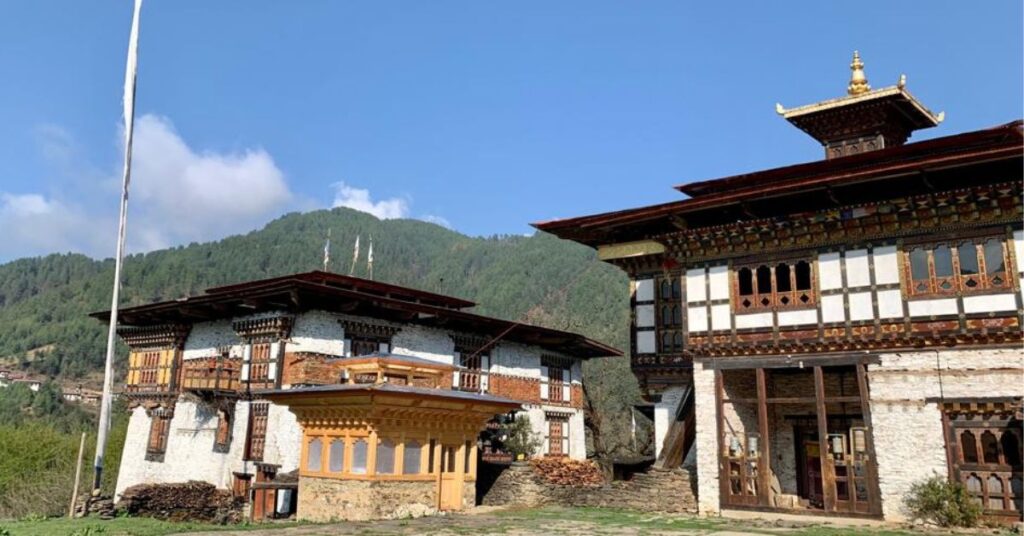
Ngang Lhakhang, the “Swan temple”, also known as Ngala Lhakhang or Nga Lhakhang, is a two-story private temple founded in the 15th century. Ngaa Lhakhang is believed to have been built by Lama Namkha Samdrup, a Tibetan Lama known as the Tshampa Lama, according to a prophecy by a Khandrom.
It is located in Ngang village, under Chhoekhor Gewog of Bumthang Dzongkhag, at an elevation of 2,819 meters. In 2004, the owners enlarged their family home adjacent to the temple and added four guest rooms to accommodate visitors.
Today, Ngaa Lhakhang hosts the popular Nalakhar Tshechu festival, which is believed to have been initiated by the founder during the consecration ceremony.
How to Reach Ngang Lhakhang
Ngang Lhakhang is situated in Ngang-yul, also known as Swan Land, near Draphe (Drapham/Damphel) Dzong, and is accessible via a farm road. Visitors can drive directly to the Lhakhang, though many prefer to take a beautiful, gentle two-hour hike from Thangbi Goemba along the river’s left bank.
Nga temple is also the starting point for the Bumthang Cultural Trail, which passes through Phephe La to Ogyen Choling Palace in the Tang Valley.
History of Ngang Lhakhang
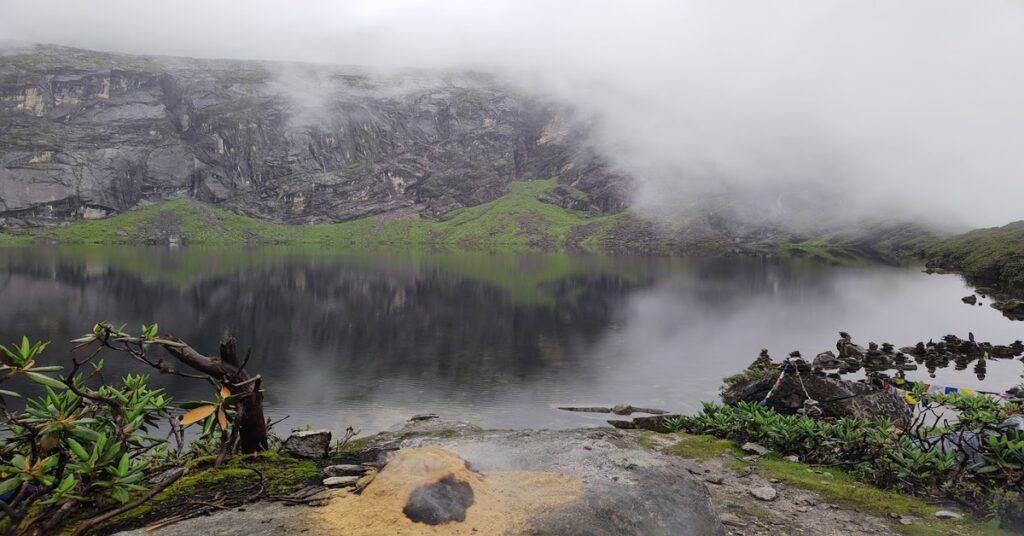
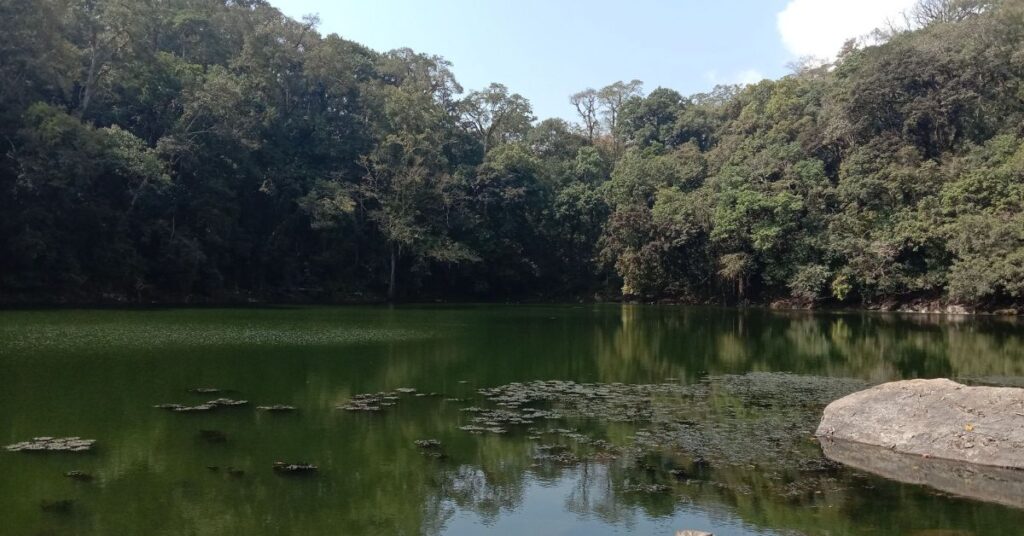
According to history, the site of Ngang Lhakhang was blessed by Guru Rinpoche in the 8th century. Later, in the 15th century, Lama Namkha Samdrup traveled from Lhodrak Kharchu in Tibet. When he reached the spot where the Lhakhang now stands, he saw two beautiful swans (Ja Ngangpa) flying in circles and landing on a lake. The lama saw this as an auspicious sign and chose to build a one-story residence. Therefore, Ngala Lhakhang is believed to have been constructed on the lake. Lama Namkha Samdrup is also thought to have built Namkhoe Lhakhang in Tang.
In the late 1800s, a fire destroyed the Lhakhang. It was reconstructed in the 1970s by the late 6th Kolay Lama, a member of the founder’s collateral lineage. Later, it was renovated by the descendants of Terton Pema Lingpa.
Description of Ngang Lhakhang
Ngang Lhakhang is enclosed by a low-height stone masonry wall with a small entrance gate. The Ngala Lhakhang is a two-story structure resembling a traditional Bhutanese farmhouse, with a spacious front courtyard. However, the red band of Kheymar identifies it as a religious structure.
The walls are built of stone masonry bound with mud mortar, while windows, doors, and the roof framework are of timber. The main temple features a two-layered jabzhi roof topped with a golden pinnacle, whereas the extended structure has a lean-to roof (chenkhep).
Ground Floor
An entrance porch leads to Khenlop Choesum Lhakhang and a mani dungkhor room. This Lhakhang houses a revered statue of Khenden Bodhisattva. The statue is considered very sacred because its tooth is believed to have appeared naturally, and holy water emerges from its mouth on auspicious days.
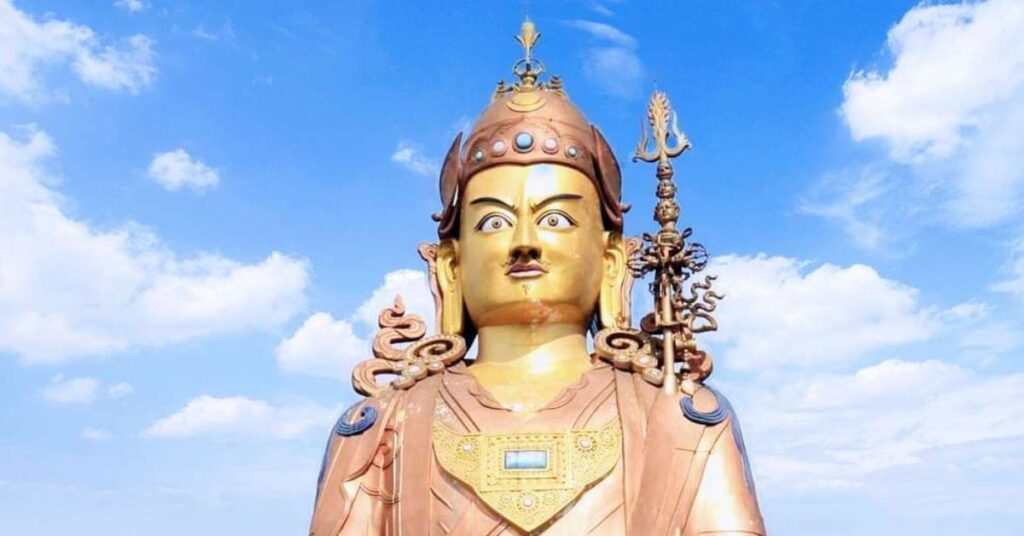
The main altar holds a statue of Guru Rinpoche, flanked by Shantarakshita and the Tibetan king Trisong Detsen. The statue of Guru Rinpoche is said to be crafted by Pema Lingpa. The Mural painting includes an image of Zhabdrung on the side wall opposite the altar and a depiction of Guru Rinpoche on a lotus with two swans.
First Floor
The first floor features a loft, the Tshela Namsum Lhakhang, a goenkhang, and a torkhang. Tshela Namsum Lhakhang houses the trinity of Tsepame, Namse, and Drolma (Tsela Nam Sum), with Chenrezig standing to the left. The goenkhang has protector deities.
Traditional masks used during the annual Ngang Bi Rabney festival are hung from the rafters.
Festival of Ngang Lhakhang
The communities of Ngang village organize religious festivals in Ngaa Lhakhang. One of them is Nalakhar Tshechu, also known as Nga Lhakhang Zhi or the Ngang Bi Rabney (or simply Ngang Rabney). It is a three-day festival held from the 15th to the 17th day of the 10th month in the Bhutanese calendar. The Tshechu is said to have been started by Lama Namkha Samdrup during the Lhakhang’s consecration.
Samdang Dung lineage and Ngang Lhakhang Choeje lead the celebration. The festival is coordinated and sponsored by the communities on a rotating basis. Family
Another important annual event is the five-day Nungney Prayer. It is held from the 13th to the 18th of the first lunar month. The prayer is performed for a good harvest and the well-being of the communities and the nation.
Frequently Asked Questions
What is Ngang Lhakhang?
Ngang Lhakhang (“Swan Temple”) is a 15th-century Buddhist monastery in Nalakhar village, upper Choekhor Valley, Bumthang. It is a private lhakhang founded by the Tibetan lama Namkha Samdrup (also known as Tshampa Lama), a contemporary of Pema Lingpa.
Why is it called the “Swan Temple”?
According to oral tradition, Namkha Samdrup was searching for an auspicious site when he saw a flock of swans (ngangpa) circling and landing on the ridge. He took this as a divine sign and built the temple there, naming it Ngang Lhakhang.
When was it built?
Lama Namkha Samdrup, who came from Tshampa (southern Tibet), built it in the 15th century.
Where exactly is it located?
Nalakhar, upper Choekhor Valley, Bumthang, about 1 hour north of Jakar (Bumthang town), on the road toward Thangbi Lhakhang and beyond.
What festival is held here?
The Nalakhar Tshechu (also called Ngang Bi Rabney) is a three-day festival held annually in the 10th Bhutanese lunar month.
Is it open to visitors year-round?
Yes, as a private village lhakhang, it is generally accessible during daylight hours, but access can depend on caretaker availability and local events.