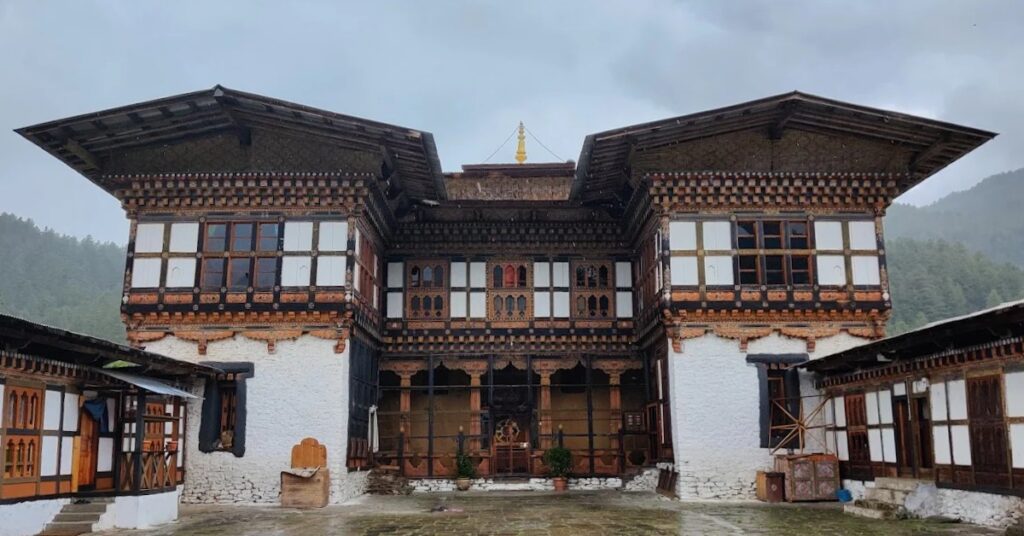
Thangbi Lhakhang, also known as Thangbi Lhendrup Choling, is a small two-story temple founded by the 4th Shamar Rinpoche, Chokyi Drakpa Yeshe Pal Zangpo, in 1470. The temple was built according to the prophecy of the Karmapa to spread Buddhism in Bumthang.
It is located on a highland within a grove and surrounded by village homes overlooking the Chamkhar Chhu in the Choekhor Valley at an elevation of 2,730 meters.
Today, Thangbi Temple is owned by the government and is maintained by the monks of 14th Shamar Rinpoche. The Lhakhang is famous for Thangbi Mewang, also known as Thangbi Mani.
How To Reach Thangbi Lhakhang
Thangbi Lhakhang is located 4 kilometers north of Kurjey Lhakhang in Bumthang. The easiest way to get there is by flying from Paro International Airport to the domestic airport in Bumthang, or by taking a scenic 7- to 8-hour drive to Bumthang. From Bumthang’s main town, Jakar, a 30-minute drive on a road leads to the temple. If you have time, go further north of Thangbi Temple to Shuk Drak Monastery.
Sacred Relics to See at Thangbi Lhakhang
- Three clay statues from the 15th century;
- Statues of Di Sum Sangay;
- Jowo Jampa (Maitreya, the future Buddha);
- Portrait of 4th Shamar Rinpoche;
- Iron chain of Pema Lingpa;
- Magnificent library;
- Collection of masks.
History of Thangbi Lhakhang
The 4th Shamar Chokyi Drakpa Yeshe Pal Zangpo founded Thangbi Lhakhang in 1470 AD.
According to the history of Thangbi Lhakhang, the 4th Shamar Rinpoche, Choki Drakpa, came to Bumthang from Tibet and built a one-story Thangbi Lhakhang on a site that resembled a Jachung in 1470. The Lhakhang became a Karma Kagyupa temple.
However, Pema Lingpa took control of the temple, transforming it into a Nyingmapa Lhakhang following a misunderstanding with the 4th Shamarpa, who left the temple.
Later, the temple was once again taken over by Shamar Rinpoche. The 8th Shamar Rimpoche, Choki Dondrup, expanded the temple into a two-story structure in the 18th century. Jakar Dzongpon Chimi Dorji renovated Thangbi Lhakhang in the late 20th century.
Importance of Thangbi Lhakhang
Thangbi Lhakhang’s historical connections to Shamar Rinpoche and Pema Lingpa highlight its religious importance, dating back to 1470. The Lhakhang’s annual Thangbi Mani Festival, which features mask dances and a fire blessing, brings communities together and helps preserve their cultural heritage. Thangbi Lhakhang also serves as the main community temple for the villages of Thangbi, Goling, and Kharsath.
Description of Thangbi Lhakhang
The main relic of Thangbi Lhakhang is Di Sum Sangay, the Buddha of three times (past, present, and future).
Thangbi Lhakhang features two-story sanctuaries with a Goenkhang, dedicated to fearful deities, and decorated with beautiful statues and wall paintings.
The iron chain at the temple’s entrance is believed to have been made by Pema Lingpa, similar to the one kept in Tamzhing Monastery.
Ground Floor
The ground floor features Di Sum Sangay, the Buddhas of the past, present, and future, along with three clay statues that likely date back to the late 15th century. The sanctuary also features a statue of 4th Shamar Rinpoche, who founded the Thangbi temple, along with portraits of many renowned religious masters.
Upper Floor
On the upper floor of the sanctuary, Jowo Jampa, also known as the future Buddha (Maitreya), is the main statue. The sanctuary’s hall also features a remarkable painting of Zangdo Pelri, the paradise of Amitabha. An adjacent room contains a magnificent library and a collection of masks used during the annual festival.
Thangbi Mewang Festival or Thangbi Mani Festival
The Thangbi Mani Festival is a 4-day annual Tshechu held at Thangbi Lhakhang. It is held from the 14th to the 17th day of the eighth month of the Bhutanese calendar. Thangbi Mani in Bhutan, also known as Thangbi Mewang, is famous for its fire blessing ceremony. The devotees jump over the flames three times to cleanse themselves of sins and evil deeds and protect themselves from bad luck and misfortune for the rest of the year.
Best Time to Visit Thangbi Lhakhang
The best time to visit Thangbi Lhakhang in Bumthang is during the autumn months of September to November, particularly around the Thangbi Mani Festival. The spring (March to May) season in Bumthang is also ideal, with blooming landscapes and favorable weather. You can visit the major pilgrimage sites of Bumthang with the Bhutan Pilgrimage Package.
Conclusion
Thangbi Lhakhang is more than a temple; it’s a living testament to Bhutan’s spiritual and cultural heritage. From its sacred relics and historical significance to the vibrant Thangbi Mani Festival, it offers an enriching experience for visitors. Whether you seek spiritual reflection, cultural exploration, or scenic beauty, this Chokhor Valley gem delivers. Plan your visit during the festival season to witness Bhutan’s traditions come alive, and let Thangbi Lhakhang’s serene embrace leave you inspired.
Frequently Asked Questions
What is Thangbi Lhakhang?
Thangbi Lhakhang (also called Thangbi Goemba or Thangbi Lhendrup Choling) is a small two‑storey 15th‑century temple in the Chokhor (Choekhor) Valley of Bumthang, at about 2,730 m altitude. It sits on a highland within a grove, surrounded by village homes and overlooking the Chamkhar Chhu river.
Who founded it and when?
The 4th Shamar Rinpoche, Chokyi Drakpa Yeshe Pal Zangpo, an important lama of the Karma Kagyu school, founded it in 1470 after a prophecy from the Karmapa to spread Buddhism in Bumthang. After a dispute, the temple came under the influence of the great tertön Pema Lingpa and is now associated with the Nyingma tradition.
Where exactly is it and how do you get there?
Location: Thangbi village, north of Kurjey Lhakhang in Chokhor Valley, Bumthang.
Access by road: about 3.5–4 km drive north of Kurjey Lhakhang on an unpaved road branching across the river at Toktu Zampa; some sources describe it as roughly 17 km from Kurjey depending on the route taken.
Final approach: from the road end, a 20–30 minute walk through buckwheat fields (some descriptions say up to ~1.5 hours if starting from where the motorable road ends) to reach the temple.
Is it open to tourists and pilgrims?
Yes. Thangbi Lhakhang is a community temple and historic site commonly included in Bumthang itineraries. Because it is active and maintained by local gomchen (lay monks), access can vary with daily rituals and festivals.
What is the Thangbi Mani festival?
A community mani (prayer) festival held annually from the 14th to 16th day of the 8th Bhutanese month, famous for its fire blessing ceremony (Mewang) performed on an open ground, plus sword dances and other local performances.