
Skip to content

trongsa

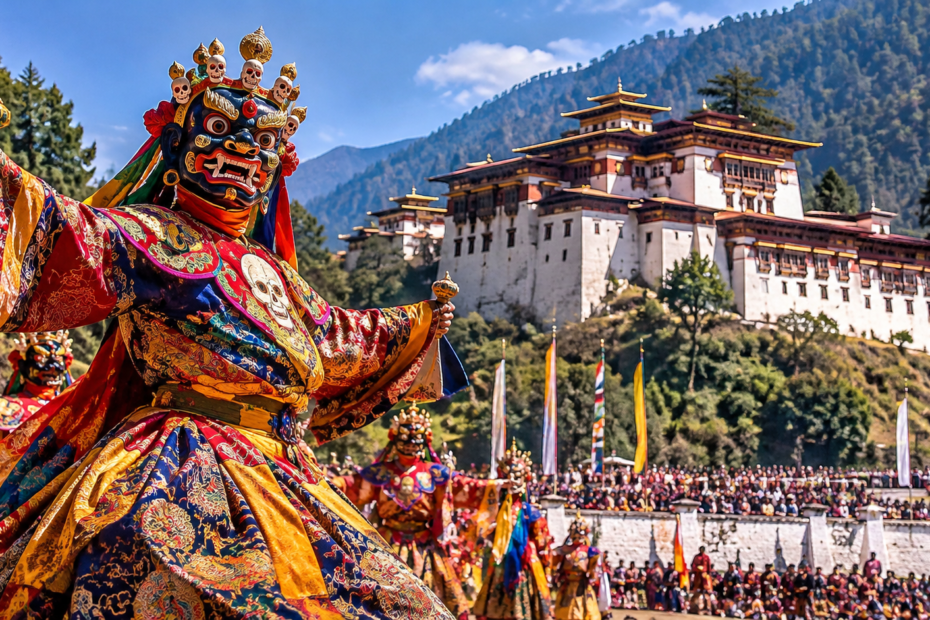
A masked Bhutanese cham dancer performing at a festival with Trongsa Dzong in the background

Trongsa Lhamoi Dromchhen 2027: Lhamoi Drubchen

Trongsa Lhamoi Dromchhen, also known as Lhamoi Drubchen or Lhamoi Dromchen, is a sacred three-day annual Buddhist ritual festival held at Trongsa Dzong in central Bhutan. Dedicated to Pelden Lhamo (also written Palden Lhamo), the female Dharma protector, the observance brings together prayers, tantric rituals, and sacred masked dances. Its purpose is religious: to invoke protection, dispel obstacles, and pray for the well-being of Bhutan and its people.

Two sacred pilgrimage sites associated with Guru Rinpoche in Bhutan

Kurjey and Nabji Lhakhang: Guru Rinpoche’s First Visit to Bhutan

Two important pilgrimage sites are associated in Bhutanese Buddhist tradition with Guru Rinpoche’s first visit to Bhutan: Kurjey Lhakhang in Bumthang and Nabji Lhakhang in Trongsa. Local accounts connect both places with Guru Rinpoche’s encounter with King Sindhu Raja and the resolution of a conflict with King Nawoche. The exact year of the visit is uncertain, and these two sites are presented here as important places in the first-visit tradition—not as an official ranking of Bhutan’s “holiest” sites.

For the broader context behind these two sacred sites, including the traditional accounts of Guru Rinpoche’s visits and other places associated with him across Bhutan, see our Guru Rinpoche in Bhutan: His Visits and Sacred Pilgrimage Sites. For detailed visitor information, continue to the individual guides to Kurjey Lhakhang and Nabji Lhakhang.

Nabji Lhakhang, historic Buddhist temple in Nabji village, Trongsa, Bhutan

Nabji Lhakhang, Trongsa: Stone Pillar of Oath & Visitor Guide

Nabji Lhakhang is a historic Buddhist temple in Nabji village, Korphu Gewog, Trongsa Dzongkhag, commonly listed at about 2,156 metres above sea level. In Bhutanese Buddhist tradition, this is where Guru Rinpoche brought together King Sindhu Raja of Bumthang and King Nawoche to end their conflict and swear an oath of peace. The Nado, a monolithic stone pillar preserved inside the temple, is revered as the lasting symbol of that agreement and bears handprints attributed to Guru Rinpoche and the two kings. The temple is traditionally associated with Khandro Tashi Khyidren and dated to the 8th century.
