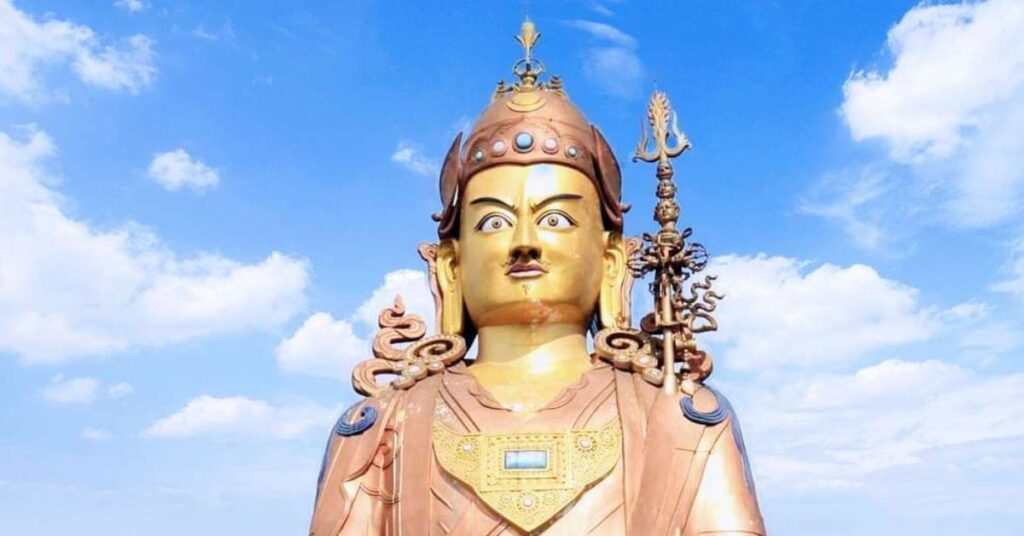
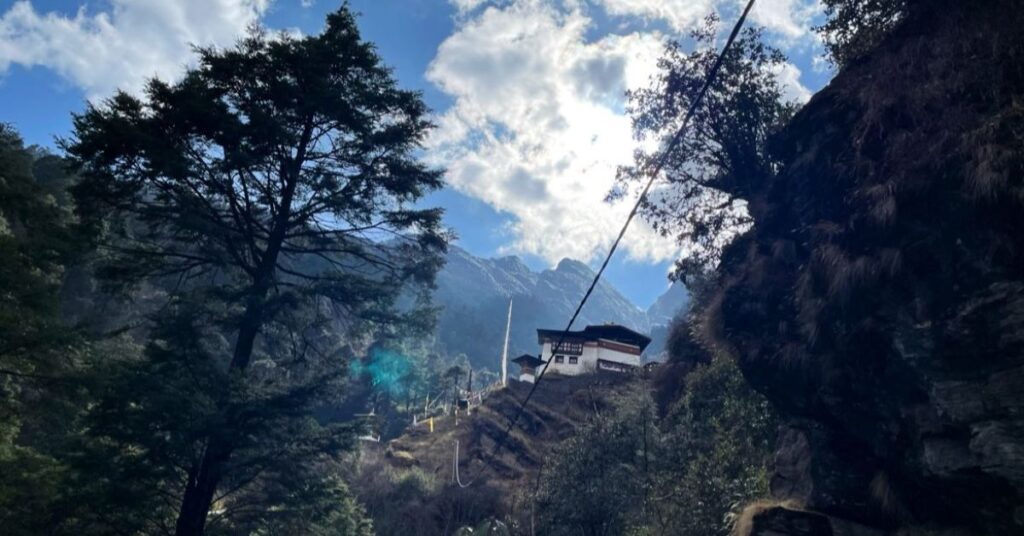
Chumphu Ney is a meditation place of Guru Rinpoche. It was originally known as Chumophug, “cave of holy water.” The Chumphu Nye was discovered by His Holiness the 9th Je Khenpo of Bhutan, Shakya Rinchen.
Chumphug Nye is located in the northern part of Dopshari Gewog of Paro Dzongkhag, at an altitude of 3078 meters (10170 ft) above sea level. The sacred relic of Chumphu Lhakhang is the famous floating statue of Dorji Phagmo, which defies gravity. Terton Drukdra Dorji discovered it from the lake above the Monastery.
How to Reach Chumphu Ney
The Chumphu Nye is located in the northern part of Dopshari Gewog of Paro Dzongkhag. Drive one and a half hours from Paro town. After parking your car at the last stop, the Chumphug Goenpa Hike is a 4-hour hike up and a 3-hour hike back to the car parking lot. The spiritual hike is usually a day trip, during which people pack their lunch and have it at the parking lot after returning from Chumophu Ney. There are no night halt facilities at the monastery. However, some hikers spend a night camping at the sacred site.
Chumphu Ney Hike
Chumphu Ney Hike is one of the best pilgrimage hikes in Bhutan for those who love connecting with pristine nature. The Hike is around 9 km. The Chumphug Nye hike starts on a gentle slope as one crosses the entry gate (Zigo), naturally formed by two boulders, and has a sharp ascent of 826 meters at the end of the hike to reach the monastery at the top.
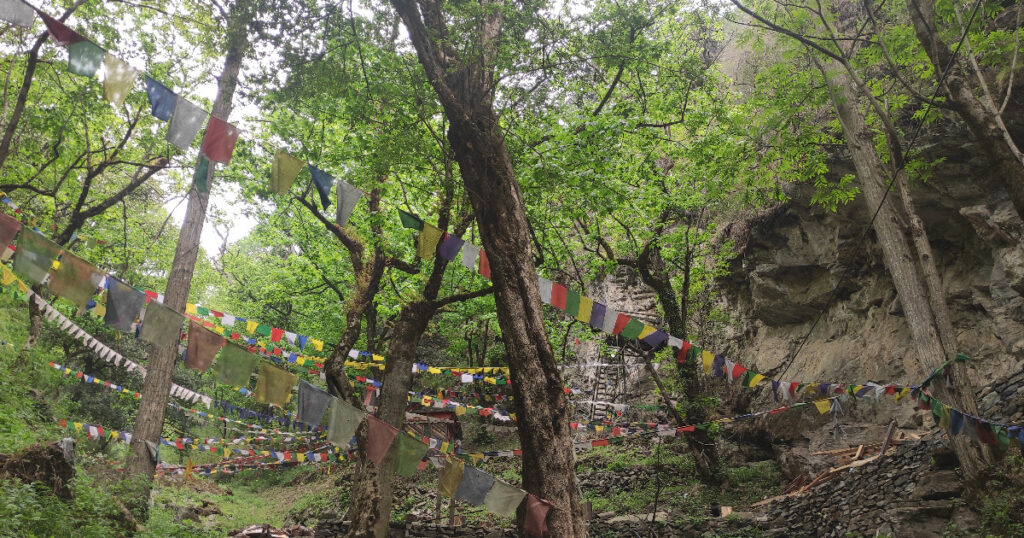
The climb begins at the bridge and passes through several sacred caves, rocks, and waterfalls associated with Guru Rinpoche, Dakinis, and Saints. The amazing sights along the way, as one hikes up, include the gateway to heaven, Guru Rinpoche’s throne, an imprint of Guru Rinpoche, the Guru’s ceremonial robe on a rock, a stone vase filled with the holy water of long life, and impressions of Dakinis.
The trail is longer than hiking up Tiger’s Nest, but it is not as physically exhausting. It is enjoyable and follows a lovely river through a charming forest till you come to a Chorten. The hike is on flat land with little gradient until the last part of the trail, at a bridge at the base of the hill. However, the final hundred meters incline up to the monastery is steep.
Also Read: Paro Taktsang Tiger’s Nest Hike
Sacred Relics to See at Chumphug Goenpa
- The floating statue of Dorji Phagmo (Vajravarahi) defying gravity;
- Numerous caves where Guru Rimpoche and his consorts, Dakinis, and legendary scholars have meditated;
- The gate to heaven;
- Guru Rinpoche’s throne;
- Imprints of Guru Rinpoche;
- Ceremonial robe of Guru Rinpoche on a rock;
- A stone vase containing the elixir of Immortality;
- Imprints of Dakinis/saints;
- Rocky cliffs that contain secret jewels to be revealed in degenerated times.
Also Read: Guru Rinpoche in Bhutan: His Visits to Bhutan and Sacred Sites
Historical Significance of Chumphug Nye
According to history, Guru Rinpoche returned to Chumophug and meditated for two months following his historic visit to Paro Taktsang Monastery on the back of a Tigress. The initial name of Chumphu Nye was Chumophug, which means “cave of holy water.”
Guru Rinpoche had described the sacred site at Chumophu: ‘The sound of the churning water; rings the sound of dharma; mother dakini, the holder of awareness; is endowed with the dual aspects of siddhi; in the cave akin to the source of dharma; the main treasure is the meteoric dagger of the pure realm’.
The Chumphu Nye was discovered by His Holiness the 9th Je Khenpo of Bhutan, Shakya Rinchen. Later, Terton Drukdra Dorji visited Chumphu Lhakhang and discovered Dorji Phagmo’s statue from the lake above the Monastery.
Chumphu Nye is also considered the second Tsari. The first Tsari is in Tibet, known as Tsari Rongkor. However, it was prophesied that Tsari Rongkor would decline steadily over time, and Chumphug Nye would then become the main Tsari.
Description of Chumophu Ney
Chumophu has two sacred sites: the upper and lower sites; the lower site, where there are remains of an old temple, is believed to have been blessed by Guru Padmasambhava in the 8th century.
There are holy waterfalls and sacred caves where Guru Rinpoche and his consorts have meditated. Many legendary scholars also meditated there. The longevity water (Tshechhu) oozing out of a rock is the most sacred water of the Chumphug Ney. The Tshechhu is believed to heal various diseases and give a long life. Waterfalls are said to be the bathing place of Guru Rinpoche, and big rock openings are said to be the opening gates to Heaven.
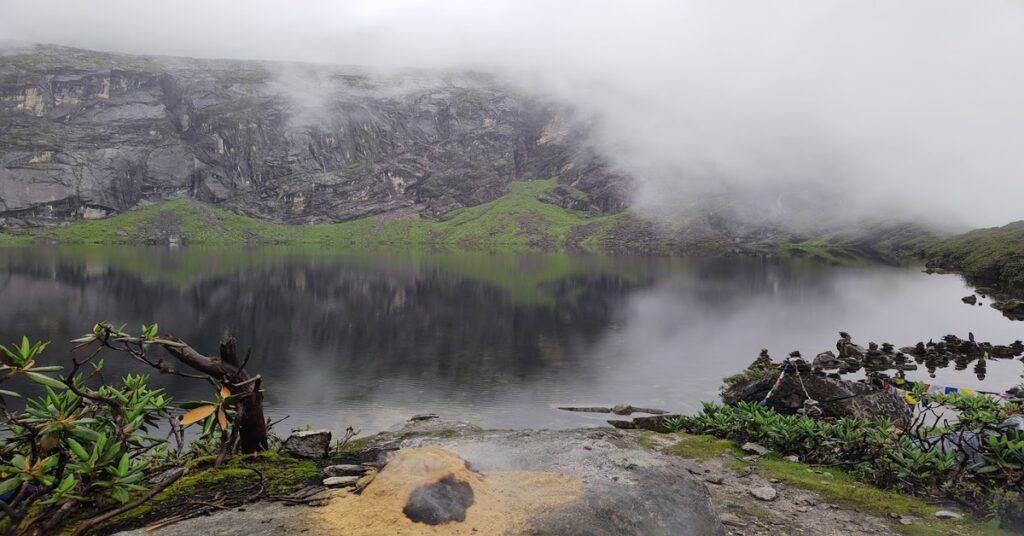
A 20-minute hike uphill from the temple leads to a holy waterfall. This is considered a lake from which the statue of Dorji Phagmo was discovered. Taking bamboo pieces (tsari nguma) from the vicinity of the waterfall, which are used to fashion amulets and talismans, is a common practice among devotees who visit Chumphug Ney.
Chumphu Lhakhang
The temple is perched atop a hilltop surrounded by three crown-shaped mountains. His Holiness the Ninth Je Khenpo Shakya Rinchen built the present Chumophu Lhakhang and named it Tsari Nyipa. The Chumophu monastery, built in the middle, at the heart of the body, is depicted in an aerial view of the region as an imaginary figure of a female wearing a crown. However, the present temple is allegedly founded by Choejey Pema Jungney from Shara Drango village.
The main statue of Chumphug Lhakhang is a 5-foot-tall floating statue of Dorji Phagmo (Vajravarahi) defying gravity. Believe it or not, one leg is crossed at the knees, and the other is standing but does not touch the ground. The Lama at the temple proves this by moving money back and forth under the feet of the floating statue.
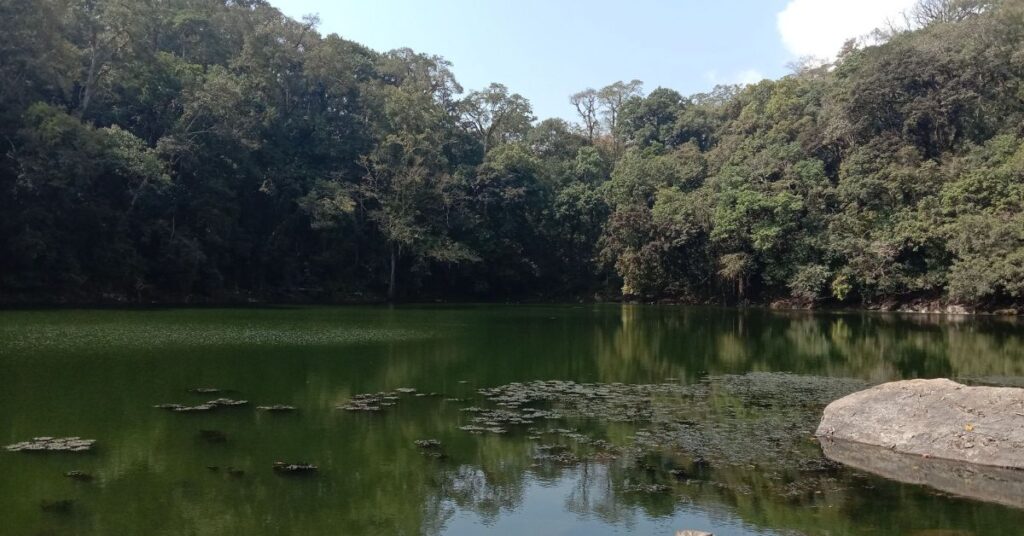
According to history, the Dorji Phagmo statue was discovered from the lake above the Monastery by Terton Drukdra Dorji. The statue was around a foot tall when it was discovered from the sacred Lake. But with a prophecy, His Holiness Je Shakya Rinchen planned to build a statue the same size as Tsari Nye by covering the foot-tall statue from the outside. However, the statue has grown to its present size by itself. Another legend has it that the Goddess Dorji Phamo flew from Tibet and stayed on as a statue there.
It is believed that whoever visits this temple, built on the crest of the crescent-shaped hill, is instantly liberated from the cycle of suffering owing to the site’s sacredness. Guru had even mentioned, ‘In the crescent-shaped cliff, there are concealed treasures on dharma teachings; on the face of the cliff, there is a foot impression of His Master (Guru Rinpoche)’.
Best Time to Visit Chumphu Ney
In Bhutan, the spring season, which runs from March to the end of May, and the autumn season, which runs from the end of September to the middle of November, are the best times to go hiking to your favorite places. Therefore, the best time to visit Chumphu Nye is in the spring and autumn. You can visit major pilgrimage sites in Paro with the Bhutan Pilgrimage Package.
Frequently Asked Questions
What is Chumphu Nye?
Chumphu Nye is a sacred Buddhist pilgrimage site and meditation sanctuary in Paro, Bhutan. Known for its peaceful mountain setting, ancient meditation caves, and spiritual significance, it is one of the important sacred destinations in western Bhutan.
Where is Chumphug Nye located?
Chumphug Nye is located in the northern part of Dopshari or Doteng Gewog in Paro Dzongkhag, at an altitude of 3078 meters above sea level.
Who discovered Chumphu Nye?
His Holiness Shakya Rinchen, the 9th Je Khenpo of Bhutan, discovered the Chumphug Nye.
How far is Chumphu Nye from Paro?
Chumphu Nye is approximately a 30- to 90-minute drive from Paro town, depending on the road and starting point. After reaching the roadhead, visitors must continue on foot to reach Chumphug Goenpa.
How long does it take to hike to Chumphu Ney?
The hike to Chumophu Ney generally takes about three to five hours one way, depending on walking speed and trail conditions. The complete round trip may take approximately seven to eight hours.
How difficult is the Chumphu Ney hike?
The Chumphug Ney hike is considered moderately difficult to challenging because of its long walking distance, steep sections, and significant elevation gain. Good physical fitness and comfortable hiking shoes are recommended.
What is the total distance of the Chumphu Ney hike?
The total round-trip hiking distance is commonly estimated at around 9 to 14 kilometres. The exact distance may vary depending on the roadhead and route used.
What is the meaning of Chumophug Nye?
The initial name of Chumphu Nye was Chumophug, which means “cave of holy water.” Chumophu Nye also translates to “Sacred Female Water Mountain”.
What is the main attraction of Chumphu Nye?
The main attraction of Chumphug Nye is the revered floating statue of Dorji Phagmo, also known as Vajra Dakini. The statue is housed inside the monastery and is an important object of devotion for pilgrims.
Why is Chumphu Nye important to Buddhists?
Chumophu Ney is believed to be a sacred meditation site associated with Guru Rinpoche and other important Buddhist masters. The caves and spiritual landscape make it a significant destination for prayer, meditation, and pilgrimage.
What can visitors see at Chumphu Ney?
Visitors can see Chumphug Goenpa, the floating statue of Dorji Phagmo, sacred meditation caves, forest trails, mountain scenery, and traditional religious structures. The journey itself is also an important part of the pilgrimage experience.
Is Chumphu Ney suitable for elderly visitors?
Chumophu Ney may not be suitable for elderly visitors who have difficulty walking for several hours or climbing steep trails. Those planning a pilgrimage should assess their health and stamina in advance and consider travelling with an experienced local guide.
What is the best time to visit Chumphu Ney?
The best time to visit Chumphug Ney is generally during spring and autumn, especially from March to May and September to November. These seasons usually offer more comfortable hiking conditions and clearer mountain views.
Can I visit Chumphu Ney during the monsoon?
You can visit Chumophu Ney during the monsoon, but rain may make the trail slippery and more difficult. Visitors should check local weather and trail conditions, wear suitable footwear, and allow extra time for the hike.
What should I carry for the Chumphu Ney hike?
Carry drinking water, packed food, rain protection, sun protection, warm clothing, a first-aid kit, and trekking poles if needed. Since facilities may be limited along the trail, it is important to carry all essential supplies.
Are food and accommodation available at Chumphug Ney?
Food and accommodation facilities are limited around Chumphug Ney. Most visitors complete the trip as a day hike from Paro and should arrange meals and accommodation in Paro before or after the visit.
Can Chumphu Ney be visited as a day trip from Paro?
Yes, Chumphu Ney can usually be visited as a full-day trip from Paro. Visitors should start early because the journey includes road travel, several hours of hiking, time at the monastery, and the return walk.
Is Chumphu Ney suitable for children?
Chumphu Ney may be suitable for older children who are accustomed to long hikes. However, the steep trail and lengthy round trip can be tiring, so parents should consider the child’s fitness and prepare sufficient food and water.
What should visitors wear at Chumphug Ney?
Visitors should wear comfortable hiking clothes, sturdy walking shoes, and layers suitable for changing mountain weather. As Chumphug Ney is a sacred site, modest clothing should be worn, and hats or sunglasses may need to be removed inside the temple.
What are the rules for visiting Chumophu Ney?
Visitors should maintain silence, respect monks and pilgrims, avoid touching sacred objects, and follow instructions from temple authorities or local guides. Photography may be restricted inside the monastery, so always ask for permission before taking pictures.
What do people do to preserve the Chumphu Nye?
To preserve Chumphu Nye, the site is well-maintained and conserved by the local authorities and the community. Visitors have to respect the sacred sites and relics, including the floating statue of Dorji Phagmo, by not touching or disturbing them to maintain the spiritual significance and integrity of the site.
What is the floating statue in Bhutan?
The floating statue in Bhutan is a statue of Dorji Phagmo in the Chumphu Nye Monastery in Paro. This statue is believed to be an incarnation of Dolma (Tara), the divine consort of Chenrezig. The statue of Dorji Phagmo is known for defying gravity and is said to have been discovered at the lake above the monastery.
How can I include Chumphu Ney in a Bhutan itinerary?
Chumphu Ney can be included in a Paro cultural and pilgrimage itinerary alongside attractions such as Kyichu Lhakhang, Paro Rinpung Dzong, the National Museum, and Taktsang Monastery. It is best to reserve one full day for the Chumphu Ney pilgrimage.
Is Chumphu Ney worth visiting?
Chumphu Ney is worth visiting for travellers interested in Bhutanese Buddhism, sacred landscapes, meditation sites, and less-crowded cultural experiences. The demanding hike is especially rewarding for visitors seeking a meaningful pilgrimage beyond Bhutan’s more famous attractions.