
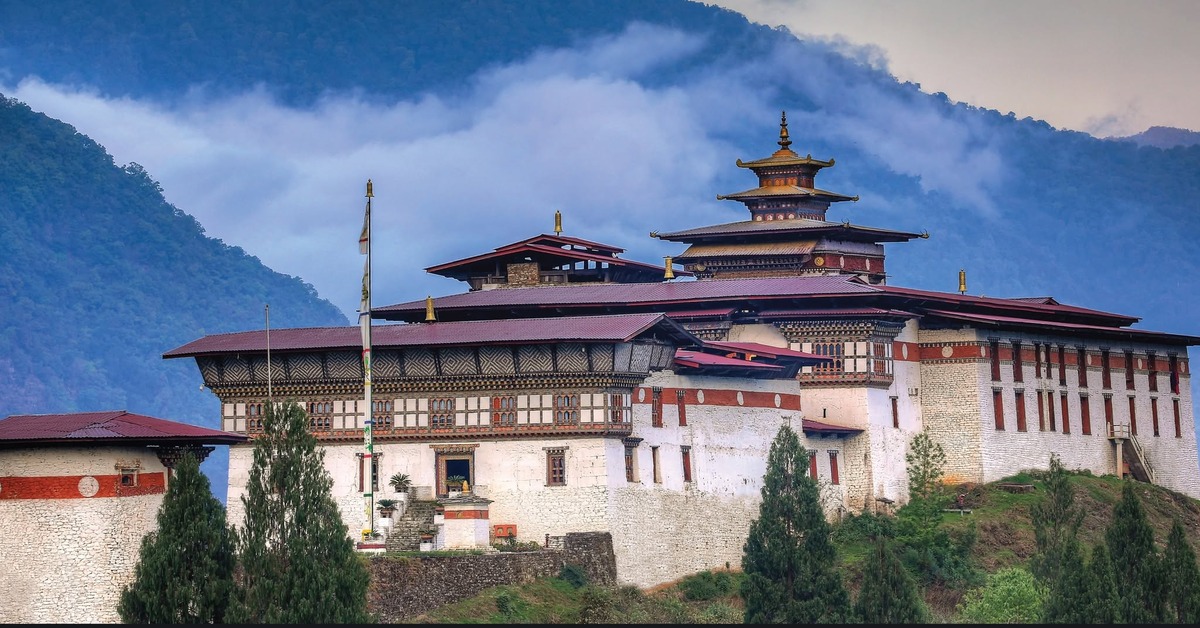
Dagana Dzong, formerly known as Daga Trashiyangtse Dzong, is one of the 16 dzongs that Zhabdrung Ngawang Namgyal built in Bhutan. In 1651, under Zhabdrung Ngawang Namgyal’s command, Druk Namgyel built it on a ridge overlooking a valley to bring Daga Lungsum under central rule.
Daga Trashiyangtse Dzong is the last Dzong built during the rule of Zhabdrung and is on Bhutan’s Tentative List for UNESCO inclusion. Today it serves as the administrative and monastic headquarters for the Dagana Dzongkhag Administration in southern Bhutan.
How to Reach Dagana Dzong
Standing proudly atop the verdant hill in the country of happiness. The best way to reach Dagana is by road from Paro and Thimphu. You can also reach it from southern Bhutan.
History of Dagana Dzong
According to historical accounts, Zhabdrung Ngawang Namgyal unified most of western Bhutan by the mid-17th century. The central, eastern, and southern parts remained under local control, so he deputed his Dronyer Drugda Namgyel to Darkala and ordered him to build the dzong in 1647 to bring Daga Lingsum under central rule and defend it from the Indian states of Assam and West Bengal.
Thus, under Zhabdrung Ngawang Namgyel’s order, Druk Namgyel built Dagana Dzong on a ridge overlooking the valley in 1651.
Legend says that during construction, the Frontier Sky Fortress (Tha Namkhai Dzong) megalith telepathically warned the builders that the Daga Dzong would collapse if they built it any higher. To this day, the Dzong’s central tower (Utse) remains level with the tip of this enigmatic rock.
After completing the Dzong, Zhabdrung named it Lho Dakar Trashiyangtse Dzong and appointed Tenpa Thinley as the first Daga Penlop. Lho Dakar Trashiyangtse Dzong means it lies to the south of Punakha (Lho), at the base of Dakarla, the guardian deity of Dakarla, Jomo Dakarmo (Dakar), under the central government, with all good traits flourishing (Trashi), and has the enriching presence of the south (Yangtse).
Over the years, the dzong withstood several earthquakes and windstorms, the most severe of which occurred during the tenure of the sixth Penlop, Pekar Jungney. The dzong’s entire roof was blown away. The 10th Chief Abbot, Je Tenzin Chogyal, then renovated and consecrated the dzong. The major renovation of Dagana Dzong was carried out in 2012. The total budget allocated for the Dzong’s renovation is Nu 125 million.
Origin of Name
However, Dudjom Jigdral Yeshe Dorje, a great Buddhist master, believed the name Daga Dzong comes from two sources: Darkala, from the province’s guardian deity, Jomo Darkala, and Darkanang (The Realm of White Prayer Flags).
Description of Dagana Dzong
Dagana Dzong is a compact fortress in traditional Bhutanese style, with whitewashed rammed-earth walls, timber framing, and a gently sloping roof. Due to multiple reconstructions, the current building includes features from various historical eras. The monastic and administrative sections encircle an internal courtyard.
Daga Dzong has no separate watchtower. Therefore, the dzong has a much taller central tower (Utse). The central utse houses the main chapel and an assembly hall. It houses unique sacred objects, including a giant buffalo horn, a self-arisen stone conch, and a spoken Jowo statue. The buffalo horn, measuring about 4’5”, is said to have been discovered by Daga Penlop Tempa Thinley in the early 16th century. Many auspicious signs appeared when the armies Daga Penlop sent found a pair of buffalo horns on the ridge where the Dzong stands. However, they took one buffalo horn to Talo Monastery in exchange for a spoken Jowo statue (Jo-sung Jen ma).
The interior shrines also feature the statues of Shakyamuni Buddha, Guru Rinpoche, and the Zhabdrung, along with murals depicting Buddhist deities and scenes from religious history.
Festival of Dagana Dzong
Dagana Tshechu is a five-day annual religious festival held at the historic Daga Dzong in Dagana, Bhutan, featuring sacred masked dances and community gatherings. It runs from the 11th to the 15th day of the 11th Bhutanese month. Considered one of Bhutan’s longest Tshechus, it ends with the unfurling of the Thongdrel Chenmo.
Best Time to Visit Dagana Dzong
The best time to visit Dagana Dzong is autumn (September to November) and spring (March to May), when the weather is mild, skies are clear, and outdoor travel is most comfortable. You can also visit the major pilgrimage sites of Dagana with the Bhutan Pilgrimage Package.
Places to Explore in Dagana
Tha Namkhai Dzong: The Frontier Sky Fortress is a holy site of Guru Rinpoche, featuring a religious bell hanging from a cliff and an Urn (Thro).
Do Namkhai Kaw: Sky Pillar Rock stands tall at around 20 metres, aligning with the height of the central pillar, the Utse of the dzong. Legend has it that the rock miraculously flew from Bodhgaya in India and is believed to house thousands of Buddha relics within its sacred confines.
Do Kelpai Genthey: The Rock of Ancient Steps with five steps that zig-zag upward towards the pinnacle. One of the steps is not visible and is supposedly sunken underground. The present aeon would end when all remaining four are submerged.
Shathong Lhakhang: This is a sacred Buddhist temple founded by the Buddhist Master Dupthob Shawa Ripa, a revered figure believed to have lived for over 900 years.
Nyindukha Lhakhang: Founded in the 18th century, the temple is a prominent 18th-century Buddhist temple located in the Dagana District of Bhutan, where Zhabdrung Choley Yeshey Ngodrup spent extended periods residing and practicing here.
Frequently Asked Questions
What is Dagana Dzong?
Dagana Dzong, also known as Daga Trashiyangtse Dzong, is a historic fortress-monastery and an important cultural landmark in Dagana District, Bhutan.
Where is Dagana Dzong located?
Dagana Dzong is located in Dagana District in southwestern Bhutan. The dzong stands on a ridge overlooking the Dagana town area.
When was Dagana Dzong built?
Dagana Dzong was established in 1651 during the time of Zhabdrung Ngawang Namgyel, the unifier of Bhutan.
Who built Dagana Dzong?
Dagana Dzong was built by Druk Namgyel under the command of Zhabdrung Ngawang Namgyel as part of Bhutan’s efforts to strengthen administration and defend its southern territories.
Why is Dagana Dzong important?
Dagana Dzong is important for its historical, religious, administrative, and architectural significance. It continues to serve as the administrative and religious centre of Dagana District.
What was the original purpose of Dagana Dzong?
The dzong was originally established as a defensive fortress and administrative centre. It helped protect the region and strengthen central Bhutanese authority in the south.
Are there sacred objects inside Dagana Dzong?
Yes, Dagana Dzong is associated with several sacred objects, including a giant buffalo horn, a self-arisen stone conch, and a spoken Jowo statue.