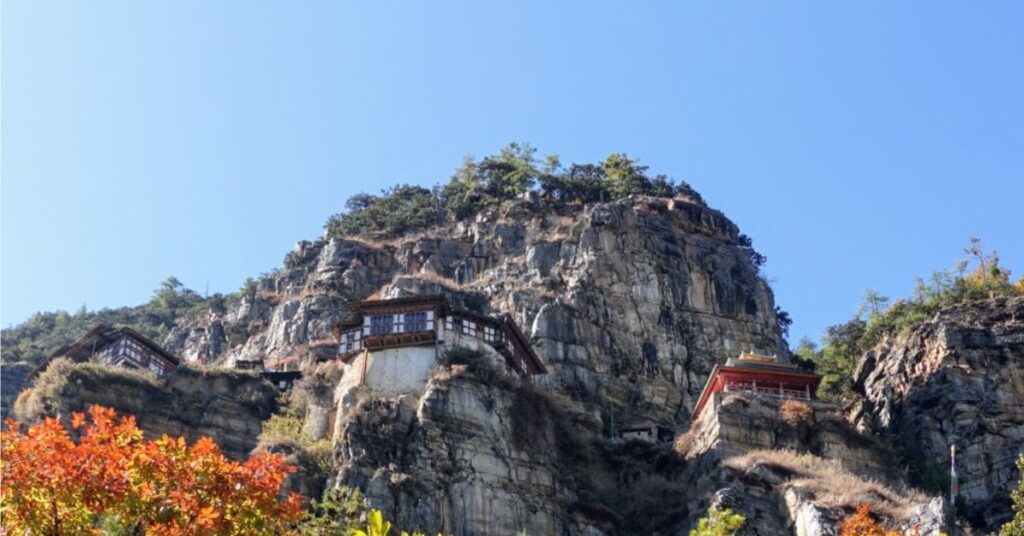
Dzongdrakha Goenpa is a sacred cliff of Guru Rinpoche above the two villages of Bonday and Gyepjag under Paro Dzongkhag, blessed during his second visit to Bhutan in 822 A.D from Tibet. This sacred Dzongdrakha Goemba is located at an altitude of 1400 meters above sea level.
Later, Drupthob Gonpo Dorji built a Lhakhang and named it Dzongdrakha Goenpa. Dzongdrakha Monastery is often called the Second Taktsang, mainly due to its location, as it is perched on a cliffside on the western side of Paro Valley. This visually splendid but seldom visited Dzongdrakha Goemba is worth a short detour off the Paro–Cheli La road.
How to Reach Dzongdrakha Goenpa
Dzongdrakha Lhakhang is a 20-minute drive from Paro International Airport toward the Paro-Haa highway. Dzongdrakha is located in Lungnyi Gewog of Paro Dzongkhag. From the road end, you must walk through some historic homes for an additional 15 minutes.
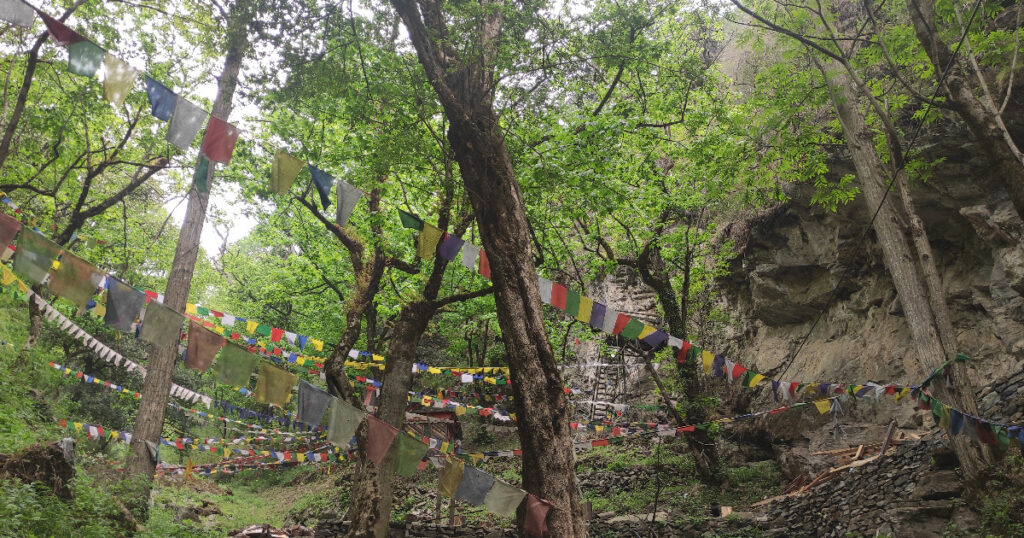
Dzongdrakha Hike: Nature enthusiasts can choose to hike to the monastery. The hike is not as strenuous as Paro Taktsang. Reaching the monastery requires a 40-minute walk through the forest of rhododendrons and oak trees. The breathtaking views of the valley that surround it will undoubtedly captivate you. Hiking to Dzongdrakha Gompa is a favored activity in Paro apart from the Tiger’s Nest trek.
Sacred Relics to See at Dzongdrakha Monastery
- A crystal stupa (chorten) which is as long as an arrow;
- Egg-shaped relic of Sangay Youelsum (Karshapa);
- Meditation cave of Drubthob Gonpo Dorji;
- Immovable statue of Buddha Sakyamuni;
- Sacred dagger marks on a stone.
Also Read: Guru Rinpoche in Bhutan: His Visits to Bhutan and Sacred Sites
Historical Significance of Dzongdrak
Guru Rimpoche is said to have flown to the sacred site from Drak Karpo in Paro, just above Shaba, in the 8th century. One can still see the footprints of Guru Rinpoche at the base of the cliff.
In the later part of the 13th century, Karzhi Rinchen Samten Pelzang had a dream in which a Khandrom gave him instructions to travel to Zhungphug in Bhutan, where the treasures of Guru Rinpoche were concealed. Lam Karzhi then shared his dream with a disciple, Drupthob Gonpo Dorji, who later followed the instructions given to Lam Karzhi Rinchen Samten Pelzang.
Drubthop Gonpo Dorji then proceeded to Bhutan in 1428 in search of a place called Zhungphug in Paro. When Drubthob arrived at a riverside and was unsure of where to go, a jackal pointed to Zhungphug. The Drubthob and the jackal followed the river’s right bank.
Finally, before reaching Dzongdrakha, the Lama reached a small plain where he encountered a female goat. The Lama later realized that the goat was no other than the riding horse of Damchen Dorji Lekpa, the deity of Dzongdrakha, and considered it a promising sign to proceed toward the sacred cliff. The Dupthob Gonpo Dorji started his meditation as soon as he arrived in Dzongdrakha.
The Discovery of Relics
While Drubthop was meditating, Guru Rinpoche gave him a crystal sword. The sword became fixed on a rock that resembled a male donkey and a frog. The rock with the sword stuck on it rolled towards him. Inside the rock, the Lam came across a crystal Chorten measuring the length of an arrow, a Ringsel (body relic of Sangay Youelsum) of Buddha Kasyapa, and three Garuda eggs. Two of the three eggs are claimed to have flown away.
Drubthop Gonpo Dorji then took the crystal chorten, the Ringsel, and the remaining egg in a sack and reached a valley and sought shelter in a farmer’s house. Knowing about the treasure in the sack, the locals claimed ownership of the relics. As a result, the valley acquired the name “Bangdey,” now known as “Bondey.”
Later, he returned to Dzongdrakha and built a chorten on a cliff that resembled a lion. The chorten was named the Shel (Crystal) chorten. Inside the chorten, he placed the crystal chorten, the Ringsel, and the egg. Dubthob Thangtong Gyalpo, on a visit to Dzongdrakha, consecrated the chorten.
Description of Dzongdrakha Goenpa
Dzongdrakha Temple, also known as Mini Taktsang, is a serene site above the Bondey village on the western side of the Paro Valley.
The first building you visit is the private manor house of Jongsarbu Lhakhang, founded in the 18th century by Drubthob Gonpo Dorji. Drubthop installed the treasures (egg-shaped relic of Sangay Youelsum and the crystal stupa) as a sacred monument inside it and named it Dzongdrakha Goenpa. The crystal stupa was given the name Chorten Karmogyel because it is said that the relic used to tremble on lucky days.
The main statue of Dzongdrakha Lhakhang is Sakyamuni in his princely Jowo form, flanked by the local protector Tsento Chen and a tshomen (mermaid). Dorji Legpa is the deity of the Lhakhang, who protects the Lhakhang and the sacred monument inside it.
The Drubthop, who had spent all his life in this Lhakhang, ultimately died there. Visit the cave where Drubthop Gyonpo Dorji has meditated.
Dzongdrakha Monastery
After the death of Drubthop, his reincarnation started the lineage of Dzongdra Chhoeje, and many Lhakhangs and monasteries were built in and around the place.
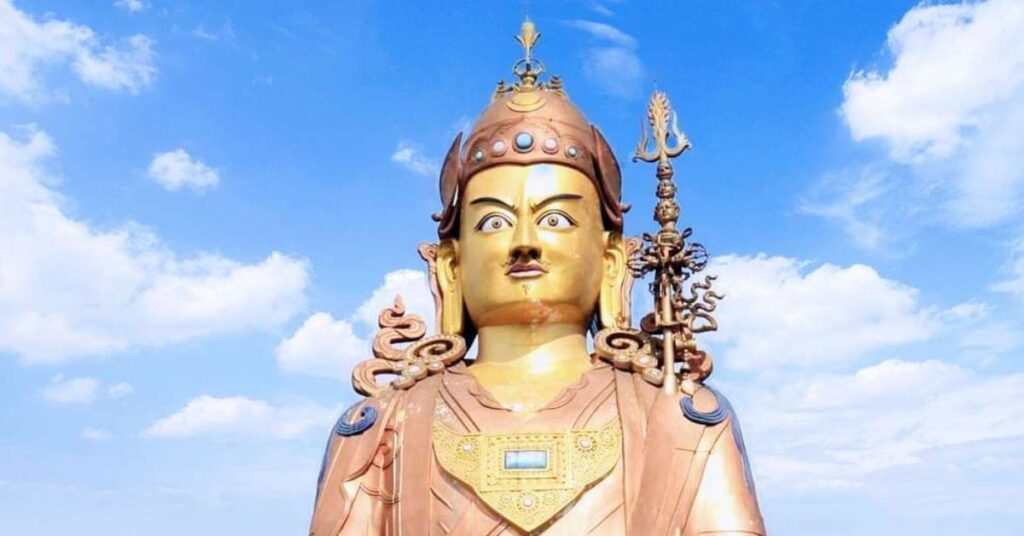
In the 14th century, his reincarnation, Lam Neten Jangchub Zangpo, built a temple dedicated to Guru Padmasambhava. On the right side of the chorten is the temple of the three Buddhas, built by the reincarnation Lama Phan Thog.
The Dzongdrakha monastery was built by Choejay Penjor, son of Choejay Dawa, the reincarnation of Drupthop Goenpo Dorje. The Dzongdrakha monastery houses four shrines devoted to Tara, Tsheringma (Goddess of Longevity), Guru Rinpoche, and the Buddha of the Future, Jowo Jampa.
To the left of the Chorten is the Tsheringma Lhakhang, the temple of the female Goddess Tashi Tsheringma (Goddess of Long Life). In the Tsheringma Lhakhang are the statues of Tsheringma and Lord Buddha.
Next to the Tashi Tsheringma temple is the temple dedicated to Sangay Mithrukpa (Akshobya). Lam Rabten and Lam Phan Thog built this.
In Guru Lhakhang, the lama will open a small door behind the main statue to reveal part of the secret chorten, which is caged to keep it from flying away. The main relics of Dzongdrakha Lhakhang are an egg-shaped relic of Sangay Youelsum (karshapa) and a crystal stupa (Chorten) that is as long as an arrow. There is a statue of two Khandroms and the statues of the eight manifestations of Guru Rimpoche.
To access the cave-like Droley Lhakhang, which houses the neighborhood protectors Doley and Shari Tsen, originally employed during local celebrations, climb the rickety log ladder behind the temple. It is customary for local parents who have recently given birth to a son to visit this temple to get a fortunate name for their child. The little Lhamey Lhakhang is the last structure.
Dzongdrakha Tshechu Festival
Dzongdrakha Tshechu is held at Dzongdrakha Monastery on the day before and the day after the Paro Tshechu held at Paro Rinpung Dzong. The annual Dzongdrakha Tshechu Festival is performed from the 8th to the 10th days of the 2nd month.
Don’t miss the Wochubi Zhey dance, which was presented at the Dzongdrakha monastery’s initiation ceremony by the residents of Wochu hamlet. Wochubi Zhey is the only Zhey reportedly introduced in Bhutan before Zhabdrung’s arrival. On the last day of Tshechu, observe the distinctive dance of Berkor Cham.
They also have a day-long festival on the 16th day of the 2nd month of the Bhutanese calendar.
Also Read: Paro Rinpung Dzong, the Fortress on a Heap of Jewels
Best Time to Visit Dzongdrakha Temple
Dzongdrakha Temple doesn’t require reservations to visit. Depending on your budget, numerous hotels are available close to Dzongdrakha Temple. Make sure to go when Dzongdrakha Lhakhang celebrates its yearly festival because the main gathering place transforms into the chorten of the previous Buddha, which is then opened so guests may receive blessings from the relic.
If you can’t trek to Tiger’s Nest, visit Dzongdrakha Goemba once, which is aesthetically just as stunning as Paro Taktsang. You can visit major pilgrimage sites in Paro with the Bhutan Pilgrimage Package.
Frequently Asked Questions
What is Dzongdrakha Goenpa?
Dzongdrakha Goenpa is a sacred cliff-side monastery complex in Paro, Bhutan, often called the “Mini Taktsang.” Perched dramatically above Bondey village, it comprises a cluster of four shrines built into natural caves and rock faces. The site is revered as one of the holiest in Bhutan, blessed by Guru Rinpoche during his second visit to the country in 822 AD.
Where is Dzongdrakha Goenpa located?
Dzongdrakha Goenpa is located in Lungnyi Gewog under Paro Dzongkhag, at an altitude of about 1,400 meters above sea level. It sits on a cliff above the villages of Bondey and Gyepjag, roughly a 15–20 minute drive from Paro town along the Paro–Haa highway.
How do I reach Dzongdrakha Goenpa?
Reaching Dzong drakha Goenpa involves a short drive from Paro followed by a moderate hike. Visitors can hire a taxi or join a guided tour from Paro to the trailhead near Bondey village. From the road end, the hike to the monastery takes approximately 20 to 40 minutes on foot, passing through pine forests and traditional homes.
What is the historical significance of Dzongdrakha Goenpa?
Dzong drakha Goenpa dates back to the 16th century and was established by the revered meditation master Drupthob Gonpo Dorji. According to legend, Guru Rinpoche first landed at this site upon arriving in Bhutan, meditating in the caves that now form the foundation of the temple structures. The monastery is also associated with the discovery of sacred relics, including a chorten and Sangay Youelsum, from the cliff face.
What can I see at Dzongdrakha Goenpa?
Visitors to Dzong drakha Goenpa can explore four interconnected shrines, each housing sacred relics, ancient statues, and murals depicting Buddhist deities. The monastery offers panoramic views of the Paro Valley and surrounding hills, making it a popular spot for photography and meditation. The site’s natural caves and cliff-side architecture add to its spiritual and aesthetic appeal.
Is there an entry fee for Dzongdrakha Goenpa?
There is no specific entry fee for visiting Dzong drakha Goenpa itself. Local visitors and pilgrims may offer voluntary donations at the monastery to support its maintenance and religious activities.
What is the best time to visit Dzongdrakha Goenpa?
The best time to visit Dzong drakha Goenpa is during the spring (March to May) and autumn (September to November) seasons when the weather is mild and the skies are clear. These months offer ideal conditions for hiking and photography, with blooming rhododendrons in spring and vibrant foliage in autumn. Winter visits are possible but may be colder, while the monsoon season can make the trail slippery.
Are there any festivals held at Dzongdrakha Goenpa?
Yes, Dzong drakha Goenpa hosts an annual religious festival known as the Dzongdra Tshechu, typically held in late October or early November. The festival features traditional mask dances, religious rituals, and blessings by monks, drawing pilgrims and tourists from across Bhutan and beyond. The exact dates vary each year according to the Bhutanese lunar calendar.
Can I combine Dzongdrakha Goenpa with other attractions in Paro?
Absolutely. Dzong drakha Goenpa is often included in Paro sightseeing itineraries alongside other iconic sites such as Paro Taktsang (Tiger’s Nest), Rinpung Dzong, and the National Museum of Bhutan. Its proximity to Paro town and the airport makes it a convenient half-day excursion for travelers with limited time.
What should I wear and bring when visiting Dzongdrakha Goenpa?
Visitors should dress modestly in respectful attire, covering shoulders and knees, as is customary at Bhutanese religious sites. Comfortable walking shoes are essential for the hike, and it is advisable to carry water, sunscreen, and a light jacket. Photography may be restricted inside the shrines, so always ask for permission before taking pictures.