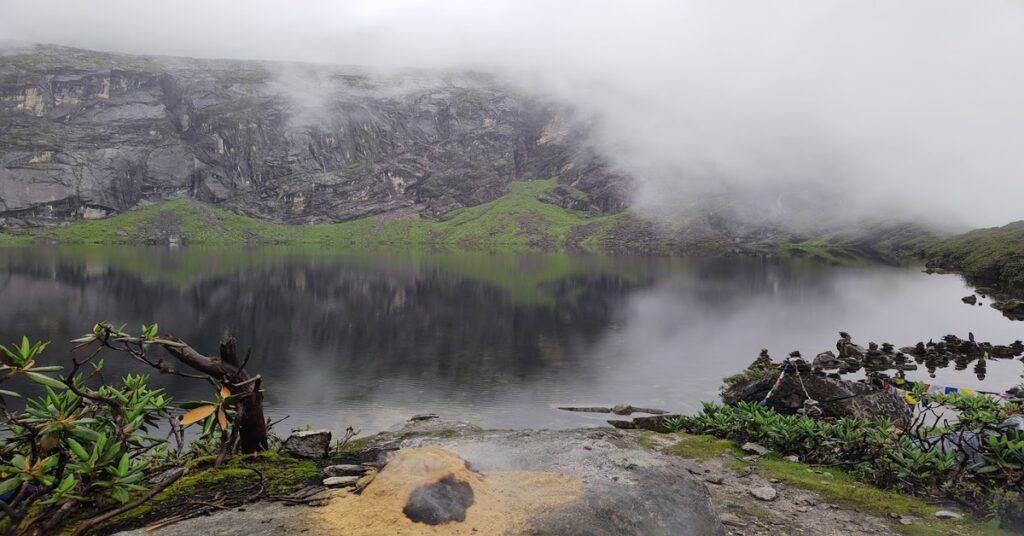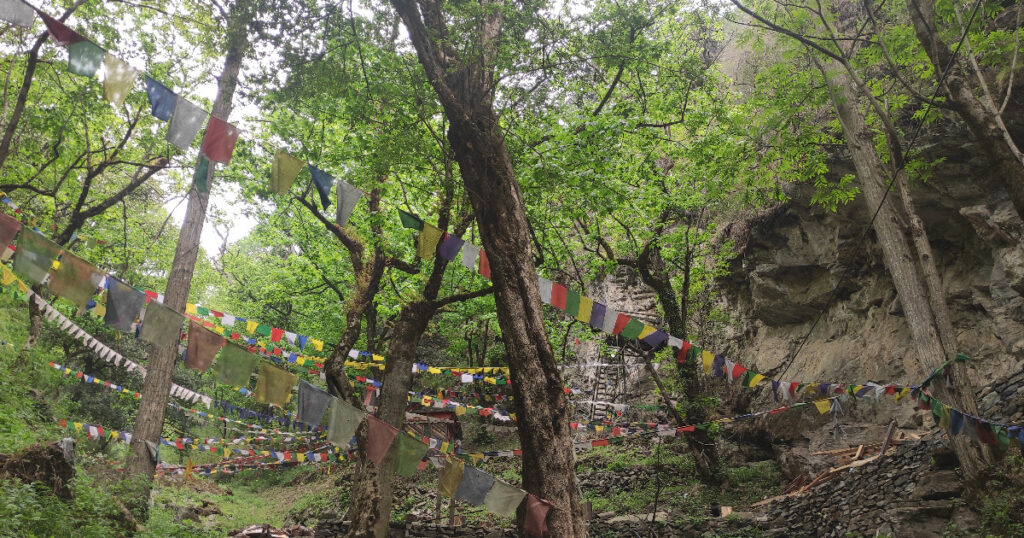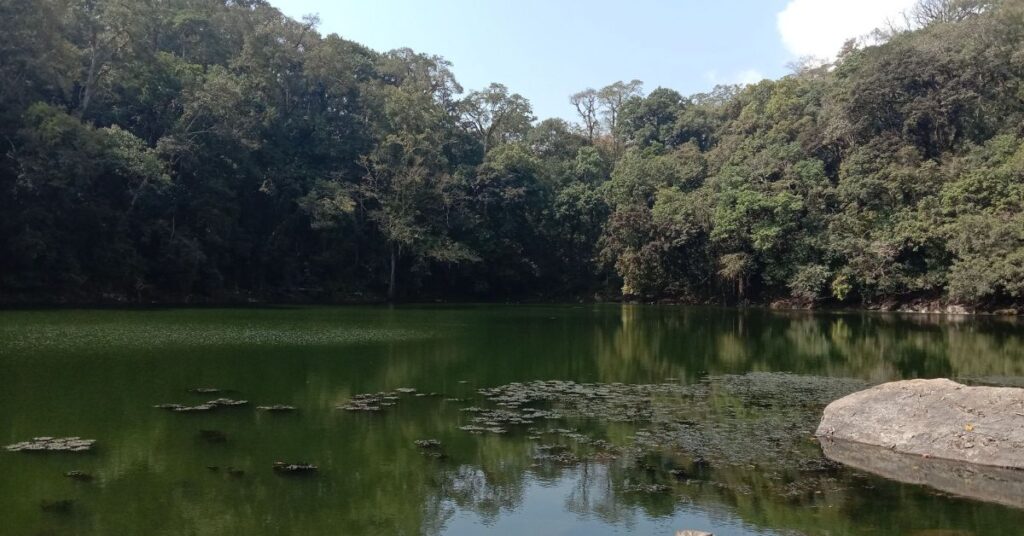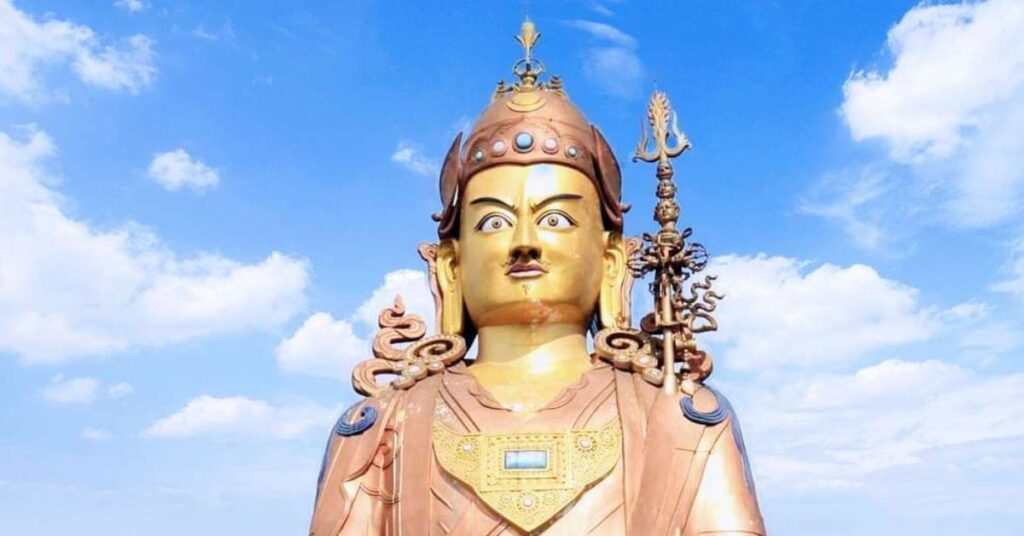
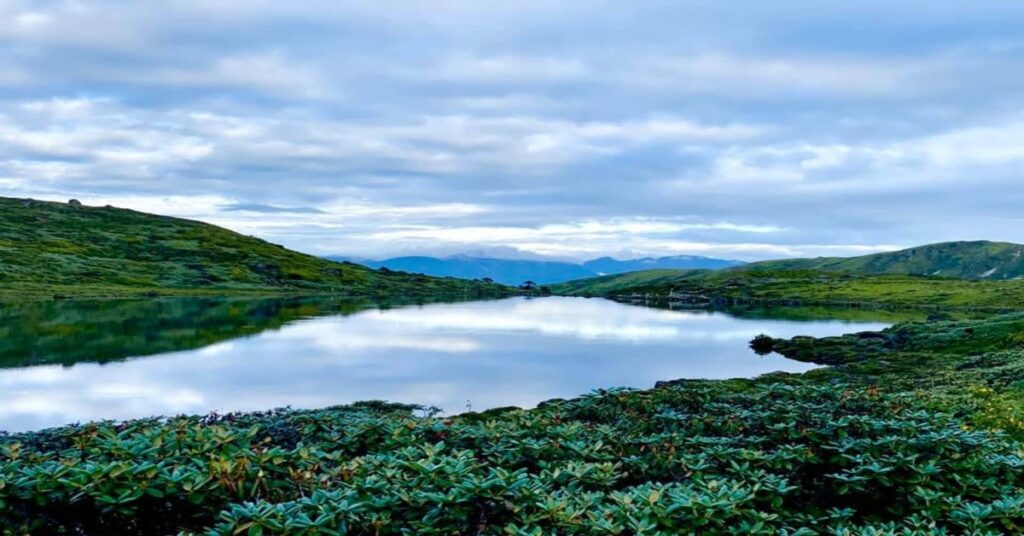
Nub Tshona-Patra, “The Great Lake in the West,” is one of the most sacred and revered lakes in Bhutan, where Guru Rinpoche had hidden treasures. The lake is situated between the ancient trade routes of Haa and Tibet, in Tshona Diga, at an altitude of 4080 meters.
Nub Tshona-patra is linked to legends about the renowned Terton Sherab Mebar and his discovery of a treasure. Some relics discovered by the Terton remain preserved today at Paro Rinpung Dzong and Ugyen Guru Lhakhang in Pangbisa. One notable relic is a cymbal housed in Rinpung Dzong, which visitors can see during the Paro Tshechu festival.
How to Reach Nub Tshona Pata
Nub Tshona-patra can be reached from Haa via three routes. The first starts from Tokel in Bji Gewog; the second starts from Drakna Gonpa and goes via Changzur Nyela after crossing Karjena in Katsho Gewog; and the third starts from Yibri in Yusu Gewog. If one takes horses, it is best to travel from Latsakha. If you are travelling without horses, it is better to start from Tokchu Gonpa. Whether you go from Drakna Gonpa or from Yibri village of Banyel, you will have to pass through Yulogkha, where yaks can be hired.
Nub Tshona-Patra normally takes three days to reach, no matter which route one takes. A fast walker can reach there in one and a half days.
Nub Tshonapata Trek
Nub Tshona-Patra trek follows the ancient trade route from Haa to Tibet.
History of Nub Tshona-Patra
According to history, Nub Tshona-Patra was initially located in Sangbay Ama village within the Sangbay Gewog before relocating to its current site. Legend has it that a mermaid transported the lake in a dung-chung (a slim bamboo container used for storing salt) because the lake’s original site was defiled or was destined to be moved.
Before the lake permanently settled at its current location, the site was a Bjobi-lakha, a nomadic settlement. The mermaid asked the shepherds to relocate their camp so the lake could settle there. However, the following morning, she discovered that the shepherds had not moved. In response, the mermaid emptied the Dung-chung, drowning the shepherds and their camps. It is said that on a clear day, some lucky individuals can see the entire Nogi-jangsa, including dogs, yaks, and people. This legend resembles that of Dangling Tsho in Trashigang Khaling.
Today, the lake is known as Nub Tshona-Patra or The Great Lake in the West. According to some sources, ‘Nub’ is also thought to be Nob, which means Norbu (precious treasures), as the lake is a treasure lake of Guru Rinpoche.
Historical Significance
Nub Tshona-Patra, known as “The Great Lake in the West” or the Precious Treasures Lake, holds deep historical and spiritual significance tied to Guru Rinpoche, the 14th-century treasure revealer Terton Sherab Mebar, and the origins of the legendary Nublang cattle breed.
- Nub Tshona Patra and Terton Sherab Mebar
Nub Tshona-patra is renowned for its captivating oral stories and mystical legends. Its sacred status stems from the myth of the great Terton Sherab Mebar and his discovery of treasures.
According to the 69th Je Khenpo Geshey Gendün Rinchen’s Lhodruk Chojung, Terton Sherab Mebar arrived in Bhutan from Kham in Tibet via Jomolhari during the 13th century and established Ugyen Guru Lhakhang in Pangbisa as his seat.
Legend has it that he was destined to uncover treasures from Nub Tshona-patra. He traveled to Haa and meditated in Yatokha to receive visions and locate the hidden treasure lake. After discovering Nub Tshona-Patra, he revealed numerous treasures, including gold, religious artifacts, and sacred instruments such as dung (trumpet), Nga (drum), Nge-tok (drumstick), and a pair of Rel-mo (cymbals).
When Terton saw a gold nugget, he held the lake in his mouth and asked his carpenters to carve it into a pillar to be gifted to Hungrel Dzong. The carpenters were instructed to take the splinters and fragments of the pillar as payment for their work. However, when the carpenters sheared off too much, Terton tried to stop them, spilled the lake, and drowned them all.
The angry lake deity, Tshomen (a mermaid), then started chasing the Terton. As he fled, he threw religious instruments one by one, forming a lake wherever the treasure landed. These lakes are Drum Lake (Nga-tsho), Drum Lake (Dungtsho in Jarey), Drumstick Lake (Ngetok-tsho), Cymbal Lake (Roel-tsho in Rigona), and Sickle Lake (Zoutsho), located in the Haa Shongana (Shokuna) region. Some sources mention that the Terton also dropped other treasures, such as religious artifacts made of gold, turquoise, silver, and shells, during his escape, leading to the formation of Ser-tsho, Yu-tsho, Ngyul-tsho, Dungkar-tsho, and Bumpa-tsho (in Jarey Damshog).
When the Terton arrived at Tergola, the mountain deity Ap Chungdu Tsan mediated peace between the Terton and the mermaid; eventually, the negotiation took place in Lab-dza of Tshellu-tsho in Ramzur, under Uesu Gewog. Ap Chungdu erected five Do-tshams (originally made of dried yak and sheep dung, which later hardened into stone) between Gangche-la and Zou-tsho (Sickle Lake) to delineate the border. An agreement was reached that neither the Terton nor the deity would cross into each other’s territory. These boundary stones are still visible today.
- Nub-Tshona-Patra and Nub-Lang, the bull from Nub-Tshona-Patra
Another myth surrounding Nub-Tshona-Patra is Nub-Lang, the bull from the west, or Nub Tshonapata. According to legend, the Tshomen (lake’s deity) appeared and asked the herder for a place to rest for the night while travelling from its original site at Sangbay Ama village to the lake’s current location. The herder hosted her and served a sumptuous feast of dairy products. When she left the next morning, the mermaid told the herder she would send a bull as a token of gratitude for his hospitality.
Two days later, a bull arrived at his herd and is believed to be a gift from the mermaid. Today, this bull is known as Nublang, the legendary bull from Nub-Tshona-Patra.
Best Time to Trek to Nub Tshona Pata
The best times for the Nub Tshona Pata Trek are spring (March to May) and autumn (September to November).
Frequently Asked Questions
What is the story of Nub Tshona Pata?
Nub Tshona Pata is a revered high-altitude lake located in Bhutan’s Haa district, where Guru Rinpoche has hidden treasures.
Nub Tshona Pata distance
The Nub Tshonapata Trek in Bhutan’s Haa Valley covers about 40 to 45 kilometers over 5 to 7 days, including a one-day trek of up to 22 kilometers to the sacred lake.
Nub Tshona Pata price
The cost of the sacred Nub Tshonapata Trek in Haa Valley typically ranges from USD $2,430 to over USD $4,660 per person for international tourists on an all-inclusive 8 to 12-day package. Costs vary significantly depending on group size and whether the $100 daily Sustainable Development Fee (SDF) is included. Occasionally, local independent organizers offer shorter 6-day community or regional group hikes, priced around Nu 7,000 to Nu 8,500 per person for local trekkers.