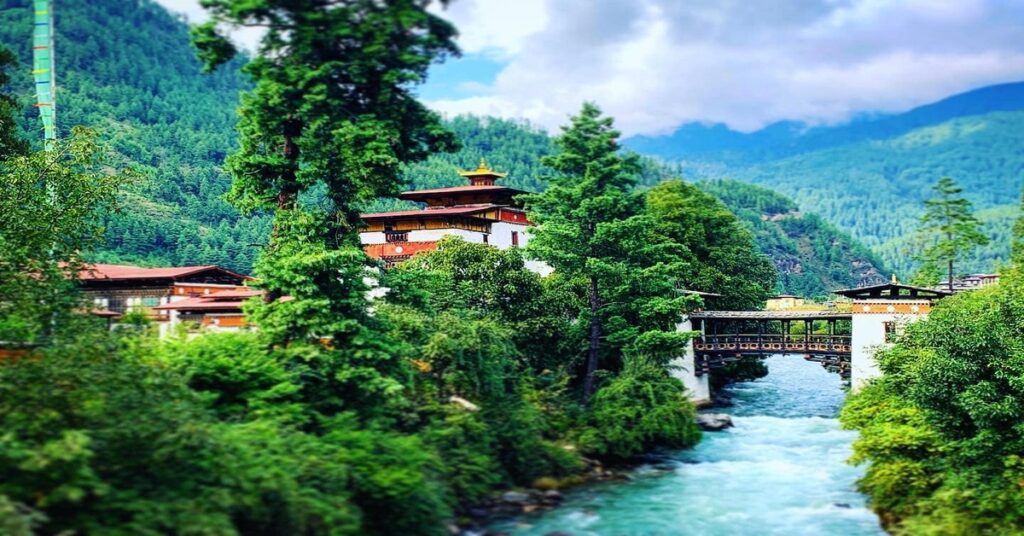
Pangri Zampa Monastery, also a College of Astrology, is one of the oldest monasteries in Bhutan, founded by Ngawang Chogyal in the 16th century. The monastery is located on the west bank of the Thimphu River, north of Thimphu city.
The monastery was named Druk Phodrang, meaning the “Castle of the Dragon.” However, when Zhabdrung Rinpoche took over, it was named Pangri Zampa Lhakhang, a Temple near the Bridge on an Abandoned Ridge.
A nine-day ritual, Jungwa Chidoe, is performed annually for the peace and prosperity in the country, as well as the well-being of all sentient beings. Every year, many people visit the monastery to find out their predictions for their careers, health, wealth, luck, and many other aspects of their lives. The Monastery is also a must-visit for tourists who wish to know their future.
How To Reach Pangri Zampa Monastery
Pangri Zampa Monastery in Bhutan is easily accessible. It’s around 8 kilometers north of the city of Thimphu. You can get there in two ways: by road and on foot. From Thimphu town, you can hire a taxi or take a local bus. The drive takes around 20 minutes. But for those who enjoy walking, hiking to the monastery is an option. The hike takes about an hour.
Sacred Relics to See at Pangri Zampa Monastery
- The giant cypress tree where the raven that guided Zhabdrung to Bhutan disappeared;
- The shrines of Yeshi Gonpo and Palden Lhamo;
- A statue of a Menmo, a consort of Genyen Jagpa Melen;
- Statue of Shakyamuni Buddha on the top floor;
- A statue of Zhabdrung Rinpoche;
- The College of Astrology.
Historical Significance of Pangri Zampa Monastery
Pangri Zampa Monastery was built by Ngawang Chogyal in the 16th century. It was named Druk Phodrang, meaning the “Castle of the Dragon.” Later, Lam Kha Nga, or the five Lamas of different religious sects, took over the monastery.
It is said that a raven guided Zhabdrung Ngawang Namgyal to Druk Phodrang Temple in his dream before he arrived in Bhutan in 1616. While in Tibet, Zhabdrung had a dream of a large black raven that flew to Bhutan and landed on a cypress tree near the Druk Phodrang temple.
When Zhabdrung arrived at Druk Phodrang from Laya, the Lam Kha Nga abandoned the temple in fear of Zhabdrung’s power. Thus, the monastery got its name, Pangri (an abandoned ridge), Zampa (a bridge) Monastery, a temple on an abandoned mountain near a bridge. The monastery was also given names like Pangri Lhakhang and Pangri Zamdong, since its location faces the bridge.
Zhabdrung took over the Lhakhang and extended it to the southeast corner of the monastery.
Description of Pangri Zampa Monastery
When you arrive there, a bridge connects the east bank of the Thimphu River to the opposite bank. The giant cypress tree in front of the main temple is believed to be the tree into which a raven, who guided Zhabdrung to Bhutan, disappeared.
Pangri Zampa monastery features two famous temples, located on its northeast and southeast corners. The architecture closely resembles that of the nearby Dechenphug Lhakhang.
Pangri Zampa Lhakhang
The Druk Phodrang temple, built by Ngawang Chogyal, is the main temple of Pangri Zampa. It is a four-storey building. The ground floor is a classroom for monks to study astrology, while the second and third floors are sacred shrines of guardian deities, Yeshi Gonpo and Palden Lhamo. The fourth floor is a sanctum that houses a statue of the Lord Buddha.
Zhabdrung Lhakhang
Zhabdrung Lhakhang is a four-storey temple built by Zhabdrung next to the Druk Phodrang temple. The top floor, which was the meditation room of Zhabdrung, now houses his statue. On another floor is a statue of a mermaid, said to be the consort of Genyen Jagpa Melen, the guardian deity of Thimphu, who resides in Dechenphug Geynyen Neykhang.
College of Astrology
Pangri Zampa monastery has gained fame for its role as a College of Astrology since 2003. It became an educational institute of the central monastic body for learning traditional astrology of Bhutan. The College of Astrology releases annual official Bhutanese calendars and is also responsible for determining dates for important national events. Pangri Zampa College of Astrology has determined auspicious dates for past national occasions, such as the coronation day of Bhutan’s fifth king in 2008, the Royal Wedding in 2011, and the crown prince’s naming ceremony in 2016.
Drolma Zhingkham Lhakhang
Drolma Zhingkham Lhakhang, or Tara Lhaden Zhingkham Lhakhang, is a temple dedicated to the 21 emanations of Tara, a female bodhisattva. It is located a few minutes’ walk from Pangri Zampa Lhakhang. The one-storied Tara Lhaden Zhingkham Lhakhang, featuring 21 Tara clay statues, was constructed by Her Majesty the Queen Mother Sangay Choden Wangchuck in 2010. His Holiness the 70th Je Khenpo, Trulku Jigme Choedra, and Gyalse Trulku Jigme Tenzin Wangpo consecrated it in 2014.
Annual Ritual of Pangri Zampa Monastery
A nine-day ritual, Ten-chi Kurim Jungwa Chidoe, is performed annually for peace and prosperity in Bhutan, as well as the welfare of all sentient beings. It is believed that attending this ritual will help cleanse misfortunes for a year. Additionally, it is said that one will not need to perform any rites at home. The college instituted the annual Kurim in 2003.
Best Time to Visit Pangri Zampa Monastery
The best time to visit Pangri Zampa Monastery is in spring (March to May) or autumn (September to November). There are no exact timings for visiting the temple, but it is advisable to visit the monastery during the daytime, as it closes by evening. The lama reads your past and future lives according to Buddhist beliefs on request. No entry fee is charged for visiting the Pangri Zampa monastery. You can visit the major pilgrimage sites of Thimphu with the Bhutan Pilgrimage Package.
Conclusion
Pangri Zampa Monastery, established in the 16th century, is a revered spiritual and architectural landmark nestled north of Thimphu. Renowned as the College of Astrology in Bhutan, it plays a pivotal role in traditional Buddhist learning and astrological practices, often consulted for auspicious dates of national events. The monastery features two temples, with intricate murals and traditional Bhutanese wooden architecture. Don’t miss out on the opportunity to learn about your future predictions on luck, money, health, career, and many more.
Other Sacred Sites to Explore in Thimphu
Dechenphu Lhakhang: It is a monastery dedicated to Geynyen Jagpa Melen, a powerful protective deity, located at the northern end of the Thimphu Valley in Bhutan. The Temple was constructed in the 12th century by Dampa, the son of Phajo Drugom Zhigpo.
Tashichho Dzong: Built in 1216 and rebuilt in 1962, it is a fortress-monastery that houses the king’s throne room, government offices, and the central monastic body. Known as the “Fortress of the Glorious Religion,” it blends religious and administrative functions with stunning Bhutanese architecture.
Cheri Monastery: Also known as Chagri Dorjeden Monastery, it is the first monastery established in Bhutan by Zhabdrung Ngawang Namgyel in 1620. It is located in the Upper Thimphu Valley, about 15 kilometers north of Thimphu city, perched on a hill at an altitude of approximately 2,850 meters above sea level.
Tango Monastery: The Tango Choying Dzong was founded in the 13th century by Phajo Drugom Zhigpo and rebuilt in its current form in 1688 by the Fourth Temporal Ruler, Tenzin Rabgye. The monastery is perched on a forested hillside near Cheri Mountain, famed for its spiritual legends, particularly the prophecy involving the deity Hayagriva.
Thuji Dra Monastery: Also known as the Cliff of Compassion, it is one of the four cliffs Guru Rinpoche prophesied to Phajo Drugom Zhigpo. The Thujidra Temple sits at nearly 4,000 meters, where Phajo saw Phagpa Thujechenpo in a vision while meditating.
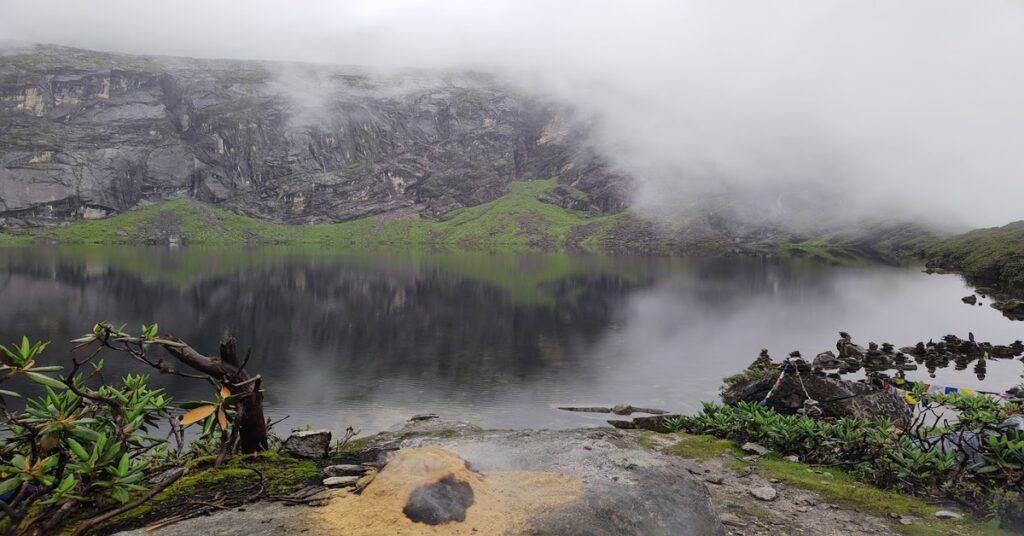
Domendrel Tsho: It is a sacred lake located near the site where Gyalse Tenzin Rabgye offered mandala offerings to consecrate the Palace of Sikkim’s King Chador Namgyal in the 17th century. The hike to Domendrel Tsho starts from the base of Tango Monastery and typically takes 4-5 hours.
Frequently Asked Questions
What is Pangri Zampa Monastery?
Pangri Zampa Monastery is a 16th‑century riverside monastery about 8 km north of Thimphu, best known today as Bhutan’s Royal College of Astrology under the Central Monastic Body. It combines monastic life with advanced study of traditional Tibetan astrology, and is where Bhutan’s official astrological calendar and many auspicious dates are prepared.
Who founded Pangri Zampa and when?
The site was founded in the early 16th century (around 1529) by the Tibetan lama Ngawang Chogyal (also spelled Ngawang Choyal), the 15th throne‑holder of Tibet’s Ralung monastery, who originally named it Druk Phodrang or “Castle of the Dragon.” It later came to be called Pangri Lhakhang (“temple on the abandoned hill”) and eventually Pangri Zampa, reflecting its position overlooking a bridge between Dechencholing and Kabesa.
Why is Pangri Zampa historically important?
Pangri Zampa is historically important as the first residence established in Bhutan by Zhabdrung Ngawang Namgyal (1594–1651), the unifier of Bhutan, after he arrived from Tibet in 1616. According to tradition, the monastery appeared in a prophetic vision that guided his journey—often described as a raven leading him to a cypress tree at Pangri—so he stayed there and used it as a base in his early years in Bhutan.
What is taught at Pangri Zampa today?
Since 2003, Pangri Zampa has functioned as Bhutan’s National Institute for Traditional Astrology, training monks and scholars in the calculation of calendars, horoscopes, and auspicious dates for national and personal events. Locals and visitors often come to consult astrologers here for yearly predictions related to health, wealth, career, and other aspects of life.
What can visitors see at the monastery?
Visitors can see the historic temple buildings, prayer halls, and the monastic school set in a quiet, scenic valley with views over the river and surrounding hills. The site is relatively modest compared to major dzongs, but its combination of history, active monastic education, and astrological practice makes it culturally significant.
Are there entry fees and what are the visiting hours?
There is no entry fee for Pangri Zampa Monastery. Exact opening hours are not rigidly fixed, but the monastery is generally open during daytime (commonly cited around 8:00 AM–6:00 PM) and closes by evening; it is best to visit in daylight and respect monastic routines.
How do I reach Pangri Zampa from Thimphu town?
Pangri Zampa lies about 8 km (roughly 20–30 minutes by car) north of central Thimphu, on the road towards Dechencholing and Kabesa. Most visitors reach it by private vehicle or taxi arranged through their hotel or tour operator; public transport options are limited, so planning is advisable.