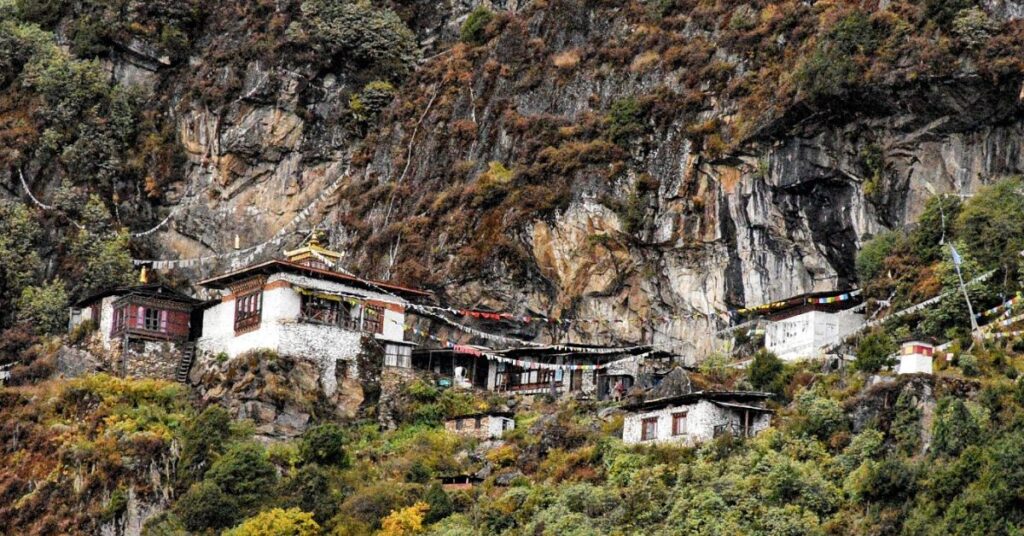
Thuji Dra is one of the four cliffs of Guru Rinpoche prophesied to Phajo Drugom Zhigpo by Guru Rinpoche. This sacred cliff is located in Thimphu Dzongkhag at 4,000 meters above sea level.
Phajo Drugom Zhigpo founded Thujidrag Goenpa in the 13th century. The name Thuje dra is derived from Phagpa Thujechenpo, “The Compassionate One,” which Phajo had seen in his vision while he meditated at the spot where the monastery stands today.
Don’t miss the opportunity to visit Thujidrag Goenpa during your Phajoding Monastery Hike. Thuji dra top is also an important stop if you are going on a Dungtsho hike. It is also part of the popular Druk Trek Path.
How to Reach Thuji Dra Top in Bhutan
Thujedra Temple is one of Bhutan’s highest monuments, at nearly 4,000 meters (13,125 feet) in altitude. Only a handful of sites, such as the Lingzhi Yügyal Dzong along the northern border, are at greater altitudes.
Thujidra Hike: There are two ways you can hike to Thujedrak top. Both paths are equally fantastic, and the two paths meet in the middle, leading to Phajoding Monastery as one.
One is a steep climb from a secluded drive to the uppermost Mothithang. It is a 5 km uphill walk from Motithang, and it takes approximately 4-5 hours to reach Phajoding Monastery from Thimphu. The Thuji Dra top is about another 45-minute hike from Phajoding. People consider this route to be faster.
The second is a subtle climb from Sangaygang, where the BBS Tower stands frustratingly. This trek offers a great view of the city, and the vegetation changes as you ascend.
Sacred Relics to See at Thuji Dra
- The sacred cliff that Guru Rinpoche entrusted to Phajo;
- Phajo Drugom Zhigpo’s Drupchhu, famous for curing people with speech impediments;
- Khandro Sonam Peldon’s Drupchhu;
- Lam Gyalwa Shacha’s Drupchhu;
- Meditation center;
- Thujedrak monastery complex;
- Phajoding Monastery.
Also Read: Guru Rinpoche in Bhutan: His Visits to Bhutan and Sacred Sites
Historical Significance of Thuji Dra
Thuji Dra was blessed by Guru Rinpoche in the 8th century. Later, he entrusted this sacred site as one of his twelve meditation places to Phajo Drugom Zhigpo.
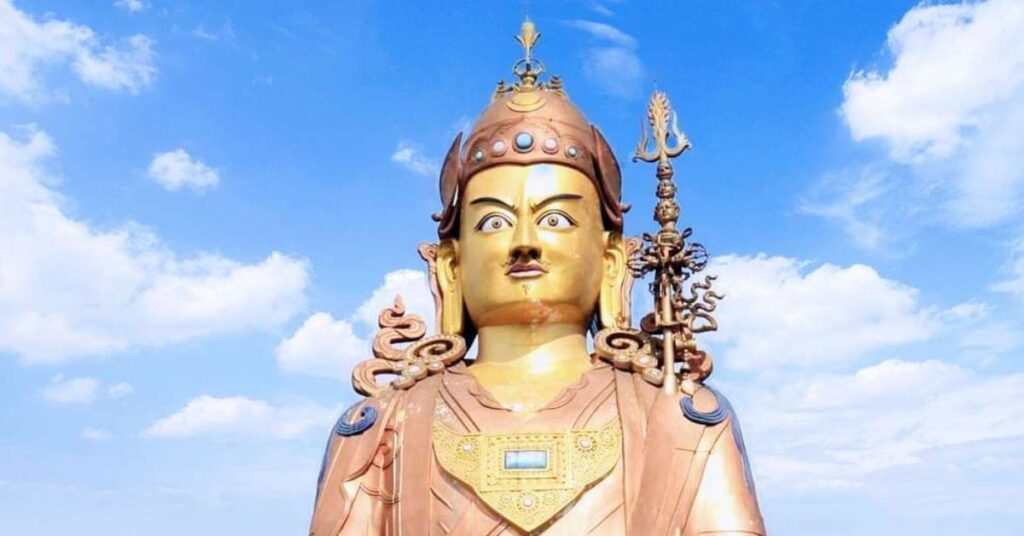
According to the biography of Phajo Drugom Zhigpo, Phajo traveled to Taktsang Senge Samdrup Dzong in the 13th century following a prophetic direction from Tsangpa Gyare. While Phajo was meditating in Taktsang Palphug, Guru Rinpoche appeared to him in an unmistakable, clear vision one early morning and said, “I am entrusting to you my twelve meditation places, consisting of four fortresses (dzongs), four cliffs (drak), and four great caves (phug); you have to plant the Victory Banner of Practice in all of these.”
According to Thuji Dra’s history, Phajo meditated at Thujedrak for a month and had a vision of Phagpa Thujechenpo Chenrezig, “The Compassionate One,” and was told to spread the Drukpa Kagyu.
To ascertain whether his teaching would spread in Bhutan, Phajo placed his walking stick into the cliff face and said, ‘If my teachings were to spread, water would emerge from the rock face.’ The holy water emerged from the rock face, indicating the spread of his teaching. This holy spring water, Thuji Drak Drupchhu, still flows from the cliff face.
Therefore, Thujedra is one of the four cliffs mentioned by Guru Rinpoche. The other three cliffs are Gomdra in Paro, Tshechudra in Gasa, and Dechendrak in Wangdue Phodrang. It is believed that anyone who meditates here will become enlightened.
Also Read: The 4 Sacred Cliffs of Guru Rinpoche Entrusted to Phajo Drugom Zhigpo
It is also a sacred site where Dampa, the son of Phajo, concealed the biography of Phajo Drugom Zhigpo in the form of a treasury (terma). Centuries later, Ngawang Tenzin, the son of Drukpa Kunley, an incarnation of Phajo’s son Gartoen, discovered the biography of Phajo in 1571 A.D.
Description of Thuji Dra
Thujedra overlooks Phajoding Monastery, a few hundred meters downhill. Thuje Dra is a sacred cliff that Guru Rinpoche entrusted to Phajo. A natural altar is carved into the rock adjacent to the temple and is believed to have been used by Phajo. It is said that anyone meditating in this place will achieve enlightenment in their life.
You can see the Drupchhu of Phajo, which is famous throughout the whole of Bhutan, for curing people with speech impediments. There is also Khandro Sonam Peldon’s Drupchhu and Lam Gyalwa Shacha’s Drupchhu.
Also Read: Drupchhu or Holy Spring Waters in Bhutan: Beliefs and Benefits
A white Chorten, Thujidra top, next to the temple, is one of the most photographed sites overlooking the magnificent Thimphu Valley. Also, it is one of the best spots to photograph sunrises and sunsets while enjoying the scenic beauty of Mother Nature.
Thujedra Temple
Thujidra Temple is a complex of seven structures at the highest point of the monastery, 13,125 feet above sea level. Phajo Drugom Zhigpo founded the Thujedra Temple in the 13th century, and it was built on Thuji Drak, the cliff of compassion. It is said to be the first temple built by Phajo at such a high altitude.
The age of the present structures at Thujidrag Goenpa is unclear—most are probably reconstructions dating from the unification of Bhutan in the 17th century and later.
According to the World Monuments Fund, Thujedrak Monastery is the most significant structure in the Phajoding vicinity. Its complex of seven structures includes Thuji Dra, a meditation center hanging on the side of a sacred cliff of Guru Rinpoche.
The meditation sites of Thujidra above the Phajoding Monastery and Tango Choying Dzong are considered the most sacred sites of Phajo Drugom Zhigpo out of the twelve holy sites he established in the country.
Also Read: Tango Choying Dzong, where Avalokiteshvara revealed himself as “the Wrathful Hayagriva”.
Accommodation at Thuje Drak
You can camp at the top of the Thujidra mountain or stay with the monks of Phajoding Monastery.
Best Time to Visit Thuji Dra
The best time for the Thujidra hike is in spring (late February, March, April, and May) and autumn (end of September, October, November, and mid-December), when skies are clear and the high peaks are visible. You can visit major pilgrimage sites in Thimphu with the Bhutan Pilgrimage Package.
Other Sacred Sites to Explore in Thimphu
National Memorial Chorten: Also known as Thimphu Chorten, it is a stupa in Thimphu built in memory of the third Druk Gyalpo, Jigme Dorji Wangchuck, in 1974.
Dechenphu Lhakhang: It is a monastery dedicated to Geynyen Jagpa Melen, a powerful protective deity, located at the northern end of the Thimphu Valley in Bhutan. The Temple was constructed in the 12th century by Dampa, the son of Phajo Drugom Zhigpo.
Pangri Zampa Monastery: It is one of Bhutan’s oldest monasteries, founded in the 16th century by Ngawang Chogyal, located 8 kilometers north of Thimphu on the west bank of the Thimphu River. The monastery now functions as Bhutan’s Royal College of Astrology, where monks study traditional astrology, and the college is responsible for determining dates for important national events.
Cheri Monastery: Also known as Chagri Dorjeden Monastery, it is the first monastery established in Bhutan by Zhabdrung Ngawang Namgyel in 1620. It is located in the Upper Thimphu Valley, about 15 kilometers north of Thimphu city, perched on a hill at an altitude of approximately 2,850 meters above sea level.
Tango Monastery: The Tango Choying Dzong was founded in the 13th century by Phajo Drugom Zhigpo and rebuilt in its current form in 1688 by the Fourth Temporal Ruler, Tenzin Rabgye. The monastery is perched on a forested hillside near Cheri Mountain, famed for its spiritual legends, particularly the prophecy involving the deity Hayagriva.
Tashichho Dzong: Built in 1216 and rebuilt in 1962, it is a fortress-monastery that houses the king’s throne room, government offices, and the central monastic body. Known as the “Fortress of the Glorious Religion,” it blends religious and administrative functions with stunning Bhutanese architecture.
Frequently Asked Questions
What is Thuji Dra?
Thuji Dra, also known as the “Cliff of Compassion,” is a sacred monastery and meditation site located high above Thimphu Valley in Bhutan. It is one of the four holy cliffs (drak) prophesied by Guru Rinpoche to Phajo Drugom Zhigpo, the founder of the Drukpa Kagyu lineage in Bhutan. The name “Thuji Dra” comes from Phagpa Thujechenpo (Avalokiteshvara, the Bodhisattva of Compassion), whom Phajo saw in a vision while meditating at this site in the 13th century.
Where is Thuji Dra located?
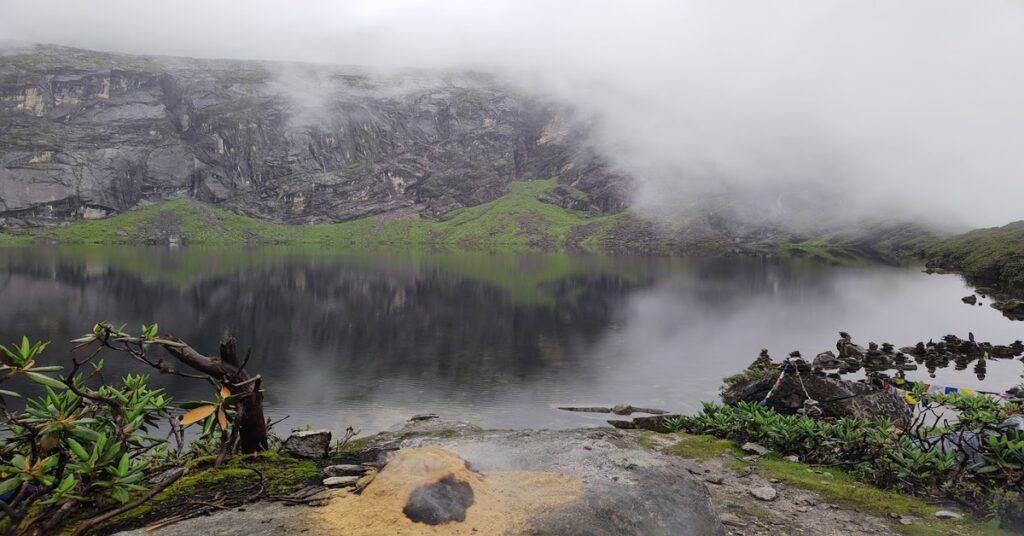
Thuji Dra is situated on a mountainside above Thimphu, near the more famous Phajoding Monastery. It lies at an altitude of nearly 4,000 meters and is accessible via a scenic but challenging hiking trail that passes through forests, alpine meadows, and sacred lakes. The site forms part of the popular Druk Path Trek and is often visited as a day hike or combined with an overnight stay at Phajoding.
What is the historical and spiritual significance of Thuji Dra?
Thuji Dra holds deep historical and spiritual importance in Bhutanese Buddhism. Guru Rinpoche blessed the site in the 8th century and later entrusted it to Phajo Drugom Zhigpo as one of his twelve meditation places. According to tradition, Phajo meditated here for a month, received a vision of Chenrezig (Avalokiteshvara), and was instructed to spread the Drukpa Kagyu teachings. He also performed a miracle by inserting his walking stick into the cliff, from which holy water (Thuji Drak Drupchhu) emerged, symbolizing the future spread of his teachings. It is believed that anyone who meditates at Thuji Dra can attain enlightenment in their lifetime.
Who founded Thuji Dra Monastery?
Thuji Dra Monastery was founded in the 13th century by Phajo Drugom Zhigpo, the great Tibetan master who established the Drukpa Kagyu school in Bhutan. It is considered one of the first temples he constructed in the Thimphu region and remains an important pilgrimage site for followers of the Drukpa Kagyu tradition.
What can visitors see at Thuji Dra?
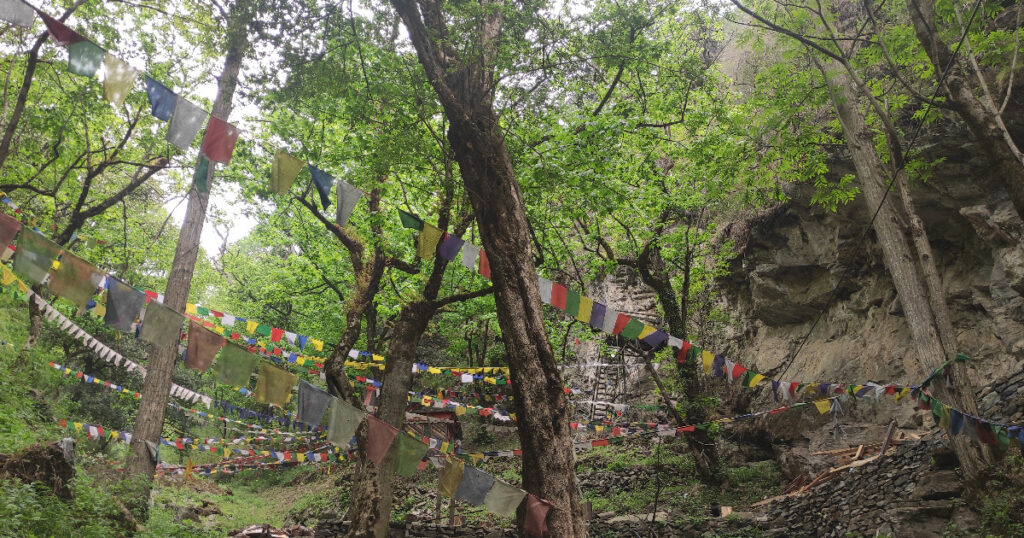
Visitors to Thuji Dra can explore the ancient temple built into the cliff face, view the sacred spring water (Drupchhu) that flows from the rock, and enjoy panoramic views of Thimphu Valley. The site also features prayer flags, stupas, and meditation caves. Many pilgrims come to collect the holy water, which is believed to have healing properties, especially for speech-related ailments.
How do you get to Thuji Dra?
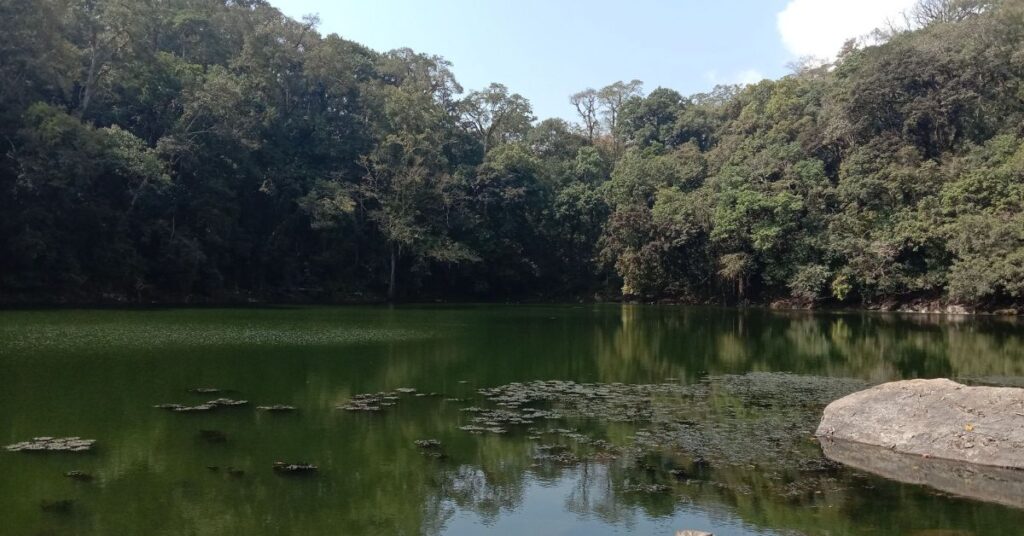
Thuji Dra is accessible only by foot via a hiking trail that typically starts from Motithang or near the National Institute of Traditional Medicine in Thimphu. The hike takes approximately 4–6 hours one way, depending on fitness level. The trail passes through rhododendron forests, open ridges, and past several small lakes and shrines. Most visitors combine the trip with a visit to Phajoding Monastery, which lies along the same route.
Can visitors meditate at Thuji Dra?
Yes, Thuji Dra is an active meditation site, and visitors are welcome to meditate in the temple or nearby caves. Given its sacred status as one of Guru Rinpoche’s twelve meditation places, it is considered especially powerful for spiritual practice. Visitors should maintain silence, dress modestly, and follow local customs such as removing shoes before entering temple areas.
Is Thuji Dra suitable for all travelers?
Thuji Dra is best suited for travelers with a moderate to high level of fitness due to the steep and lengthy hike required to reach it. The high altitude (nearly 4,000 meters) may also pose challenges for those not acclimatized. It is not recommended for young children, elderly travelers, or those with mobility issues. Guided tours are highly recommended for safety and to ensure proper permits and logistics are arranged.
Are there accommodation options near Thuji Dra?
There are no hotels or lodges directly at Thuji Dra, but visitors can stay overnight at Phajoding Monastery, which offers basic guest facilities for pilgrims and trekkers. Most travelers return to Thimphu city after their hike, where a wide range of accommodation options is available. Camping is sometimes permitted in designated areas along the trail with prior approval from local authorities.