
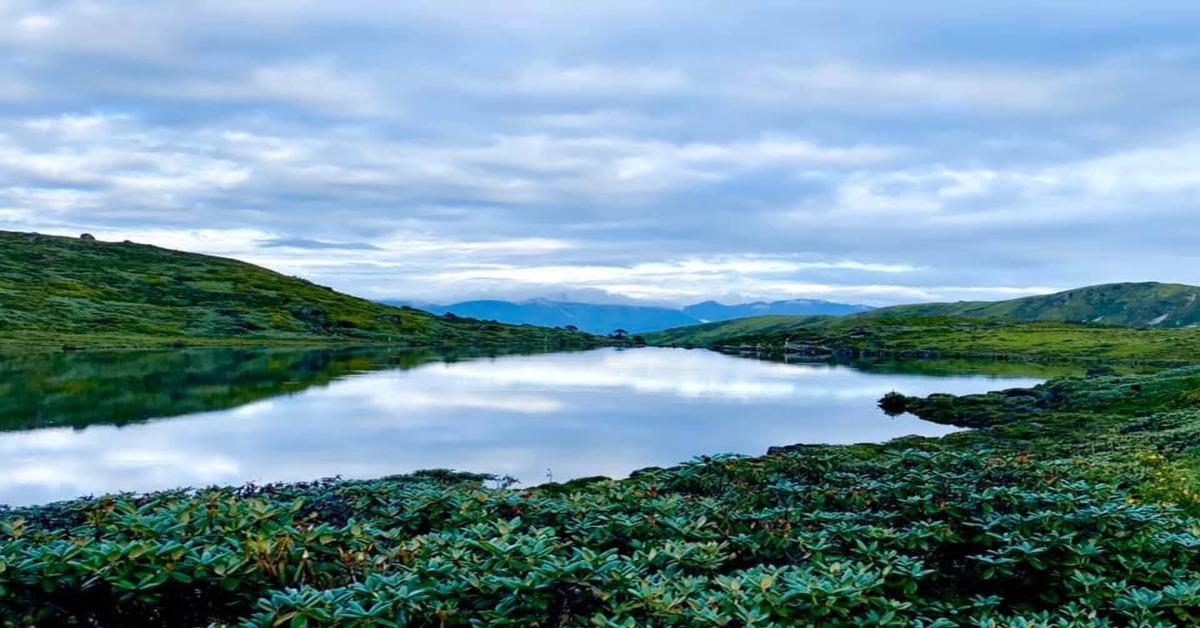
Nub Tshona Patra, often translated as “The Great Lake in the West,” is a sacred high-altitude lake in the Haa region of western Bhutan, associated with the ancient trade route between Haa and Tibet. Bhutanese Buddhist tradition links the lake with the treasure revealer Terton Sherab Mebar, who is said to have discovered sacred objects there. The marked trekking route climbs from about 3,278 to 4,200 metres. The trek is remote and is usually planned over several days.
Planning the Nub Tshona Patra Trek?
Planning a visit to this sacred high-altitude lake in Haa? Contact us on WhatsApp for help understanding the route, arranging local guidance and planning a wider cultural journey in western Bhutan. Trek conditions and access should be confirmed locally before departure.
Nub Tshona Patra is associated with the religious biography of Terton Sherab Mebar, a treasure revealer from Kham, Tibet, traditionally dated to the late 13th and early 14th centuries. Some of the objects associated with his treasure discoveries are preserved at Ugyen Guru Lhakhang in Pangbisa and Paro Rinpung Dzong. The cymbals (relmo) are traditionally displayed during Paro Tshechu.
Table of Contents
How to Reach Nub Tshona Patra
There are three traditional approaches to Nub Tshona Patra from Haa. One begins at Tokel in Bji Gewog; another starts at Drakna Gonpa and passes through Changzur Nyela after crossing Karjena in Katsho Gewog; the third begins at Yibri in Yusu Gewog. Local route advice recommends starting from Latsakha if travelling with horses and from Tokchu Gonpa for a walking approach. Confirm the current trailhead, route condition and pack-animal arrangements with a local guide before departure.
The time required depends on the approach and itinerary. The marked five-day, four-night itinerary begins and ends at Kajena Village. Some local route accounts describe reaching the lake in about three days, while a fast and well-acclimatised walker may take less time; these shorter estimates should not replace the published itinerary when planning a safe trek. The route crosses remote high-altitude terrain and requires overnight stops, sufficient supplies and flexibility for changing weather.
Also Read: How to Reach Dangling Tsho, the Sacred Summer Abode of Meme Dangling
Nub Tshona Patra Trek
Trek Distance, Duration and Altitude
The marked Nubtshonapata route covers 21.3 kilometres over five days and four nights, beginning and ending at Kajena Village. The published altitude range for the route is approximately 3,278 to 4,200 metres. These figures describe the official tourism route and should not be confused with the elevation of the lake itself, which is recorded at about 4,080 metres.
The route is a camping trek through high-altitude terrain. Daily walking, weather and trail conditions can affect the pace, so travellers should confirm the current itinerary, access arrangements and local guidance before setting out. Do not rely on the shorter journey estimates sometimes repeated in informal accounts when planning the trek.
The Nub Tshona Patra trek follows sections of an ancient trade route between Haa and Tibet. The route passes highland settlements and open grazing areas and may require crossing passes and arranging local support. Because the trail is remote, travel with a qualified local guide and confirm the availability of horses or yaks if required.
Haa’s Nubtshonapata route is also known as the Poppy Trek. The trail moves through fir, juniper and rhododendron landscapes before opening into high alpine meadows. The area is known for the rare white poppy (Meconopsis superba), and trekkers may also encounter signs of high-altitude wildlife. Sightings of animals such as snow leopards are never guaranteed, so enjoy the landscape without disturbing wildlife or collecting plants.
Also Read: Trek to Jo Bay Tsho, a Hidden Lake with a Golden Pillar in Haa
History of Nub Tshona-Patra
Local oral tradition says Nub Tshona Patra was once located near Sangbay Ama village in Sangbay Gewog before moving to its present location. The story describes a lake deity carrying the water in a narrow bamboo container known as a dung-chung. The lake’s movement is a sacred origin story, not a verified geological event.
The legend says the current site was once a nomadic settlement called Bjobi-lakha. The lake deity is said to have asked the herders to move their camp so the lake could settle there. When they did not leave, the story says the deity emptied the bamboo container and flooded the camp. Some versions describe a submerged settlement, or Nogi-jangsa, that may be glimpsed on clear days. These are local religious stories and should not be presented as observed underwater features.
The name Nub Tshona Patra is commonly translated as “The Great Lake in the West.” Some local explanations also connect Nub with Norbu, meaning precious jewel or treasure, because the lake is associated with treasure-revelation traditions. The exact linguistic derivation varies between accounts.
Also Read: The History of Drakey Pangtsho, the Treasure Lake of Guru Rinpoche on the Lap of Jowo Drake
Historical Significance
The lake’s sacred history is closely associated with Terton Sherab Mebar, who is traditionally said to have discovered treasures there. These accounts connect the lake with ritual objects, precious materials and the treasure-revealing lineage. They are religious histories and should not be presented as a verified archaeological inventory.
The following objects are associated with the Terton’s treasure-revelation story and the wider pilgrimage landscape:
- Relmo (cymbals): a pair of cymbals associated with the treasure-revelation story and preserved at Paro Rinpung Dzong
- Phurpa Ku: a three-sided ritual dagger statue preserved at Ugyen Guru Lhakhang
- Stone mongoose: a sacred object associated with the lake’s treasure story
- Drum, trumpet and drumstick: ritual objects identified in local accounts of the Terton’s discoveries
- Five Do-tsham stones: boundary markers associated with the agreement mediated by Ap Chungdu
According to the Lhodruk Chojung attributed to the 69th Je Khenpo Geshey Gendün Rinchen, Terton Sherab Mebar arrived in Bhutan from Kham in Tibet via Jomolhari. The account places his activity in the late 13th and early 14th centuries and associates him with the establishment of Ugyen Guru Lhakhang at Pangbisa, Paro.
Local tradition says Terton Sherab Mebar meditated in Yatokha to receive visions and locate the hidden treasure lake. The treasures are said to have included gold, ritual instruments and precious objects. The stories explain the lake’s importance in the Peling and treasure-revealing traditions.
One version of the story says the Terton saw a gold nugget and held the lake in his mouth while asking carpenters to shape the gold into a pillar to be offered to Hungrel Dzong. The carpenters were allowed to keep the shavings, but the story says they cut away too much material and the lake spilled from the Terton’s mouth. This is a sacred legend, not a physical account of the lake’s movement.
The lake deity, known as a Tshomen, is then said to have pursued the Terton. As he fled, he dropped ritual objects that became lakes: the drum, trumpet, drumstick, cymbals and other treasures are linked with places in Haa and neighbouring regions. The names and locations vary between local accounts.
At Tergola, the mountain deity Ap Chungdu Tsan is said to have mediated peace between the Terton and the lake deity. The story says five boundary markers, known as Do-tsham, were erected between Gangche-la and Zou-tsho to mark the territory neither party should cross. The stones are still identified in the landscape and are part of local oral history.
Also Read: Buli Tsho, a Promised Lake of Buli Moenmo Kuntu Zangmo
A second local legend tells of a herder who offered hospitality to the Tshomen while she was travelling from the lake’s former location near Sangbay Ama. The story says she promised to send him a bull in gratitude for his kindness.
Two days later, a bull is said to have joined the herder’s animals. Local tradition associates this animal with Nublang, the distinctive cattle breed of Bhutan. This is an oral origin story and should not be presented as a verified genetic or agricultural history of the breed.
Also Read: Domendrel Tsho, where Gyalse Tenzin Rabgye offered Mandala Offerings.
Best Time to Trek to Nub Tshona Patra
The best seasons for the Nub Tshona Patra trek are generally spring (March to May) and autumn (September to November). Spring brings wildflowers and rhododendrons, while autumn often offers clearer mountain views. Winter snow and extreme cold make the high-altitude route more difficult. Check weather and trail conditions before departure, and do not set out in poor visibility or severe weather.
Also Read: The Best Time to Hike to Kabji-Hoka Tsho, a Lake with an Opening to Stop Overflowing
The Poppy Trek: Landscape and Wildlife
The Nubtshonapata route is also known as the Poppy Trek because of the endemic white poppy found in its high-altitude habitat. The landscape changes from forested slopes to open alpine meadows, with mountain passes, grazing grounds and high lakes along the way. The flowering season varies with weather and altitude; late spring and early summer are especially interesting for alpine flowers.
The wider area is also known for its biodiversity, including high-altitude mammals and birdlife. Snow leopards and musk deer inhabit the broader mountain environment, but sightings are uncommon. Keep a respectful distance from wildlife, stay on established routes where possible and leave flowers, stones and other natural features undisturbed.
Preparing for the Nub Tshona Patra Trek
This is a remote, high-altitude camping trek rather than a day hike. The main itinerary is five days and four nights, with walking days averaging around six to seven hours and the route reaching approximately 4,200 metres. Allow time to acclimatise, walk at a steady pace and be prepared for cold nights, sudden weather changes and rough sections of trail.
Arrange a licensed guide and confirm the required trekking permissions, current trail access and camping arrangements before leaving Haa. Ask locally about the availability of pack animals, porters and cooking support if needed. Carry suitable layered clothing, waterproof outerwear, sturdy trekking footwear, sun protection, personal medication and a warm sleeping system. Pack out all rubbish and avoid contaminating streams or the lake.
Frequently Asked Questions
Where is Nub Tshona Patra located?
Nub Tshona Patra is a sacred high-altitude lake in the Haa region of western Bhutan, along the historic Haa–Tibet highland routes. The lake itself is about 4,080 metres above sea level; the official Nubtshonapata trekking route ranges from approximately 3,278 to 4,200 metres.
How do I reach Nub Tshona Patra?
There are three traditional approaches from Haa: from Tokel in Bji Gewog; from Drakna Gonpa via Changzur Nyela after crossing Karjena in Katsho Gewog; and from Yibri in Yusu Gewog. For horse-supported travel, local directions recommend starting from Latsakha; for a walking route, Tokchu Gonpa is a common starting point. Confirm the route and current trail conditions with a local guide.
How long does the Nub Tshona Patra trek take?
The main marked itinerary is five days and four nights, beginning and ending at Kajena Village. Other traditional approaches may take a different amount of time, so confirm your chosen route with a local guide and allow flexibility for weather, rest and overnight stops.
Who was Terton Sherab Mebar?
Terton Sherab Mebar was a treasure revealer from Kham, Tibet, traditionally dated to the late 13th and early 14th centuries. Bhutanese religious accounts associate him with the discovery of treasures at Nub Tshona Patra and with the founding of Ugyen Guru Lhakhang at Pangbisa, Paro.
What treasures did Terton Sherab Mebar discover?
Local religious accounts say the Terton revealed ritual objects including a trumpet, drum, drumstick and cymbals, along with precious materials. Some of these objects are associated with Paro Rinpung Dzong and Ugyen Guru Lhakhang. The stories are treasure-revelation traditions, not archaeological inventories.
What is the story of the lake deity and the escaping lake?
Local tradition says the lake deity, a Tshomen, pursued Terton Sherab Mebar after the lake escaped from a bamboo container. The Terton is said to have dropped ritual objects along the way, creating several lakes in the Haa region. This is a sacred origin story, not a geological explanation.
What are the five boundary stones at Tergola?
According to local tradition, the mountain deity Ap Chungdu mediated an agreement between Terton Sherab Mebar and the lake deity. Five stone markers, known as Do-tsham, were erected to mark the boundary that neither party should cross. The stones are still identified in the landscape.
What is the Nublang bull story?
A local legend says a herder hosted the lake deity during her journey to the present lake and was later gifted a bull in gratitude. The bull is associated with the Nublang cattle breed in oral tradition; this should not be presented as a verified account of the breed’s genetic origin.
When is the best time to trek to Nub Tshona Patra?
Spring and autumn are generally suitable seasons for the trek. Late spring and early summer can be rewarding for alpine flowers, including the white poppy, while autumn often brings clearer mountain views. Conditions vary at high altitude, so check the local forecast and trail access before travelling.
Can I camp near Nub Tshona Patra?
The official route is a multi-day camping trek, but do not assume that camping is permitted anywhere you choose. Confirm the planned campsites, permissions, waste arrangements and fire restrictions with your guide or the relevant local office before departure.
Why is the Nub Tshona Patra route called the Poppy Trek?
Haa’s Nubtshonapata route is known as the Poppy Trek because the high-altitude landscape is a habitat for the endemic white poppy, Meconopsis superba. Flowering depends on seasonal and weather conditions, and trekkers should admire the plants without picking them.
Plan Your Visit to Nub Tshona Patra
Nub Tshona Patra is a remote high-altitude destination, so a successful visit needs careful planning. If you would like help exploring the Haa trekking routes, coordinating local arrangements or combining the trek with other sacred places in Bhutan, get in touch with Bhutan Pilgrimage.
