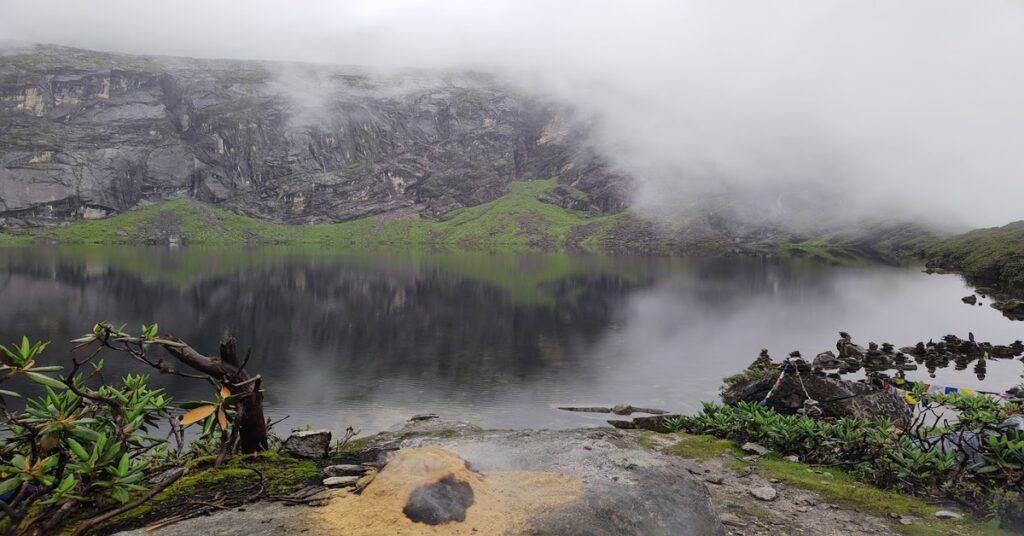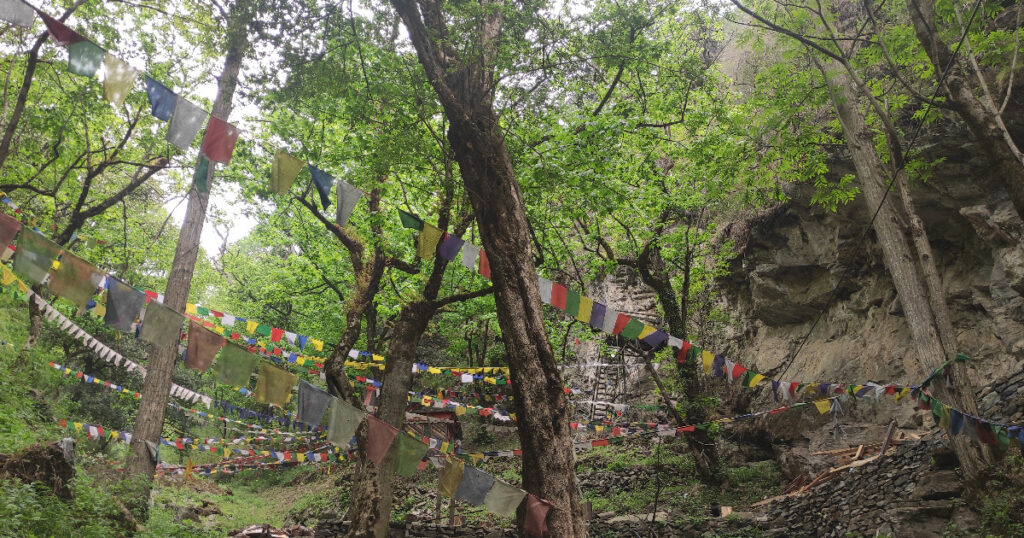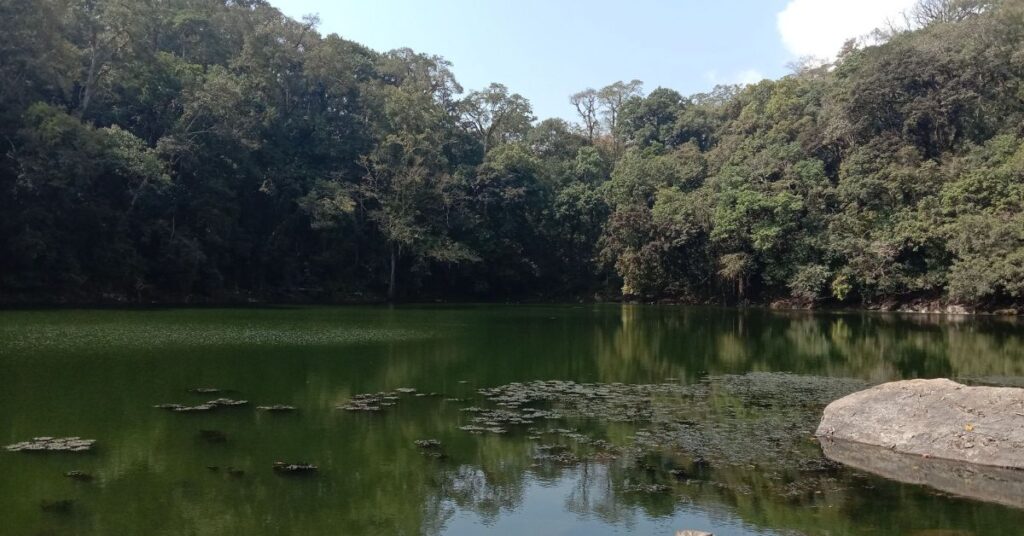
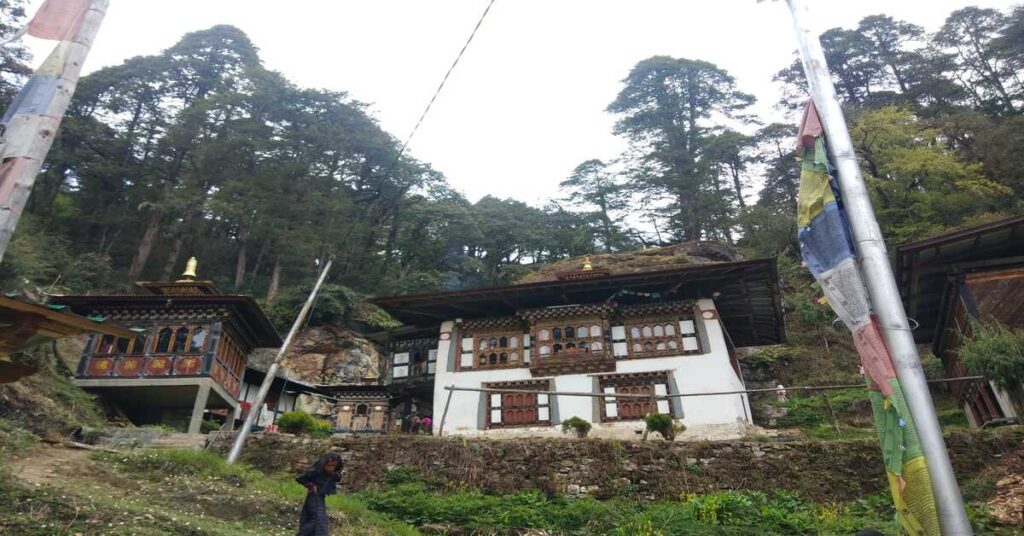
Dechen Draphu, or Dechendrak, the “Cliff of Great Bliss,” is one of the “four cliffs” of Guru Rinpoche entrusted to Phajo Drugom Zhigpo in his prophetic vision. This sacred cliff is located in Sha Khotakha of Bjena Gewog under Wangdue Phodrang Dzongkhag at 3053 meters above sea level.
Phajo Drugom Zhigpo is said to have seen the vision of the Mandala of eight precepts while meditating at this place. It was also here that Phajo received an indication that his teachings would flourish in Bhutan when his rosary string broke and got scattered around.
Also known as Dechen Drak, the cliff has several sacred sites near the rock cavern. It is open to locals and tourists from 7 a.m. to 5 p.m.
How to Reach Dechen Draphu Ney
Dechen Drak is in Sha Khotokha. The sacred site is 23 kilometers from Tekizampa, which is 14 kilometers away from Wangdue Phodrang towards Trongsa. From the Rinchenling Shedra junction, it is about a half-hour drive to the nearest parking space of Dechen Drak.
You can also go from Sha Ngarwang or Khothangkha Dolangdo. From Khothangkha Dolangdo, it takes an hour’s drive to reach Dechen Draphu.
Sacred Relics to See at Dechen Draphu Ney
- Sacred cave of Guru Rinpoche;
- The footprint of an elephant;
- Imprint of Guru Rinpoche’s Dharma robe;
- Guru’s hat;
- Guru’s Vajra;
- Khandro’s Baga;
- A Chorten built by Phajo Drugom Zhigpo;
- Imprint of Phajo Drugom Zhigpo;
- A small Lhakhang.
Also Read: Guru Rinpoche in Bhutan: His Visits to Bhutan and Sacred Sites
Historical Significance of Dechen Drak
Guru Rinpoche is said to have traveled to Dechen Draphu riding on an elephant and meditated in the 8th century. Later, Guru Rinpoche entrusted Phajo Drugom Zhigpo with his twelve meditation places.
According to the biography of Phajo Drugom Zhigpo, “The Current of Compassion”, Phajo Drugom Zhigpo traveled to Taktsang Senge Samdrup Dzong in the 13th century following a prophetic direction from Tsangpa Gyare. While he was meditating in Taktsang Palphug, Guru Rinpoche appeared to him in an unmistakable, clear vision one early morning and said, “I am entrusting to you twelve of my meditation places, which consist of four Dzongs (Fortresses), four cliffs, and four great caves; you have to plant the Victory Banner of Practice in all of these.”
Also Read: Phajo Drugom Zhigpo in Bhutan: The Sacred Sites of Phajo Drugom Zhigpo and his Descendants
Dechen Draphu’s History
According to Dechen Draphu’s history, Phajo Drugom Zhigpo meditated there at Shar Khothang Dechen Drak. The Lhodruk Chojung mentions that while Phajo was meditating there, he saw the vision of the Mandala of Eight Commands and obtained supernatural powers. He also subdued the spirit, Tsen Moklap, there.
While meditating, Dechendrak, a string of his rosary broke, and the beads scattered in 10 directions. An immaterial voice from above spoke, “Do not be worried; it is a sign that your teaching will spread throughout the Southern Direction. Go back to the place where the prophecy was spoken. Meditate there and protect the living beings by way of your heroic yogic discipline and eliminate the enemies of the Dharma through your magical powers!”
Therefore, Dechen Drak is one of the four cliffs out of the twelve meditation places, consisting of four Dzongs, four Cliffs, and four Caves entrusted to him by Guru Rinpoche. The other three cliffs are Thujidra in Thimphu, Gomdra in Paro, and Tshechudra in Gasa. It is believed that anyone who meditates here will become enlightened.
From Dechen Draphu, Phajo went back to Dodeyna, where he had seven sons from Khandro Sonam Peldon later.
Description of Dechen Draphu
The sacred cave, popularly known as the Dechen Draphu, is above the temple and is one of the four cliffs (Drak) prophesied by Guru Rinpoche to Phajo Drugom Zhipo.
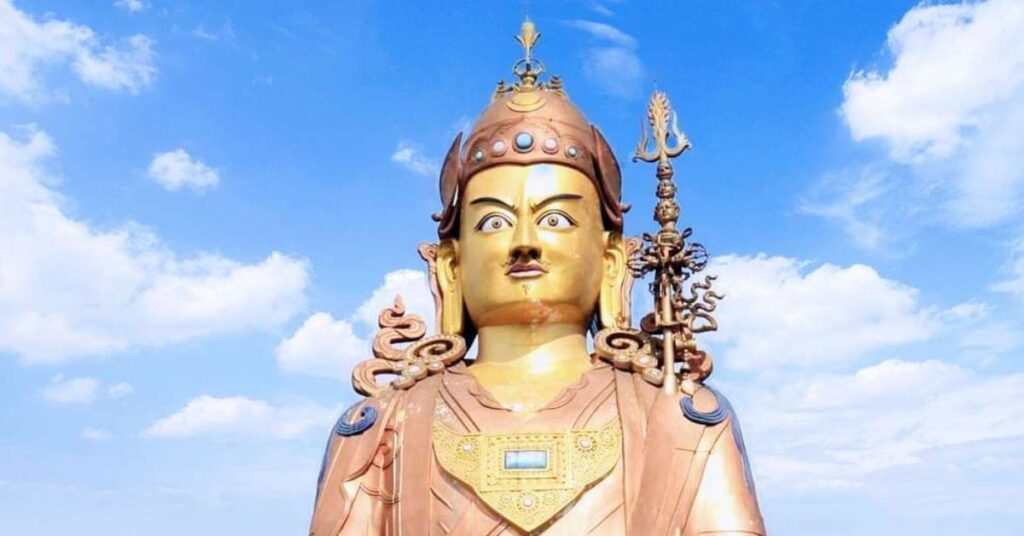
The cliff is remarkable, with the main statue of Guru Rinpoche himself flanked by two Khandros housed inside a glass box. Inside the cave, we can see the footprints of an elephant. There’s also an imprint of Guru Rinpoche’s Dharma robe. Then, you will see Guru’s hat on the cave’s tip. On the left side, you can see Guru’s Vajra and Khandro’s Yoni. There is also a chorten said to have been built by Phajo Drugom Zhigpo.
Behind the cave is a cliff with the imprint of Phajo Drugom Zhigpo. You can circumambulate the cave. The footpath around the sacred cave was constructed by the lam of the Dechen Draphu Nye with volunteers’ help, including the scouts. There is a newly built temple here. You can contact Lam Rinchen Dorji at 17943956.
Also Read: The 4 Sacred Cliffs of Guru Rinpoche Entrusted to Phajo Drugom Zhigpo
Best Time to Visit Dechendraphu Ney
Dechen Draphu Ney is one of the most sacred sites, but is rarely visited, owing to the distance and difficult road access. Although you can visit Dechen Draphu any time of the year, the best time would be during the winter and spring. We recommend you drive a car with good clearance and off-road capabilities. A 4WD during rainy days from Tekizampa is recommended. Motorcycle adventure is the best recommendation for your perfect adventurous experience. You can visit the major pilgrimage sites of Bhutan with the Bhutan Pilgrimage Package.
Other Sacred Sites to Explore in Wangdue Phodrang
Baylangdra Ney: It is a sacred site where Guru Rinpoche meditated for seven days, conquered the local spirit Lhatsen Langdra, and concealed numerous spiritual treasures. Baylangdra was formally rediscovered in 1988 by Kyabje Chatral Rinpoche.
Wangdue Phodrang Dzong: It is one of the 16 dzongs built by the Zhabdrung Ngawang Namgyal in Bhutan. It was built in 1638 to fulfill the prophecies of Pel Yeshey Gonpo and Lama Zhang on a hill that resembles a sleeping elephant.
Gangtey Monastery: It is the largest Nyingma center, noted for peling traditions and black-necked crane circumambulation, founded by the grandson of Pema Lingpa in Phobjikha Valley in 1613.
Frequently Asked Questions
What is Dechen Draphu (Dechendrak)?
Dechen Draphu, also known as Dechendrak or Dechen Draphug Nye, is a sacred cliff and meditation site located in Khotokha, Wangdue Phodrang District, Bhutan. It is one of the four great cliffs (Dra Zhi) of Guru Rinpoche that were entrusted to Phajo Drugom Zhigpo in a prophetic vision. The site holds profound spiritual significance as the place where Phajo Drugom Zhigpo, the 13th-century lama who introduced the Drukpa Kagyu school to Bhutan, had a visionary experience of the Mandala of the Eight Precepts and obtained supernatural powers during his meditation retreat.
Where is Dechen Draphu located?
Dechen Draphu is situated in Khotokha Valley, Wangdue Phodrang Dzongkhag, in central Bhutan at an elevation of approximately 3,053 meters. The sacred cliff is located in the serene Khotokha wetland area, which is recognized as one of Bhutan’s Ramsar sites and is often called the hidden twin of Phobjikha Valley. The site lies along the route between Wangdue Phodrang town and the Phobjikha Valley, making it accessible as part of a broader cultural and spiritual itinerary through central Bhutan.
What is the history and legend of Dechen Draphu?
According to Bhutanese Buddhist tradition, Dechen Draphu was revealed to Phajo Drugom Zhigpo through a prophetic vision from Guru Rinpoche, who instructed him to meditate at twelve sacred sites consisting of four dzongs (fortresses), four draks (cliffs), and four phugs (caves). While meditating at Dechen Draphu, Phajo experienced a profound vision of the Mandala of the Eight Commands (Eight Precepts) and attained both ordinary and supreme siddhis (supernatural powers). During this meditation, his rosary beads scattered in ten directions, which an immaterial voice explained as a sign that his teachings would spread throughout the southern regions, fulfilling Guru Rinpoche’s prophecy.
What spiritual significance does Dechen Draphu hold?
Dechen Draphu is revered as a powerful meditation site where Phajo Drugom Zhigpo fulfilled his spiritual aspirations and received blessings to propagate the Drukpa Kagyu lineage across Bhutan. The vision of the Mandala of the Eight Precepts at this cliff is considered a pivotal moment in Bhutanese Buddhist history, marking the establishment of Drukpa Kagyu as the dominant spiritual tradition in the country. Pilgrims visit Dechen Draphu to receive blessings for spiritual progress, meditation success, and the fulfillment of religious aspirations, following in the footsteps of Phajo and his disciples who transformed Bhutan into a land of Dharma.
How do I reach Dechen Draphu?
Dechen Draphu is accessible by road from Wangdue Phodrang town, approximately a 30–45-minute drive toward the Khotokha Valley. From the main highway, visitors take a turn into Khotokha village and follow local signs or ask residents for directions to Dechen Draphug Nye. The final approach may involve a short walk through the wetland area or farmland, depending on road conditions. Private vehicles, taxis, or tour buses can reach the vicinity, and local guides in Wangdue or Phobjikha can provide precise directions. The site is often combined with visits to nearby attractions such as Phobjikha Valley, Gangtey Goemba, and the Black-Necked Crane Information Centre.
What are the visiting hours and entry details for Dechen Draphu?
Dechen Draphu is an open-air sacred site with no formal entry fees or restricted visiting hours, accessible to pilgrims and travelers throughout the day. As a natural cliff and meditation cave, it does not have structured opening times like monasteries or temples. Visitors are encouraged to approach the site with respect, maintain cleanliness, and observe local customs such as offering prayers, lighting incense, or making small donations at any nearby shrines or prayer flags. There are no formal facilities, so travelers should plan for a rustic, off-the-beaten-path spiritual experience.
What can I see and do at Dechen Draphu?
At Dechen Draphu, visitors can explore the sacred cliff face, meditation caves, and prayer sites where Phajo Drugom Zhigpo received his visionary experiences. The area features traditional prayer flags, mani stones, and small shrines where pilgrims offer prayers and butter lamps. The surrounding Khotokha Valley offers stunning views of wetlands, rice fields, and traditional farmhouses, providing a serene backdrop for meditation and reflection. Visitors can combine their spiritual visit with nature walks through the Ramsar wetland, birdwatching for black-necked cranes (in winter), and cultural interactions with local farming communities.