
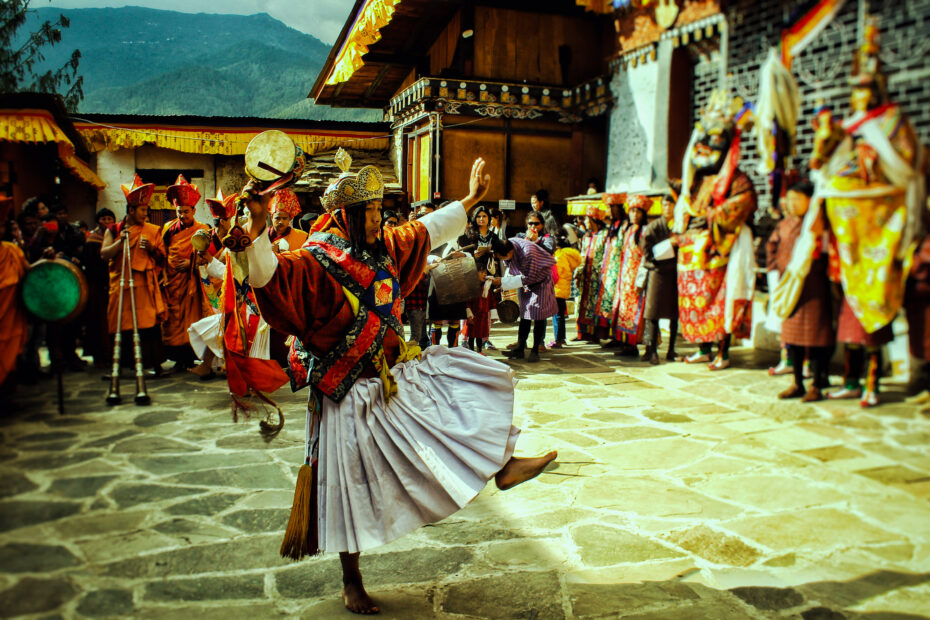
Bhutan festivals and tshechus are among the most meaningful ways to experience the country’s living Buddhist traditions and community life. Across the valleys, dzongs, monasteries and village temples, people gather for sacred mask dances, religious ceremonies, blessings, traditional music and local celebrations. These occasions are not simply performances for visitors: they are important religious and social events for the communities that preserve them.
Plan your Bhutan festival visit
Planning to experience a Bhutanese festival?
Whether you wish to attend a major tshechu or a smaller regional celebration, we can help you explore festival dates, destinations and travel arrangements.
This guide introduces the main types of festivals in Bhutan, highlights important celebrations in different regions and explains how to plan a visit respectfully. It brings together our regional knowledge and links to detailed festival and destination guides. For dates and event-specific updates, always check the individual guide and the Festivals of Bhutan calendar, as programmes can change.
Contents
What Makes Bhutan’s Festivals Special?
A Bhutanese festival often brings together religious practice, local identity and community participation. A tshechu may commemorate events in the life of Guru Rinpoche (Padmasambhava), while other observances honour a lineage master, a protective deity, a sacred temple or a local tradition. People attend to receive blessings, make offerings, meet relatives and renew their connection with the place and its religious heritage.
The dances, music, costumes and ritual objects have meanings rooted in Buddhist teachings and local histories. Some festivals include the display of a large sacred image or thongdrel, believed by devotees to confer blessings through viewing. Other events are known for distinctive practices such as fire blessings, night-time dances, processions, ritual recitations or the reenactment of historical episodes.
The scale of a festival varies. Thimphu and Paro attract large crowds, while smaller village celebrations may be intimate occasions attended mainly by residents of the surrounding communities. Both are valuable ways to understand Bhutan, and a quieter local festival can offer a very different experience from a major national event.
Understanding Tshechus, Drubchens and Other Festivals
Tshechu: annual religious festivals
A tshechu is a religious festival commonly associated with the performance of sacred cham, or masked dances. Many tshechus are held annually on auspicious days of the Bhutanese lunar calendar and are linked to Guru Rinpoche and the transmission of Buddhist teachings. The dances are performed by monks or lay dancers according to the tradition of the host dzong, monastery or community. The programme differs from one place to another; there is no single standard sequence shared by every tshechu.
Drubchen and Dromchoe: intensive ritual observances
A drubchen is a period of intensive religious practice, often involving prayers, rituals and ceremonies conducted by monks. A dromchoe is a distinctive religious observance held in some places, sometimes before a tshechu. Punakha Dromchoe, for example, is known for the dramatic Pazap procession and its historical associations with Bhutan’s defence under Zhabdrung Ngawang Namgyal. The Thimphu and Trongsa Lhamoi Dromchoe are dedicated to Pelden Lhamo and have a more solemn ritual character than a public tshechu.
Drup, Mewang, Choepa and local observances
Not every important festival is called a tshechu. The word drup appears in the names of religious gatherings such as Jambay Lhakhang Drup and Nabji Lhakhang Drup. Mewang refers to a fire-blessing ceremony, a distinctive feature of the Thangbi Mewang festival and other local observances. Choepa festivals, annual temple ceremonies and village celebrations may preserve traditions particular to a temple, lineage or community. It is best to understand each event by its own history and programme rather than treating all festivals as interchangeable.
Large prayer assemblies such as Moenlam Chenmo, public teachings, empowerments and pujas are also part of Bhutan’s religious calendar, but they are not all tshechus. For these gatherings and other religious programmes, see our Choeshey guide.
Major Festivals and Tshechus Across Bhutan
The following regional overview introduces well-known celebrations and selected local festivals covered by Bhutan Pilgrimage. It is not an exhaustive list: many dzongkhags and villages hold their own annual religious observances, and some are not widely publicised outside the local area.
Western Bhutan: Paro, Thimphu and Haa
Paro Tshechu
Paro Tshechu is one of Bhutan’s best-known spring festivals. It is held at Rinpung Dzong, where sacred dances and religious ceremonies bring together residents, pilgrims and visitors. The unfurling of the large thongdrel is a particularly significant moment for devotees. To understand the setting and its history, read our guide to Paro Rinpung Dzong. The festival dates should be checked for the year of travel.
Thimphu Tshechu and Thimphu Lhamoi Dromchoe
Thimphu Tshechu is held at Tendrel Thang, near Tashichho Dzong, and is one of the country’s largest public religious festivals. Its programme includes sacred dances and the gathering of people from across the country. The preceding Thimphu Lhamoi Dromchoe is a separate and more solemn ritual observance dedicated to Pelden Lhamo. See our Thimphu Tshechu guide for the current published details.
Druk Wangyel Tshechu and Haa Tshechu
The Druk Wangyel Tshechu takes place at Dochula Pass beside Druk Wangyel Lhakhang. Its setting among the 108 Druk Wangyel Chortens gives it a distinctive character. In Haa, the annual Haa Tshechu is associated with the valley’s religious and cultural life, including the traditions of Lhakhang Karpo and Lhakhang Nagpo. These western festivals can be combined with visits to nearby sacred sites, subject to road conditions and the time available.
Punakha, Wangdue, Trongsa and Bumthang
Punakha Dromchoe and Punakha Tshechu
Punakha’s religious calendar includes the distinctive Punakha Dromchoe, associated with the history of Zhabdrung Ngawang Namgyal and the Pazap procession, followed by Punakha Tshechu. These are separate but closely connected occasions at Punakha Dzong. Visitors should check the dates and programme for the year they intend to travel.
Trongsa Lhamoi Dromchhen
The Trongsa Lhamoi Dromchhen is a sacred annual observance dedicated to Pelden Lhamo at Trongsa Dzong. Its devotional and ritual character differs from the public cham programmes of a tshechu. It can be considered as part of a central Bhutan journey, with time to explore Trongsa and the surrounding region.
Bumthang: a rich calendar of temple festivals
Bumthang has a particularly varied festival calendar, reflecting the religious heritage of its valleys and temples. Important events and guides include Jambay Lhakhang and its Jambay Lhakhang Drup, Nimalung Tshechu, Nalakhar Tshechu, Thangbi Mewang and Tamzhing Phala Choepa. These events are not all the same type of observance, and each has its own traditions, setting and schedule.
A festival visit can be combined with nearby temples and monasteries, but allow enough time to travel between valleys and avoid assuming that several events will fall on consecutive days. Use the individual guides to check the published dates and local details.
Wangdue Phodrang and Gangtey
Wangdue Phodrang and the Phobjikha–Gangtey area offer opportunities to experience local religious festivals as well as seasonal cultural events. Gangtey Monastery is associated with the annual Gangtey Tshechu, while the valley also hosts the Black-necked Crane Festival, a community event that celebrates the arrival of the cranes and raises awareness of their conservation. These are different occasions with different purposes; check the relevant local programme before planning.
Eastern Bhutan
Eastern Bhutan’s festivals are an important part of the region’s religious and community life. Gomphu Kora Tshechu in Trashiyangtse draws pilgrims to the sacred site beside the Drangme Chhu. The nearby Chorten Kora hosts the Dakpa and Drukpa Kora observances, which are distinct from Gomphu Kora Tshechu.
Other important regional celebrations include Mongar Tshechu and Trashigang Tshechu. In eastern Bhutan, travel between districts can take longer than expected, so plan the route around the actual festival dates rather than trying to cover too many places in a short visit.
Southern and Community Festivals
Southern Bhutan and the smaller communities of central and eastern Bhutan also preserve local religious and cultural events. Nabji Lhakhang Drup in Trongsa is a community-centred religious gathering with its own distinctive traditions. Other local celebrations, seasonal events and agricultural festivals may be important to the people who organise them even when they attract fewer visitors than the major tshechus.
For visitors, these smaller events can offer a more personal view of community life. However, information may be limited and arrangements may be informal. Confirm the event dates, access, accommodation and whether visitors are welcome with the local organisers or relevant dzongkhag before setting out.
Plan your Bhutan festival visit
Experience Bhutan’s festivals with confidence
Tell us which tshechu or local festival you hope to attend, your preferred travel dates and the number of travellers. We can help you consider the route, nearby places and practical arrangements.
