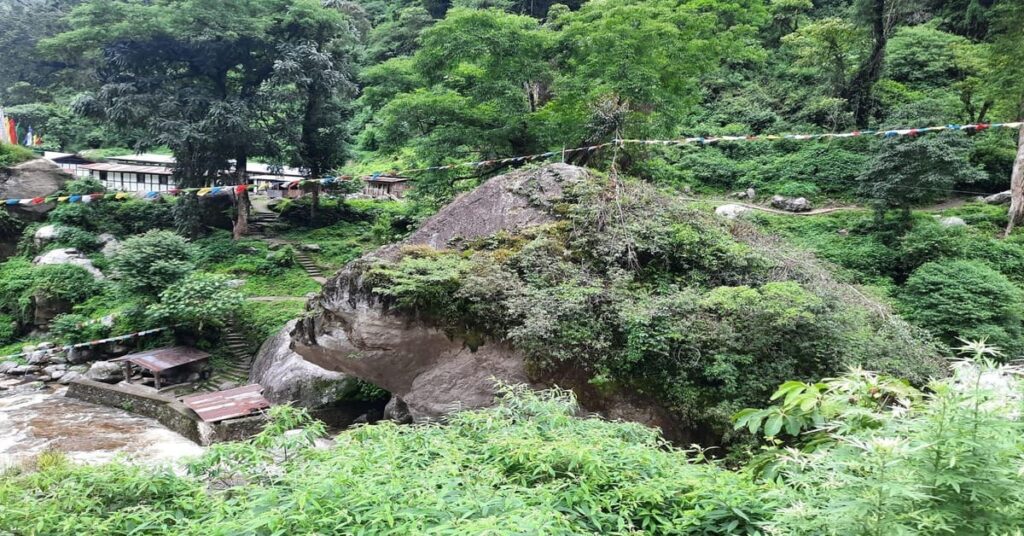
Koma Tshachu is one of the oldest and most culturally significant hot springs in Bhutan, believed to have been blessed by Guru Rinpoche in the 8th century. It is located within the Jigme Dorji National Park, under Goenshari Gewog of Punakha Dzongkhag at 1839 meters.
Visitors come to experience the healing benefits of the hot springs, which are said to alleviate various ailments. Koma Tshachu is also famous for healing broken bones and joints.
Although the temperature of the hot spring has decreased over the decades, people’s faith in its healing effects has remained. The most popular hot springs in Bhutan are the Chubu and Koma hot springs in Punakha; the Duenmang hot spring in Zhemgang; the Khempajong Nye hot spring in Lhuntse; the Gasa hot spring in Gasa; and the Gelephu hot spring in Sarpang.
How to Reach Koma Tshachu in Punakha
To reach Koma Tshachu, drive along the Punakha-Gasa Highway from Khuruthang town via Tshorim Zam for around an hour and a half to the junction called Tshorim Zam leading to Goenshari village.
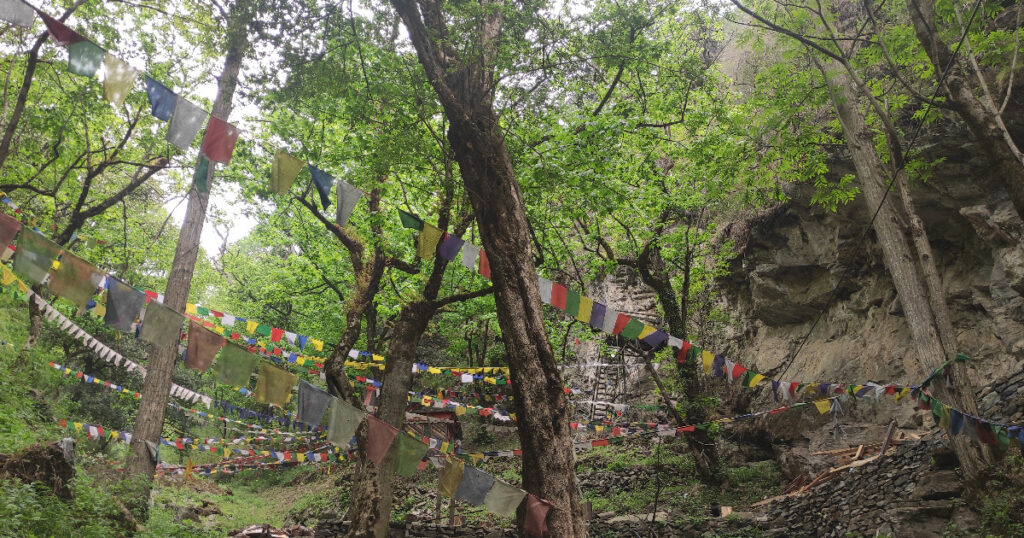
Koma Tshachu Hike: Tshorim Zam is the beginning point of two short treks – Koma Tshachu and Guru Rinpoche caves. After crossing the bridge, hike uphill through warm broadleaf forests for about two and a half hours. After an hour’s hike, the slope gets gentler and runs alongside a rumbling river beside the Koma Tshachu.
Also Read: How to Reach Gasa Hot Spring
The Trek Route of Koma Tsachu
- Start from Punakha Khuruthang town;
- Khuruthang town to Gon Shari village junction: 1 hour and 30 minutes to drive;
- Tshori Zam to Koma Tshachu: 2-hour trek.
Also Read: How to Trek to Dur Hot Spring in Bumthang
The Origin of Koma Tshachu
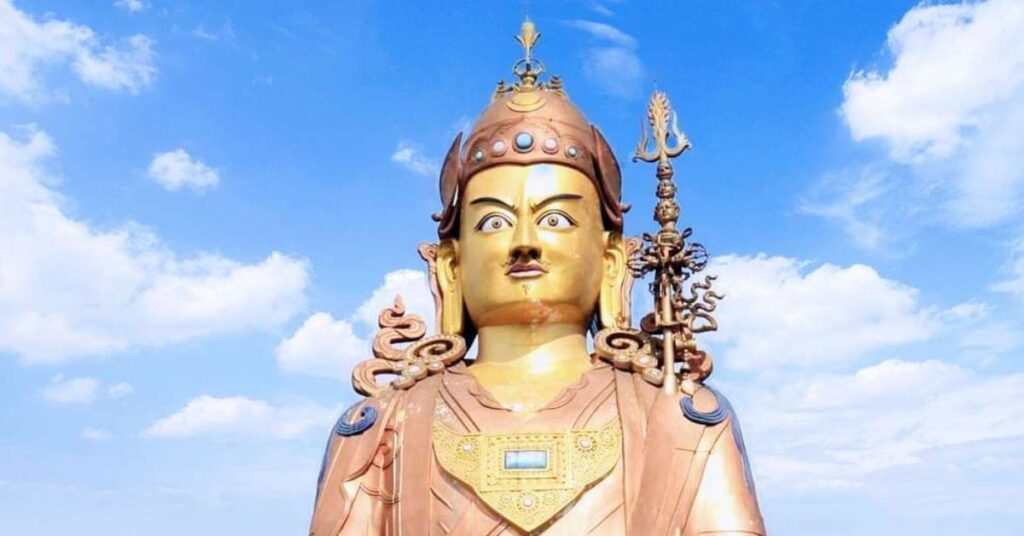
There is no written history of Koma Tshachu about its origin. However, the hot spring is considered sacred as it is believed to have been blessed by Guru Rinpoche in the 8th century. This is evident from the presence of the sacred sites (Cave) of Guru Rinpoche in the Tshachu vicinity.
Also Read: The Origin of Chubu Tshachu in Punakha
Description of Koma Tsachu
The hot spring is situated at the base of the hill of Ney Rinchen Dzong. Given that it is located on the way to Goen Tshephu Ney, it is considered the seat of Guru Rinpoche.
Also Read: The Sacred Sites of Guru Rinpoche in Bhutan
A new 50-meter suspension bridge was officially opened to the public in 2024 to improve visitor accessibility to Koma Tsachu and support the local economy of Goenshari Gewog.
The Goenshari Gewog administration manages the hot spring site. The income generated from the hot spring is reinvested into the construction and maintenance of essential amenities to ensure the site’s sustainability and enhance the visitor experience.
Koma Tshachu has three pools covered with corrugated galvanized roofing sheets. The first pool on the other side of the stream is situated at an altitude of 1860 meters. The second pool is on the side of the stream at an altitude of 1850 meters. The third pool, a Medicinal Water (Menchu), is also on the other side of the stream at 2600 meters above sea level.
Also Read: Menchu or Medicinal Springs in Bhutan: Beliefs and Benefits
Therapeutic Values or Ethnopharmacological Benefits of Koma Tshachu
The first pool, with a temperature of 38.3°C, is a warm hot spring and has healing properties for wind disorders, bile disorders, dizziness, defective bile, complicated convulsions, headache, and low vision.
The second pool, a Medicinal Spring Water (Menchu) with a temperature of 33.20°C, is a tepid hot spring with curative properties for skin diseases, indigestion, stiff muscles, festering wounds, fractures, serous fluids, increasing mucus because of suppressed wind, inflicted by evil spirits, swellings, and combined disease of defective wind and bile. This is the pool where the 69th Je Khenpo Geshey Gendün Rinchen used to bathe. Although the temperature of this pool is very low, people bathe in this pool as Je Geshey Gendün Rinchen personally blessed the pool.
The third pool with a temperature of 38.3°C is a warm hot spring good for joint pain, chronic tumors, and anal fistula. However, people with high blood pressure are advised not to bathe for long in the Tshachu.
Also Read: Therapeutic Values or Ethnopharmacological Benefits of Duenmang Tshachu
Accommodation at Koma Tshachu
There is a four-room accommodation. The room is very simple with solar electricity and is taken care of by a few young boys who also provide meals. Facilities are relatively minimal because of the hot spring’s isolation and tiny size. Visitors are recommended to reserve accommodation in advance. Although a few small stores have sprouted around the hot spring, the only true alternative, if all of the accommodations are full, is to camp and bring your tent. There is much space around the site to pitch tents, as well as overhanging rocks to camp under. Porters and ponies can be hired by consulting the local leader of the Tshori Zam community.
Contact the caretaker, Mrs. Kinley Wangmo, at 17568173 or 17334773 for booking the guesthouse and for further information.
Also Read: Accommodation at Gelephu Tshachu
Best Time to Visit Koma Tshachu
The best time to visit Koma Tshachu is between September and January. It is considered auspicious to visit Tshachu from the eighth month until the twelfth month of the Bhutanese calendar. It is believed that one should dip for at least three continuous days to get the full effect of the minerals of Tshachu. Don’t miss trekking to the Guru Rinpoche caves nearby. You can visit major hot springs in Bhutan with the Bhutan Pilgrimage Package.
Frequently Asked Questions
What is Koma Tshachu?
Koma Tshachu is one of Bhutan’s oldest and most culturally significant hot springs, located in Goenshari Gewog, Punakha Dzongkhag, within Jigme Dorji National Park. Revered as a sacred site blessed by Guru Rinpoche in the 8th century, it attracts visitors seeking both spiritual merit and therapeutic benefits from its mineral‑rich waters.
Where is Koma Tshachu located?
Koma Tshachu lies at an altitude of about 1,839 meters at the base of the hill of Ney Rinchen Dzong, under Goenshari Gewog in Punakha. It is situated on the way to Goen Tshephu Ney, deep in a forested valley alongside a river, and is accessible via the Punakha–Gasa highway followed by a short village road and hike.
How do I reach Koma Tshachu?
From Punakha town, drive along the Punakha–Gasa highway for about an hour to the turning for Goenshari village, then continue to the trailhead and walk roughly 40 minutes to the hot springs. A new suspension bridge has been built to improve access across the stream, making the final approach easier for visitors.
What are the health benefits of Koma Tshachu?
Koma Tshachu is especially famous for healing broken bones, joint pain, and orthopedic disorders, and is also believed to help with bile disorders, digestive problems, skin diseases, migraines, paralysis, and gout. Local tradition holds that soaking for at least three continuous days maximises the curative effect of the mineral waters.
What are the different pools at Koma Tshachu?
The site has multiple pools with varying temperatures and claimed benefits: a warm pool around 33–38°C for wind and bile disorders, digestive issues, lymphatic and skin problems, and a cooler medicinal pool (sman chu) around 17°C said to aid injuries, fractures, gout, jaundice, and neural conditions. People with high blood pressure are advised not to stay too long in the hotter pools.
Why is Koma Tshachu considered sacred?
Koma Tshachu is considered sacred because it is believed to have been blessed by Guru Rinpoche during his 8th‑century visit to Bhutan, and the vicinity includes caves and sites associated with him. As with many Bhutanese tshachus, the spring is seen as a holy gift from the Buddha and bodhisattvas, blending spiritual significance with traditional medicine.
Are there entry fees and visiting hours for Koma Tshachu?
There is no widely published entry fee for Koma Tshachu; visitors typically pay for local facilities, guides, or accommodation rather than a formal gate charge. The site is generally accessible during daylight hours, with most visitors staying overnight in basic guesthouses or camping nearby to complete multi‑day bathing routines.
What facilities are available at Koma Tshachu?
Basic facilities include simple bathing areas, local guesthouses, and small shops, with recent infrastructure upgrades such as a new suspension bridge to improve access. Plans for additional guesthouses and better amenities have been discussed due to rising visitor numbers, but facilities remain relatively rustic compared to urban hot‑spring resorts.