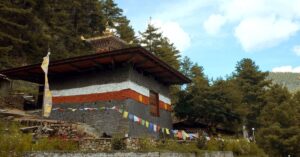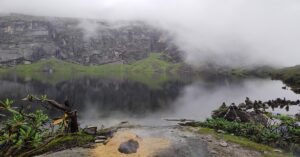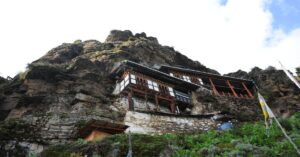
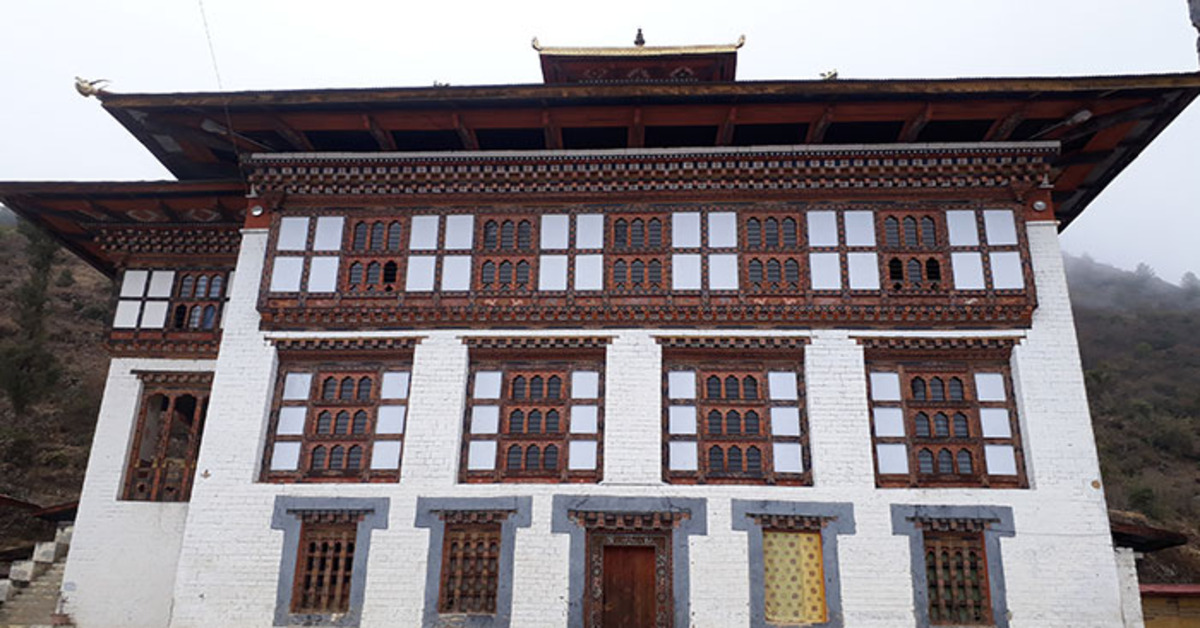
Rigsum Goenpa is a monastery founded by Lam Tshering Jamtsho on a hill that resembles the three elements of Manjushri, Vajrapani, and Avalokiteshvara in the 18th century. It is located in Bumdeling Gewog under Trashiyangtse Dzongkhag, at an elevation of 2928 meters.
The monastery was established primarily as a protection from external enemies. Rigsum Goemba from the North, and Yongla Goenpa from the South, are believed to guard Bhutan’s sovereignty.
Today, Rigsum Gonpa in Trashiyangtse has become one of the most popular pilgrimage sites, considered equivalent to a pilgrimage to Lhasa in Tibet.
How to Reach Rigsum Goenpa
Rigsum Goenpa sits atop a ridge, offering the majestic views of Trashi Yangtse Dzong and Bumdeling Valley. Drive from Trashiyangtse town to Dungzam in Bumdeling, then trek to reach Rigsum Goenpa.
Rigsum Goemba Hike
Rigsum Goenpa hike starts from Dungzam. It takes 3 to 4 hours on foot to reach the monastery.
History of Rigsum Goenpa
Lama Tshering Gyamtsho built Rigsum Goenpa monastery in the 18th century.
According to legend, Lama Tshering Jamtsho, while meditating in the Dodedrak cave, had a vision of three barley seeds sprouting from the cave floor. When he shared this vision with his master, 9th Je Khenpo Sakya Rinchen, it was interpreted as a prophecy that Lam Tshering Jamtsho was destined to encounter Rigsum Gonpo and build a temple that would protect Bhutan from external threats.
Guided by this prophecy, the Lama journeyed in search of Rigsum Gonpo and arrived in Trashiyangtse, where he meditated for three months in a cave near today’s Rinchengang Lhakhang. During his meditation, Yongla deities and Ge-Nyen urged him to proceed toward Pemaling.
At Pemaling, Lama Tshering Jamtsho discovered imprints symbolizing Rigsum Goenpo, the enlightened deities of Manjushri, Vajrapani, and Avalokiteshvara near a cave. With the blessings of Goenyen Phaenbu, the guardian deity of the cave, he built a small hermitage. The site was named Rigsum Goenpa, inspired by many triple elements (Rigsum), such as three mountains, three cliffs, and even three surrounding valleys.
Successive Abbots of Rigsum Goenpa
After the passing of Lama Tshering Jamtsho, the monastery was succeeded by a lineage of dedicated abbots:
- Lama Jangchub Gyeltshen, his nephew, became the second abbot and expanded Lhakhang Wogma (lower monastery) with mural paintings of Paksam Thrishing, which can still be seen today.
- Lama Ngawang Loday, nephew of Lama Jangchub Gyeltshen, became the 3rd abbot and built a 5-storied Lhakhang with hostels above the main temple. The lama brought the sacred copper statue of Lord Buddha (Jowo Shakya Muni) from Punakha Dzong and also installed eight Enlightenment Stupas and a hundred volumes of Buddhist scriptures.
The legend of Jowo Sung-Joen
During the time of the 6th abbot, Lama Shacha Gyalpo from Sewla Goenpa, a remarkable event occurred. It is said that when he erected a Lhadhar, the government officials were displeased. Fearing repercussions, the Lama prayed to the Jowo Shakya Muni statue. The statue is believed to have said, “Sakya Gyalpo, it will never be.” True to the prophecy, the government’s anger never reached Rigsum Gonpa. Thus, the statue came to be known as Jowo Sung-Joen, the Speaking Buddha.
During the appointment ceremony of Chogyal Minjur Tenpa as the Trongsa Penlop, three Lams of Choedrak Goenpa, Rigsum Goenpa, and Yongla Goenpa were appointed from Trongsa Rabdey. Since then, it has become customary to appoint these Lams from the Trongsa Rabdey.
Reconstruction of Rigsum Goenpa
Rigsum Goenpa was fully reconstructed and consecrated by His Holiness the 70th Je Khenpo in 2004 at a cost of Nu 15.5 million. However, the monastery suffered damage during the 2013 earthquake.
Following a Royal Command in 2018, reconstruction plans were approved, and work began in 2021. With funding of Nu 261 million from the Government of India, the ongoing project includes a three-storied main temple, a two-storied classroom, monk hostels, a dining hall, and a guesthouse, among others.
Description of Rigsum Goenpa
The main relic of the Rigsum Goenpa monastery is the statue of Shakya Muni Buddha, who spoke (Jowo Sungjoenma). It also has unique mural paintings depicting the life history of Lord Buddha. The lower temple has exquisite murals of Zaedja Pagsam Thishing, narrating the history of 108 Buddhas. Rigsum Goenpa also houses a Chugchig Zhey, Chenrezig statue installed by the 11th Lam Geshe Namgay Pelzang.
Tashi Yangtse Bumdelling Rigsum Gonpa Goenzin Dratshang
Rigsum Gonpa is one of the Goenzin Dratshangs in the eastern Dzongkhag. It serves as the summer residence of some 50 monks whose winter residence is Chorten Kora.
Best Time to Visit Rigsum Goenpa
The best time to visit Rigsum Goenpa is in the 6th and 7th lunar months. However, the perfect time would be during the Rigsum Goenpa Tshechu in the early spring season. You can visit the major pilgrimage sites of Trashiyangtse with the Bhutan Pilgrimage Package.
Places to Explore in Trashiyangtse
Gomphu Kora: A sacred cave where Guru Rinpoche meditated to subdue an evil spirit in the 8th century.
Omba Ney: It is a sacred site featuring the holy Mantra “OM” and cliffside temples, often referred to as the “Taktsang of the East”.
Gongza Ney: Gungja Ney is a revered site where Khandro Yeshe Tsogyal offered tea to Guru Rinpoche at noontime.
Chorten Kora: This is a Boudhanath stupa built to subdue a powerful demon terrorizing the people in the Yangtse valley.
Pemaling Ney: The most sacred site of Guru Rinpoche, where he meditated.
Dechen Phodrang Ney: A meditation cave of Guru Rinpoche, discovered in the 15th century.
Enjoyed reading this blog?