Skip to content

trek

Kurjey Lhakhang, sacred monastery complex with three temples in Bumthang, Bhutan

The Lotus-Born Trail: Following Guru Rinpoche’s Sacred Journey Across Bhutan

The Lotus-Born Trail, also written Lotus Born Trail and sometimes called the Padmasambhava Trail, is a developing pilgrimage and cultural heritage route in Bhutan. Planned to cover approximately 150–200 kilometres, it connects Gelephu Mindfulness City in southern Bhutan with Kurjey Lhakhang in Bumthang, passing through the landscapes and communities associated with Guru Rinpoche’s sacred journey. The route rises from subtropical lowlands towards the forests and high valleys of central Bhutan.

For an overview of the sacred landmarks at the southern gateway of this route, see our guide to spiritual sites in Gelephu Mindfulness City, including temples, chortens, monasteries and developing pilgrimage projects.

If you are exploring pilgrimage beyond this developing route, our Bhutan Pilgrimage Guide introduces sacred destinations and pilgrimage traditions across the country.
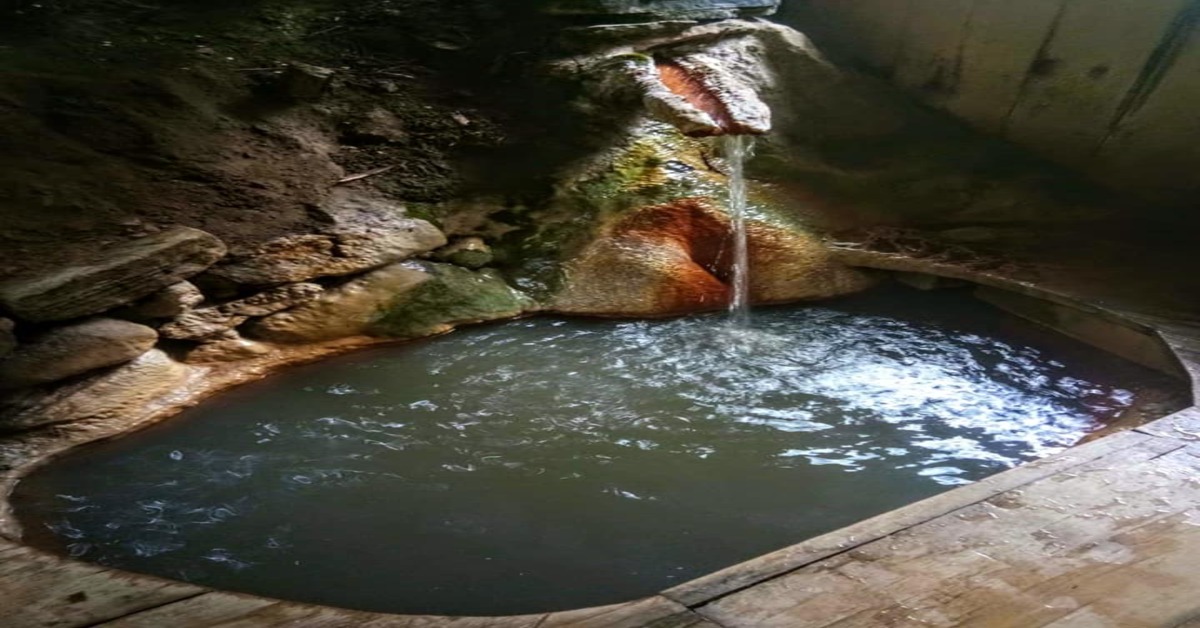
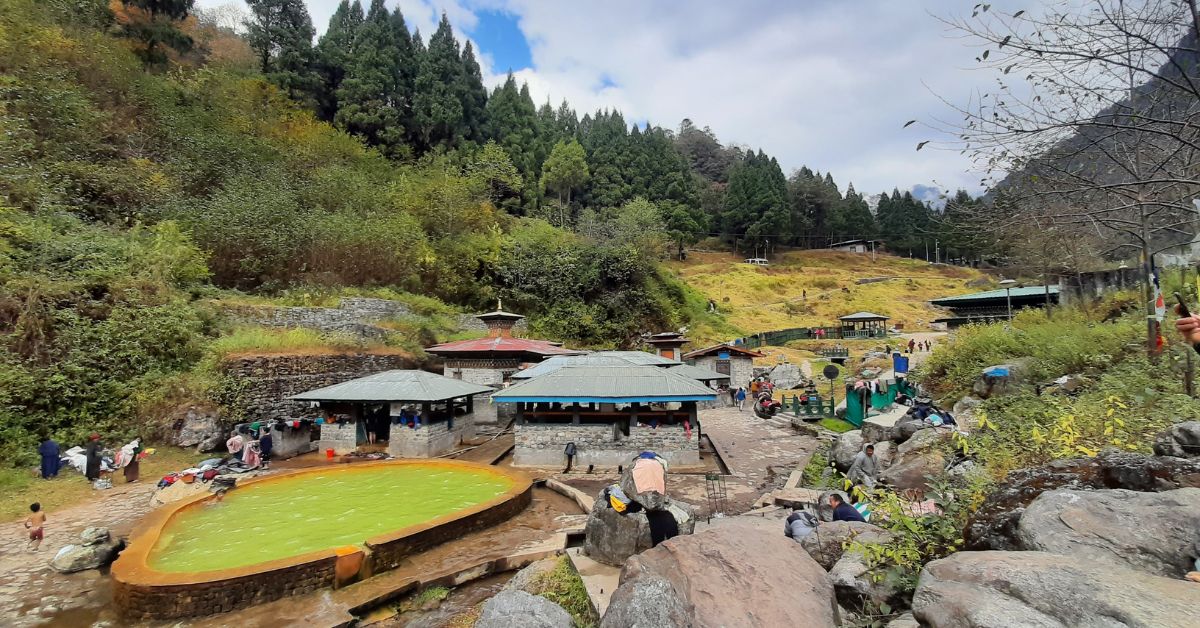
Dhur Tshachu, remote natural hot spring with bathing pools in Bumthang, Bhutan

Dhur Tshachu: Sacred Hot Springs and Trek Guide

Dhur Tshachu, also known as Dur Tshachu or Dur Hot Spring, is a remote group of natural hot springs in Wangchuck Centennial National Park, Bumthang Dzongkhag. Set at roughly 3,400 metres in a forested mountain valley, the springs are associated in Bhutanese Buddhist tradition with Guru Menlha, the Medicine Buddha. Reaching the pools requires a demanding high-altitude trek from the nearest roadhead.

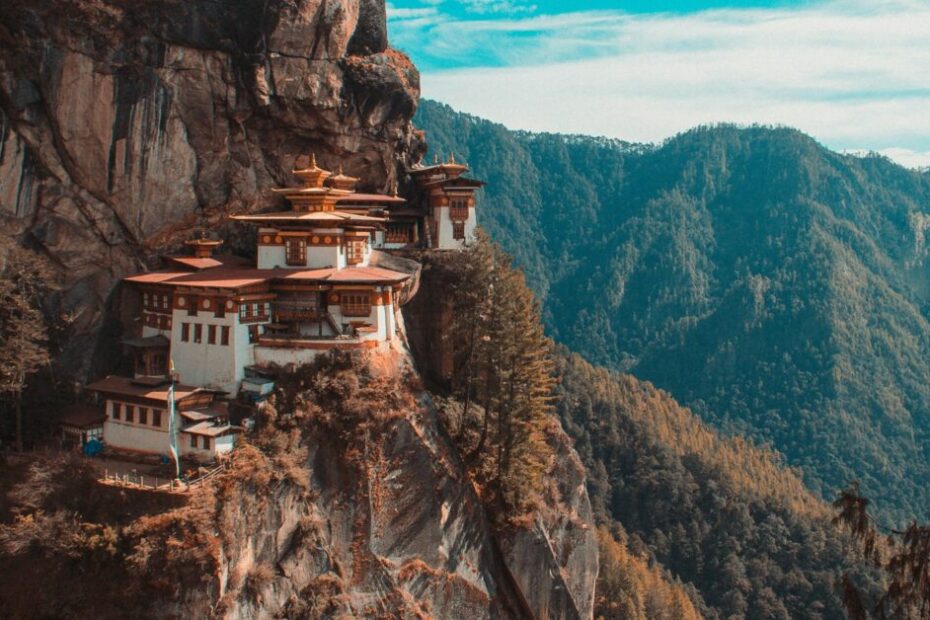
Paro Taktsang (Tiger’s Nest), a sacred destination in this Bhutan pilgrimage guide

10 Famous Temples in Bhutan You Must Visit

Temples in Bhutan are living centres of worship, learning and community life. From cliffside Paro Taktsang (Tiger’s Nest) to the ancient shrines of Bumthang and the lesser-visited monasteries of eastern Bhutan, each sacred place has its own history, legends and traditions. This guide introduces ten famous temples and monasteries across the country, with practical information to help you understand what makes each one special and plan a respectful visit.

For a broader introduction to sacred destinations, Buddhist pilgrimage traditions and planning a journey across the country, continue to our Bhutan Pilgrimage Guide.

Traditional Bhutanese drupchhu, or sacred spring water, collected at a pilgrimage site

Drupchhu in Bhutan: Sacred Spring Waters, Beliefs & Visitor Guide

Drupchhu or holy spring waters are considered to be blessed water, often extracted from a cliff or a sacred place by a spiritual person. Many holy spring waters in Bhutan are said to have been extracted by Guru Rinpoche. The holy springs may or may not have medicinal value, but are considered to have a great spiritual power to liberate one from suffering if one drinks them.

Menchu, traditional medicinal hot or mineral spring water at a Bhutanese healing spring

Menchu in Bhutan: Medicinal Springs, Traditions & Visitor Guide

Menchu refers to mineral or medicinal springs in Bhutan. These natural waters are valued in local communities for bathing, traditional wellness practices and spiritual significance. Some springs are associated with Buddhist masters and sacred-site legends. The term “medicinal” reflects traditional classification and use; it does not mean that the water is proven to cure disease.

Thuji Dra sacred cliff and meditation site associated with Phajo Drugom Zhigpo in Thimphu, Bhutan

Thuji Dra, Thimphu: Sacred Cliff of Compassion & Hiking Guide

Thuji Dra, meaning the Cliff of Compassion, is one of the four sacred cliffs associated with Phajo Drugom Zhigpo and Guru Rinpoche. Located high above Thimphu Valley at approximately 4,000 metres, the sacred site is revered in the Drukpa Kagyu tradition. It is here, according to the traditional account, that Phajo meditated and received a vision of Phagpa Thujechenpo Chenrezig, the Bodhisattva of Compassion. Phajo is traditionally credited with founding Thujidrag Goenpa in the 13th century.

Thuji Dra can be understood within the wider network of sacred places and pilgrimage traditions across Bhutan. See our Bhutan Pilgrimage Guide for a regional overview.

Tha Namkhai Dzong, historic fortress in Dagana District, Bhutan

Tha Namkhai Dzong, Dagana: The Frontier Sky Fortress

Tha Namkhai Dzong, also called the Frontier Sky Fortress, is a sacred cliffside site overlooking Thasa Chiwog in Laja Gewog, Dagana Dzongkhag. It is associated in local Buddhist tradition with Guru Rinpoche and is best known for a religious bell suspended from a cliff, with a sacred urn (Thro) above it. It is not a conventional built dzong. BBS’s September 2026 report confirms the site’s location in Laja Gewog and describes the bell and urn.

Mount Jomolhari, a sacred Himalayan mountain associated with Guru Rinpoche in Bhutan

Jomolhari Ney, Bhutan: Guru Rinpoche’s Sacred Cave

Mount Jomolhari, also known as Chomolhari, is a sacred mountain on the Bhutan–Tibet border, with a commonly cited summit elevation of about 7,326 metres. The Jomolhari Ney is a separate high-altitude pilgrimage site associated in local Buddhist tradition with Guru Rinpoche and Khandro Yeshe Tsogyal. The meditation cave and temple are described as being above 4,600 metres in Soe Gewog, Lingzhi Drungkhag, Thimphu Dzongkhag. This is a remote high-altitude site and should not be confused with Jangothang, the more commonly visited Jomolhari Base Camp.

This remote ney is part of Bhutan’s wider sacred geography. For an overview of other pilgrimage destinations, traditions and practical journey planning, see our Bhutan Pilgrimage Guide.

Rangtse Ney, sacred pilgrimage caves and cliffside shrine in Haa, Bhutan

Rangtse Ney, Haa: Sacred Caves of Guru Rinpoche

Rangtse Ney is a sacred site associated in Bhutanese Buddhist tradition with Guru Rinpoche and Khandro Yeshe Tsogyal. It is located in Rangtse village, Gakiling Gewog, Haa Dzongkhag, above the Amo Chhu. The Haa Dzongkhag geospatial survey records the site at approximately 759 metres, while Haa Tourism describes the area at around 800 metres. Treat the elevation as approximate and dependent on the measurement point. Rangtse Ney is also known as Sangbe Rinchenling or Sangbay Ney, names associated with its identity as a concealed sacred place.

For the wider story of Guru Rinpoche’s traditional visits and sacred places across Bhutan, see our Guru Rinpoche in Bhutan pillar guide.

Rangtse Ney may be considered alongside other sacred destinations in western Bhutan. Our Bhutan Pilgrimage Guide introduces pilgrimage traditions and places across the country.

Gom Dra sacred cliff and Gomdralo Lhakhang in Shapa, Paro, Bhutan

Gom Dra, the Great Meditation Cliff of Guru Rinpoche Prophesied to Phajo Drugom Zhigpo

Gom Dra, also known as Gomdralo, is a sacred meditation site in Shapa, Paro Dzongkhag. It is revered as one of the four sacred cliffs and one of the twelve meditation places associated with Phajo Drugom Zhigpo in Drukpa Kagyu tradition. The landscape includes a meditation cave and Gomdralo Lhakhang, a registered heritage building whose documented history begins in the 13th century. The cliff, cave and temple are related but distinct parts of the pilgrimage site.

Gasa Tshachu, natural hot springs in Gasa District, Bhutan

Hot Springs in Bhutan: Bhutanese Beliefs and Benefits

Hot springs, known as tshachu in Bhutan, are natural springs where geothermally heated groundwater reaches the surface. They are valued for bathing, relaxation, social connection and traditional wellness practices. Bhutanese communities also distinguish mineral springs (menchu) and holy spring waters (drupchhu). Research has documented many such sites, but the number varies by survey and classification. Traditional healing beliefs should be distinguished from laboratory evidence and proven medical treatment.