Skip to content

hike

Tha Namkhai Dzong, historic fortress in Dagana District, Bhutan

Tha Namkhai Dzong, Dagana: The Frontier Sky Fortress

Tha Namkhai Dzong, also called the Frontier Sky Fortress, is a sacred cliffside site overlooking Thasa Chiwog in Laja Gewog, Dagana Dzongkhag. It is associated in local Buddhist tradition with Guru Rinpoche and is best known for a religious bell suspended from a cliff, with a sacred urn (Thro) above it. It is not a conventional built dzong. BBS’s September 2026 report confirms the site’s location in Laja Gewog and describes the bell and urn.

Mount Jomolhari, a sacred Himalayan mountain associated with Guru Rinpoche in Bhutan

Jomolhari Ney, Bhutan: Guru Rinpoche’s Sacred Cave

Mount Jomolhari, also known as Chomolhari, is a sacred mountain on the Bhutan–Tibet border, with a commonly cited summit elevation of about 7,326 metres. The Jomolhari Ney is a separate high-altitude pilgrimage site associated in local Buddhist tradition with Guru Rinpoche and Khandro Yeshe Tsogyal. The meditation cave and temple are described as being above 4,600 metres in Soe Gewog, Lingzhi Drungkhag, Thimphu Dzongkhag. This is a remote high-altitude site and should not be confused with Jangothang, the more commonly visited Jomolhari Base Camp.

This remote ney is part of Bhutan’s wider sacred geography. For an overview of other pilgrimage destinations, traditions and practical journey planning, see our Bhutan Pilgrimage Guide.

Rangtse Ney, sacred pilgrimage caves and cliffside shrine in Haa, Bhutan

Rangtse Ney, Haa: Sacred Caves of Guru Rinpoche

Rangtse Ney is a sacred site associated in Bhutanese Buddhist tradition with Guru Rinpoche and Khandro Yeshe Tsogyal. It is located in Rangtse village, Gakiling Gewog, Haa Dzongkhag, above the Amo Chhu. The Haa Dzongkhag geospatial survey records the site at approximately 759 metres, while Haa Tourism describes the area at around 800 metres. Treat the elevation as approximate and dependent on the measurement point. Rangtse Ney is also known as Sangbe Rinchenling or Sangbay Ney, names associated with its identity as a concealed sacred place.

For the wider story of Guru Rinpoche’s traditional visits and sacred places across Bhutan, see our Guru Rinpoche in Bhutan pillar guide.

Rangtse Ney may be considered alongside other sacred destinations in western Bhutan. Our Bhutan Pilgrimage Guide introduces pilgrimage traditions and places across the country.

Baylangdra Ney, the sacred Bull Cliff pilgrimage site in Wangdue Phodrang, Bhutan

Baylangdra Ney, the Hidden Treasure of the Bull Cliff

Baylangdra Ney is a sacred pilgrimage site in Wangdue Phodrang, associated in Bhutanese Buddhist tradition with Guru Rinpoche’s meditation, the subjugation of the guardian spirit Lhatsen Langdra and the concealment of sacred treasures. The site is also known for a revered cypress tree believed to have grown from Guru Rinpoche’s walking stick. The commonly published elevation is approximately 2,989 metres. The pilgrimage is reached from Chuzomsa and includes a rough-road journey followed by a forest hike.

Gom Dra sacred cliff and Gomdralo Lhakhang in Shapa, Paro, Bhutan

Gom Dra, the Great Meditation Cliff of Guru Rinpoche Prophesied to Phajo Drugom Zhigpo

Gom Dra, also known as Gomdralo, is a sacred meditation site in Shapa, Paro Dzongkhag. It is revered as one of the four sacred cliffs and one of the twelve meditation places associated with Phajo Drugom Zhigpo in Drukpa Kagyu tradition. The landscape includes a meditation cave and Gomdralo Lhakhang, a registered heritage building whose documented history begins in the 13th century. The cliff, cave and temple are related but distinct parts of the pilgrimage site.

Gasa Tshachu, natural hot springs in Gasa District, Bhutan

Hot Springs in Bhutan: Bhutanese Beliefs and Benefits

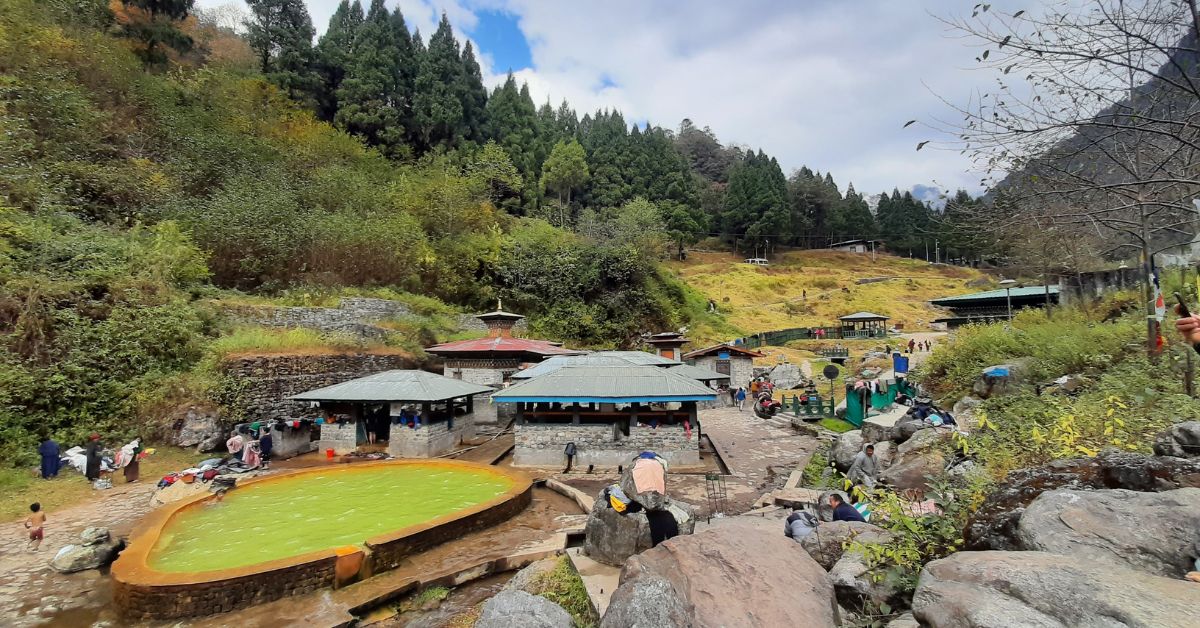
Hot springs, known as tshachu in Bhutan, are natural springs where geothermally heated groundwater reaches the surface. They are valued for bathing, relaxation, social connection and traditional wellness practices. Bhutanese communities also distinguish mineral springs (menchu) and holy spring waters (drupchhu). Research has documented many such sites, but the number varies by survey and classification. Traditional healing beliefs should be distinguished from laboratory evidence and proven medical treatment.

RaGoe Ney sacred Guru Sungjoen shrine and pilgrimage site in Paro, Bhutan

RaGoe Ney, the Destined Place of Guru Sungjoen brought by a Goat and a Vulture

RaGoe Ney is a sacred Buddhist pilgrimage site in Atsho-Phunum village, Doteng Gewog, Paro Dzongkhag. The cliffside monastery, Ragoe Guru Lhakhang, is renowned for Guru Sungjoen, a statue of Guru Rinpoche revered as self-speaking. Local tradition says the statue was brought from Punakha first by a vulture and then by a goat to its destined place. The site is also associated with Guru Rinpoche’s meditation, sacred caves and springs. These accounts belong to Bhutanese Buddhist religious tradition.

Dra Zhi, the four sacred meditation cliffs in Bumthang, Bhutan

Dra Zhi, the Four Great Meditation Cliffs of Guru Rinpoche in Bumthang

Dra Zhi means the Four Cliffs. In Bumthang, the name refers to four sacred cliffs associated with Guru Rinpoche: Choedrak, Kunzangdrak, Shugdra and Thowadra. Bhutanese Buddhist tradition connects these places with Guru Rinpoche’s meditation and the subduing of the local deity Shelging Karpo. The stories are part of Bumthang’s sacred geography and should be understood as religious tradition. The four Bumthang cliffs are a distinct group from the four sacred cliffs entrusted to Phajo Drugom Zhigpo in other parts of Bhutan. For the wider traditional account of Guru Rinpoche’s visits and the sacred sites associated with him across Bhutan, see our Guru Rinpoche in Bhutan: His Visits and Sacred Pilgrimage Sites.

For a broader account of Guru Rinpoche-related destinations and pilgrimage traditions across Bhutan, see our Bhutan Pilgrimage Guide.

Shuk Drak Goenpa, also known as Shugdra Goenpa, sacred cliff monastery in Bumthang, Bhutan

Shugdra Goenpa, where Guru meditated in the form of Blood-Drinking Padma

Shugdra Goenpa (also called Shuk Drak Goenpa) is one of Bumthang’s four sacred meditation cliffs, collectively known as Dra Zhi. It stands in the upper Chhoekhor-toed valley below Kharsa village. Bhutanese Buddhist tradition associates the cliff with Guru Rinpoche’s meditation and the subduing of the local deity Shelging Karpo. Bhutanese Buddhist tradition places Guru Rinpoche’s blessing of the site in the 8th century, while the present lhakhang is attributed to Garpa Nado in the late 19th century. Our Dra Zhi guide introduces all four cliffs and their separate access routes.

Namthong Karpo sacred cave near Zuri Lhakhang and Zuri Dzong in Paro, Bhutan

Namthong Karpo, a Sacred Cave where Guru Rinpoche subdued a Sickle-faced Demon

Namthong Karpo is a sacred cave and pilgrimage site on the wooded ridge above Paro Valley, closely associated with Zuri Lhakhang and nearby Zuri Dzong. Bhutanese Buddhist tradition connects the cave with Guru Rinpoche’s meditation and the subduing of a harmful spirit. Paro Dzongkhag’s account records that Yung Toen Dorji established a goenpa at Namthong Karpo, which later became known as Zuri Lhakhang. The cave, temple and historic fortress are related but distinct features of this sacred landscape.

Chubu Tshachu sacred hot spring in Punakha, traditionally associated with Guru Rinpoche, Bhutan

Chubu Tshachu: Sacred Hot Spring and Pilgrimage Guide

Chubu Tshachu is a natural hot spring in Toedwang Gewog, Punakha Dzongkhag, in the Pho Chhu valley. Local Buddhist tradition associates its discovery with Guru Rinpoche and identifies Ap Khachhep as the guardian deity of the site. A 2025 peer-reviewed study recorded the sampled Chubu ponds at approximately 1,797–1,817 metres above sea level; the precise elevation varies by pool and measurement point.