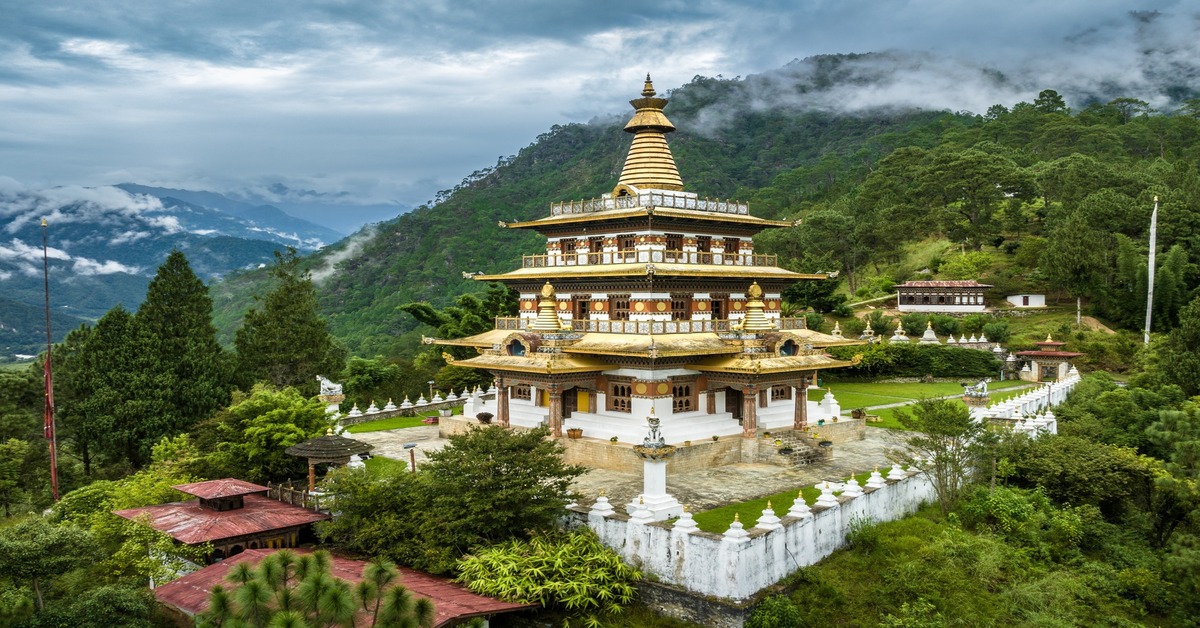
Khamsum Yulley Namgyal Chorten, also called Nyizergang Chorten or Punakha Zangdopelri Chorten, is a four-story monastery in the shape of a chorten. It was built by Ashi Tshering Yangdon Wangchuck in 2004 to ward off negative forces and spread peace and harmony to all living beings.
The chorten is 30 meters (100 feet) tall and sits on a hilltop overlooking the Mo Chhu River in Nyizergang in Punakha Dzongkhag. The hike to the Khamsum Yulley Namgyal Chörten is one of the most popular hikes in Punakha.
How to Reach Khamsum Yulley Namgyal Chorten
Khamsum Yulley Namgyal Choeten is located 8 kilometers northwest of Punakha Dzong. It takes roughly an hour to reach. The best way to get to Khamsum Yulley Namgyal Chorten is by hiking. For those who can’t hike, a narrow, unpaved road leads to a parking area near the chorten, followed by a quick 15-minute walk through the forest. The stupa is open daily from 6:00 AM to 6:00 PM, and entry is free.
Khamsum Yulley Chorten Hike
The hike to the Khamsum Yulley Namgyal Chorten starts at Yebesa Village. Park the vehicles near the west bank of the Mo Chhu River and cross a suspension bridge on foot. From there, a large prayer wheel housed in a small shelter marks the start of a scenic uphill trail. The hike takes around 45 minutes through lush rice paddies and pine forests, providing stunning views of the Punakha Valley.
History of Khamsum Yulley Namgyal Chorten
Khamsum Yulley Namgyal Chorten was built under the royal vision of Ashi Tshering Yangdon Wangchuck. It was built to ward off the negative forces and promote peace, harmony, and protection for the kingdom and the world.
Bartsham Lam Kunzang Wangdi (Lama Nyingku) designed the stupa resembling a “Celestial Palace of the Gods,” following the instructions of Lama Sonam Zangpo.
The Chorten was named Khamsum Yulley Namgyal, in which Khamsum refers to the three realms of existence, Yulley signifies the land of the deity, and Namgyal symbolizes victory.
Description of Khamsum Yulley Namgyal Chorten
The entrance is as beautiful as it is flanked by small white stupas, accompanied by a garden, a Bodhi tree, and prayer wheels.
Khamsum Yulley Namgyal Chorten is designed in the traditional form of a stupa, with three distinct stories and a rooftop. Four porches, located on each side of the monument, provide access to the interior, which is arranged in a mandala pattern.
Inside Khamsum Yulley Namgyal Chorten
Every floor of the Chorten houses the statues of wrathful deities. To balance the wrathful force of these deities, a series of peaceful, responding deities, the Yab-Yum figure, covers every floor.
First Floor
The entire first-floor room features a shrine with a 15-foot-tall statue of Vajrakilaya, one of the eight deities of the Kagyé tradition. Encased in glass, the statue features 103 intricately crafted 3D sculptures, each representing a distinct aspect of the deity.
Second Floor
On the second floor, there is a statue of Khamsum Namgyel, a wrathful deity, though not as overwhelming in size and complexity, but still ferociously powerful. There is a designated space for mindful meditation.
Third Floor
The third level is home to Nampar Gyalwa, another wrathful deity, even more ferocious and energetic.
Rooftop
A narrow stairway leads to the stupa’s rooftop. A golden statue of Sakyamuni Buddha sits facing south. From here, visitors enjoy panoramic views of the Punakha Valley and the Mo-Chhu River, truly feeling the peace after surviving the wrathful deities on the lower floors.
Best Time to Visit Khamsum Yulley Namgyel Chörten
Khamsum Yulley Namgyal Chorten is accessible year-round. However, the autumn and winter seasons are considered the best time to hike to Khamsum Yulley Chorten when the valley shines with all its golden colors of rice ready for harvest. You can visit the major pilgrimage sites of Punakha with the Bhutan Pilgrimage Package.
Places to Explore in Punakha
Punakha Dzong: Also known as Pungtang Dewa Chhenbi Punakha Phodrang, which translates to “the palace of great happiness or bliss,” is the administrative center of the Punakha District, constructed in 1637 by Ngawang Namgyal.
Chimi Lhakhang: Also known as the fertility temple, it is a Buddhist monastery in Punakha. It was constructed on the site where Drukpa Kunley subdued a demoness. The monastery was founded in 1499 by Lam Ngawang Chogyal.
Talo Monastery: Also known as Talo Sangngak Choling, is a monastery associated with the mind manifestation of Zhabdrung Ngawang Namgyal, located on the hills above Punakha, Bhutan, at an elevation of approximately 2800 meters.
Goen Tshephu Ney: It is a sacred cave of longevity in Punakha, considered the third Draphu Maratika. Guru Rinpoche meditated in the cave for three months and visualized Buddha Amitayus, the “Buddha of Long Life”.
Chubu Tshachu: Also known as Chuba Tsachu, is a well-known hot spring in Punakha. The hot spring is said to have been discovered by Guru Rinpoche in the 8th century. Chubu Tshachu is helpful with cold disorders, chronic stomach aches, diabetes, and indigestion.
Kabji-Hoka Tsho: As a sacred lake in Punakha, with an opening in the lake created by the lake’s deity after a demon threatened to flood the area. The hike to Kabji-Hoka Tsho is considered to be of medium difficulty. It takes two to three hours on foot from Chorten Nyingpo Lhakhang.
Enjoyed reading this blog?